
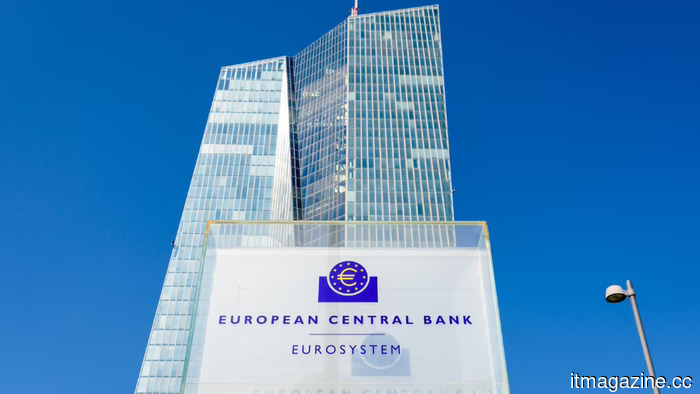
ECB selects 36 payment companies for the digital euro trial.
Deutsche Bank, UniCredit, Revolut, Stripe, and Adyen have been included in the selection. The trial period lasting 12 months will commence in the latter half of 2027, and the funds transferred will not have legal tender status.
On Tuesday, the European Central Bank released the list of 36 payment service providers chosen from over 50 applicants to participate in the initial pilot of the digital euro.
The selected participants range from Deutsche Bank, UniCredit, and Poste Italiane to Revolut, Stripe, Adyen, SumUp, Satispay, Worldline, and the Cooperative Bank of Chania, a Greek cooperative lender that will now participate in the Eurosystem trial alongside two of the largest banks in the eurozone.
These 36 participants represent 16 out of the 21 member states of the euro area, with Italy contributing seven and Germany five. The ECB noted that the participants represent “a broad range of business models and sizes,” indicating that the pilot intentionally includes both traditional banks and the acquirers and app-based challengers that have significantly contributed to the growth of European payments over the past decade.
The pilot is set to launch in the second half of 2027 and will run for a year. It will utilize a beta version of the digital euro, which is functionally and technically close to what the proposed legislation outlines but does not have legal tender status, meaning there is no obligation for anyone to accept it, and no consumers outside of the trial will use it.
The participating entities are categorized into two roles: distributing providers will provide Eurosystem staff with beta digital euro accounts and the ability to make payments, while acquiring providers will enroll merchants to accept those payments. Some firms will fulfill both roles, and the ECB notes that a provider may ultimately offer services in a different country than where it initially applied.
Testing will be conducted at the ECB and 19 national central banks from Estonia to Portugal, with Bulgaria and Malta being the only euro-area countries not participating. Central bank personnel will act as users, and merchants will include e-commerce sellers and businesses operating in institutional settings, such as cafeterias and restaurants.
Four primary use cases are prioritized: online person-to-person payments, offline person-to-person payments via NFC, tap-to-pay at the point of sale, and online and mobile commerce.
Participation in the pilot is not subsidized. Providers must cover their own expenses, will not receive funding from the ECB, and cannot charge pilot users any fees. This arrangement has been highlighted by industry publications as potentially favoring larger players, who can more easily absorb the costs related to development and certification without a revenue stream. The ECB's pilot FAQ initially estimated that around 10 to 30 providers would be selected, but the final number reached 36.
“The significant market interest in the pilot demonstrates the private sector’s willingness to engage actively and swiftly advance the digital euro project to enhance the European payments landscape,” stated Piero Cipollone, ECB executive board member and chair of the high-level task force for the project.
The day before the announcement, during an interview with Jornal de Negócios, he reiterated this sentiment more directly, emphasizing that observing actions rather than words is more telling, and noted that over 50 institutions had applied.
The underlying strategy for the project remains unchanged: the ECB seeks to lessen the bloc’s reliance on US-based card networks and payment platforms—a reliance that has not diminished despite recent consolidation efforts, including Mastercard’s $1.8 billion acquisition of a stablecoin.
The same arguments for sovereignty drive the EU’s plans for a universal digital wallet, and the ECB has spent much of the last two years addressing concerns regarding the currency’s design, particularly regarding privacy and data issues.
The schedule now lies with Brussels rather than Frankfurt. The ECB aims to be prepared for a potential first issuance in 2029, contingent upon the adoption of the digital euro regulation this year, and it has stated that it will not determine whether to issue the currency until the law is established. The list of countries where each provider will ultimately offer pilot services will be published later this year.
Other articles
 Flex secures $70 million from Ryan Smith’s Halo fund to expand its AI private banking services worldwide.
Flex has secured $70 million in a Series B1 round, spearheaded by Ryan Smith’s Halo fund, and is introducing Flex Global, which includes stablecoin infrastructure and multi-currency accounts in over 100 countries.
Flex secures $70 million from Ryan Smith’s Halo fund to expand its AI private banking services worldwide.
Flex has secured $70 million in a Series B1 round, spearheaded by Ryan Smith’s Halo fund, and is introducing Flex Global, which includes stablecoin infrastructure and multi-currency accounts in over 100 countries.
 Moneybox reaches unicorn status on London’s new Pisces market.
Moneybox has become Europe's latest unicorn, valued at £800 million (US$1.1 billion), following a £45 million employee share sale on the new Pisces market of the LSE, rather than through a fundraising effort.
Moneybox reaches unicorn status on London’s new Pisces market.
Moneybox has become Europe's latest unicorn, valued at £800 million (US$1.1 billion), following a £45 million employee share sale on the new Pisces market of the LSE, rather than through a fundraising effort.
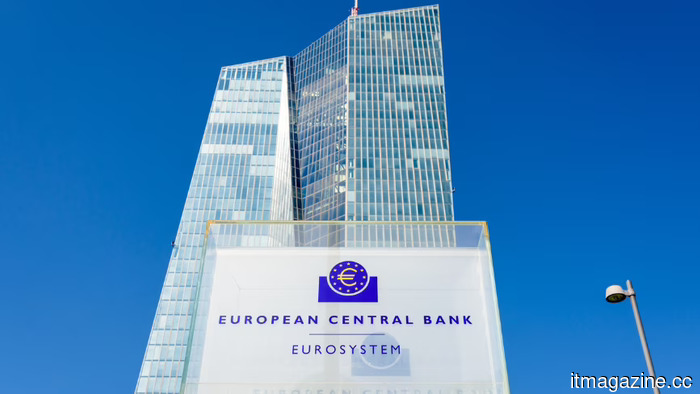 ECB selects 36 payment companies for the digital euro pilot program.
Deutsche Bank, UniCredit, Revolut, Stripe, and Adyen are part of 36 companies selected for the ECB’s digital euro pilot, a year-long trial set to commence in late 2027.
ECB selects 36 payment companies for the digital euro pilot program.
Deutsche Bank, UniCredit, Revolut, Stripe, and Adyen are part of 36 companies selected for the ECB’s digital euro pilot, a year-long trial set to commence in late 2027.
 Tower Semiconductor is investing $3 billion in Japan, with Tokyo covering a third of the amount.
Tower Semiconductor plans to invest approximately $3 billion to enhance its 300mm silicon photonics capacity in Japan, after accounting for $1 billion in government grants from Japan.
Tower Semiconductor is investing $3 billion in Japan, with Tokyo covering a third of the amount.
Tower Semiconductor plans to invest approximately $3 billion to enhance its 300mm silicon photonics capacity in Japan, after accounting for $1 billion in government grants from Japan.
 Switzerland initiates a competition investigation regarding Google's disappearing Android choice screen.
Switzerland's COMCO has initiated a preliminary inquiry into Google's elimination of the Android search choice screen, which is still operational throughout the EEA.
Switzerland initiates a competition investigation regarding Google's disappearing Android choice screen.
Switzerland's COMCO has initiated a preliminary inquiry into Google's elimination of the Android search choice screen, which is still operational throughout the EEA.
 This $68 phone offers smartphone-generation kids the childhood that millennials missed out on.
Pinwheel's vintage-style home phone allows kids to make voice calls to pre-approved contacts, with set calling hours and no access to apps or social media.
This $68 phone offers smartphone-generation kids the childhood that millennials missed out on.
Pinwheel's vintage-style home phone allows kids to make voice calls to pre-approved contacts, with set calling hours and no access to apps or social media.
ECB selects 36 payment companies for the digital euro trial.
Deutsche Bank, UniCredit, Revolut, Stripe, and Adyen are included among 36 companies selected for the ECB's digital euro pilot, a year-long trial scheduled to commence in late 2027.