

The AI penalty: employees penalized for using AI ethically.
Companies are urging employees to utilize AI, yet they attribute the achievements to the technology. Researchers refer to this as the AI penalty, noting that workers claim it is hindering their chances for promotions and pay raises.
Aubrey dedicated over a year to improving a costly medical manufacturing process. Upon completing her project, her manager requested that she present it to senior leadership as if the AI chatbot, Claude, had produced the work. She agreed to highlight the chatbot's role while clarifying her own significant contributions. Nevertheless, her manager interrupted and claimed that she had completed the entire project in just a minute with the help of AI. A few weeks later, her performance review reflected this incident unfavorably, and her boss acknowledged that the episode had negatively impacted her evaluation.
Aubrey isn’t the only one affected, as reported by Business Insider’s Shubham Agarwal. Deepak, an IT developer at a Fortune 500 company in India, began crediting the coding agents he utilized for the sake of transparency. However, his superiors quickly assumed that all his accomplishments were thanks to the machine, which, he believes, delayed his promotion.
Many office workers find themselves between managers who demand increased use of AI and those who penalize its users. As a result, they have started concealing the extent of their reliance on it. This instinct to hide their usage is understandable. Christoph Riedl, a professor at Northeastern University, conducted a meta-analysis of 13 studies across various jobs and found a distinct pattern: managers tended to rate work lower when employees acknowledged that AI had assisted, presuming the machine was largely responsible. Riedl describes this phenomenon as the “AI penalty.”
He discovered that the best way to avoid this penalty is to maintain control over the main task and clearly explain one’s contributions. This is challenging, especially as employers implement increasingly scrutinous methods to monitor AI usage in a job market already unsettled by automation.
The most basic measurement is the token, the fundamental unit processed by an AI model. Tracking tokens informs managers about how frequently someone prompted a chatbot and the volume of text exchanged, yet it doesn’t reveal the actual contributions of the AI. Employees quickly learned to manipulate this system by posing trivial inquiries to appear as power users, prompting companies to limit these practices.
Recently, Amazon eliminated an internal leaderboard that ranked token usage. “Please don’t use AI just for the sake of using AI,” stated senior vice-president Dave Treadwell at a company meeting.
Even more sophisticated tools can provide misleading insights. For instance, coding assistants like Claude Code label their contributions in the code but do not specify which lines they authored or how much the human contributor influenced them. “If AI usage is reported without precise details about its application, the manager’s default assumption seems to be that it was used in a way that diminishes agency,” Riedl explains. In simpler terms, supervisors tend to believe that the AI took the lead, underscoring the importance of clarifying the process.
Some researchers are working to clarify the distinction between human and machine contributions. Graham Neubig, a computer scientist at Carnegie Mellon University, co-founded OpenHands, an open-source coding platform that footnotes any line written by AI, allowing reviewers to examine it thoroughly. Meanwhile, a team at IBM developed an AI Attribution Toolkit, inspired by the methodology scientists use to attribute authorship in academic papers. This tool enables individuals to record how much a chatbot generated versus what a human verified, subsequently creating an attribution statement.
High-level acknowledgments of AI are insufficient, according to Jessica He, one of the toolkit's designers.
The underlying issue also lies in social dynamics. Several studies indicate that admitting to AI assistance, even truthfully, can lead colleagues to trust you less and perceive you as lazy. Oliver Schilke, a professor at the University of Arizona, observed similar outcomes in his research. He labels this a paradox: those who act honestly end up suffering consequences. He advocates for established rules regarding AI credit rather than leaving it to individual interpretation.
Thomas Prommer, an engineering executive at Adidas, witnessed the negative effects of mandatory attribution firsthand. His engineers ceased utilizing AI completely because they didn’t want their significant contributions credited as “co-written by Claude.” Instead, recognition of the final outcome rather than the tool itself proved to be more effective.
The ramifications extend beyond missed promotions. Earlier this year, Amazon was found to have dismissed employees for mistakes made by an AI agent. “The accolades go to AI, but the responsibility for its content lies with us,” Deepak notes. Alessio Artuffo, CEO of the learning platform Docebo, contends that basic attribution is the wrong approach.
The key question should not be how work was accomplished, but whether the individual behind it is able to defend and rectify it. If companies continue to penalize those who use AI transparently, he warns, they will yield greater output while diminishing ownership. This, he asserts
Other articles
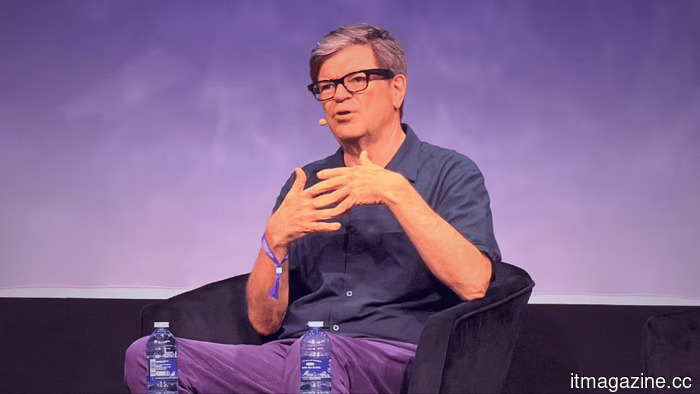 Yann LeCun's venture capital fund, Extelligence, crumbles within hours.
Yann LeCun was appointed as a partner at the new venture capital firm Extelligence Invest. However, within eight hours, the fund was dissolved due to unspecified 'exclusive relationships'.
Yann LeCun's venture capital fund, Extelligence, crumbles within hours.
Yann LeCun was appointed as a partner at the new venture capital firm Extelligence Invest. However, within eight hours, the fund was dissolved due to unspecified 'exclusive relationships'.
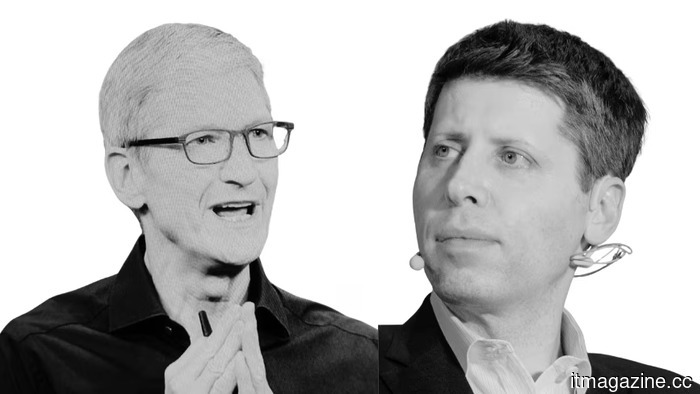 Apple's lawsuit is already impacting OpenAI's competitor to the iPhone.
Apple's trade secret lawsuit could span several years, but Bloomberg reports that it is already impacting OpenAI's recruitment efforts and creating uncertainty around its device release prior to any decision.
Apple's lawsuit is already impacting OpenAI's competitor to the iPhone.
Apple's trade secret lawsuit could span several years, but Bloomberg reports that it is already impacting OpenAI's recruitment efforts and creating uncertainty around its device release prior to any decision.
 The AI penalty: employees penalized for using AI in good faith
Managers encourage employees to utilize AI, only to give credit to the technology instead. Researchers refer to this phenomenon as the AI penalty, and workers claim it is impacting their chances for promotions and salary increases.
The AI penalty: employees penalized for using AI in good faith
Managers encourage employees to utilize AI, only to give credit to the technology instead. Researchers refer to this phenomenon as the AI penalty, and workers claim it is impacting their chances for promotions and salary increases.
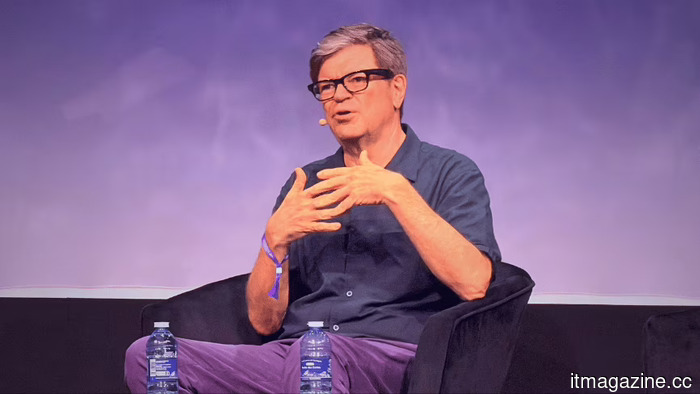 Yann LeCun's venture capital fund, Extelligence, collapses within hours.
Yann LeCun was appointed as a partner at the new venture capital firm Extelligence Invest. However, the fund was dissolved within eight hours due to undisclosed 'exclusive relationships'.
Yann LeCun's venture capital fund, Extelligence, collapses within hours.
Yann LeCun was appointed as a partner at the new venture capital firm Extelligence Invest. However, the fund was dissolved within eight hours due to undisclosed 'exclusive relationships'.
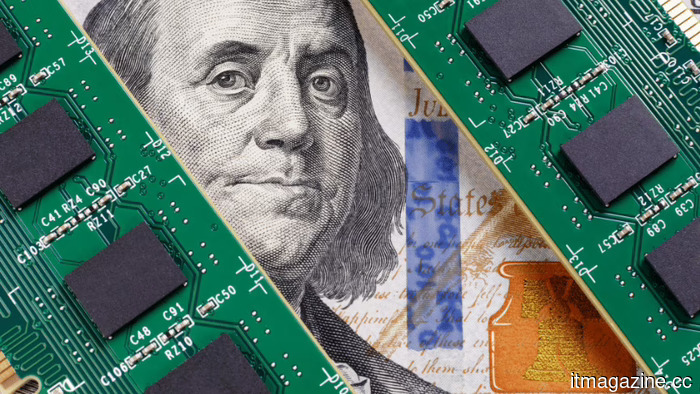 The AI memory shortage will not improve until 2028.
The surge in AI has disrupted the typical boom-bust cycle of the memory market. The current memory shortage caused by AI is expected to persist until 2028, and the subsequent downturn could be unprecedented.
The AI memory shortage will not improve until 2028.
The surge in AI has disrupted the typical boom-bust cycle of the memory market. The current memory shortage caused by AI is expected to persist until 2028, and the subsequent downturn could be unprecedented.
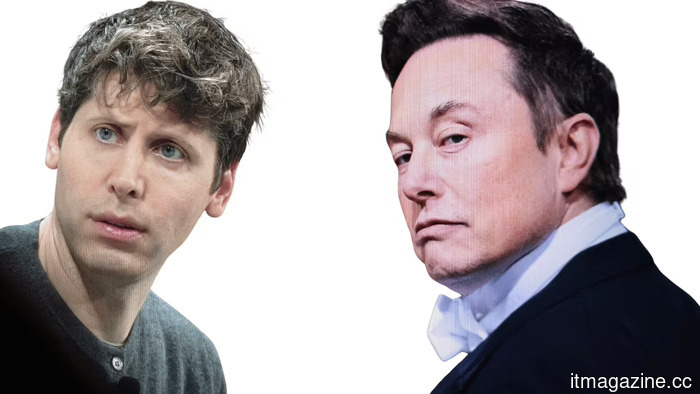 'Scam Altman': Musk and Altman's weekend clash on X
Musk referred to Sam Altman as a 'scammer' throughout the weekend on X following Apple’s lawsuit against OpenAI. Altman responded by asserting that it simply demonstrated the effectiveness of his new model. Here's a closer look at the dispute.
'Scam Altman': Musk and Altman's weekend clash on X
Musk referred to Sam Altman as a 'scammer' throughout the weekend on X following Apple’s lawsuit against OpenAI. Altman responded by asserting that it simply demonstrated the effectiveness of his new model. Here's a closer look at the dispute.
The AI penalty: employees penalized for using AI ethically.
Managers encourage employees to utilize AI, but then attribute the success to the technology. Researchers refer to this phenomenon as the AI penalty, and workers claim it is negatively impacting their chances for promotions and salary increases.