

The AI consequence: employees penalized for using AI in good faith.
Companies are instructing employees to utilize AI while attributing the credit to the technology itself. Researchers refer to this trend as the "AI penalty," explaining that employees feel it's hindering their opportunities for promotions and pay increases.
Aubrey dedicated over a year to improve a costly medical manufacturing process. Upon completion, her manager requested that she present her work to senior leadership as though it were accomplished by Claude, the AI chatbot. To find a middle ground, she highlighted the bot's role while making it clear that she had done the majority of the work. However, her manager interrupted and claimed in the meeting that she had completed everything in just a minute using AI. A few weeks later, her annual review was tepid, and her supervisor acknowledged that this incident negatively impacted her evaluation.
She is not the only one facing this issue, as reported by Business Insider’s Shubham Agarwal. Deepak, an IT developer at a Fortune 500 company in India, began openly acknowledging the coding tools he utilized for transparency. Soon, his supervisors began to attribute all his successful work to the machine, which he believes hindered his promotion prospects.
Many white-collar workers now find themselves in a difficult situation, navigating between employers who expect increased use of AI and those who penalize its users. Consequently, they have started concealing the extent of their reliance on these technologies.
This inclination to hide AI usage appears logical. Christoph Riedl, a professor at Northeastern University, conducted a meta-analysis of 13 studies spanning various professions and discovered a consistent trend: managers tended to lower evaluations once employees acknowledged a chatbot's assistance, presuming the machine had performed the majority of the work. Riedl refers to this as the "AI penalty."
He found that the primary way to avoid this penalty is to maintain control over the essential aspects of the task and clearly outline one's contributions. However, this becomes challenging as employers introduce increasingly direct monitoring of AI usage, particularly in a job market already disrupted by automation.
Measuring creativity through tokens proves ineffective. The most straightforward metric is the token, the fundamental unit processed by an AI model. Counting tokens provides insight into how frequently an employee engaged a chatbot and the volume of text exchanged, but it offers no information about what the AI actually contributed. Employees soon learned to manipulate this metric by asking trivial questions to appear as advanced users, prompting companies to tighten restrictions on it.
Recently, Amazon eliminated an internal leaderboard that ranked token usage. “Please don’t use AI just for the sake of using AI,” stated Dave Treadwell, a senior vice-president, during a company meeting.
Even more nuanced tools can be misleading. Coding assistants like Claude Code mark their contributions with a co-author tag on code but do not specify which lines were theirs or how significantly the human impacted them. Riedl notes, “If AI use is disclosed without specific details about how it was utilized, managers generally assume it diminished the person's agency.” Essentially, bosses presume the AI was in charge, emphasizing the importance of how the AI was used.
Efforts are underway to clarify the division of labor between humans and machines. Graham Neubig, a computer scientist at Carnegie Mellon University, co-founded OpenHands, an open-source coding platform that footnotes any AI-written line, allowing reviewers to examine it closely. IBM has taken a further step with an AI Attribution Toolkit designed similarly to the system scientists use to credit every author of a paper. It allows users to log how much content a chatbot generated versus what a human reviewed, subsequently producing an attribution statement.
Jessica He, a designer of the toolkit, asserts that mere acknowledgments of AI are insufficient.
The more profound issue at hand is social. Several studies indicate that even honest disclosures about AI can decrease colleagues' trust and lead them to perceive individuals as lazy. Oliver Schilke, a professor at the University of Arizona, reached similar conclusions in his research. He describes it as a paradox: those who act with integrity ultimately face consequences. He advocates for established guidelines regarding AI attribution so employees need not guess.
Thomas Prommer, an engineering executive at Adidas, witnessed the adverse effects of mandatory attribution. His engineers became reluctant to use AI because they didn’t want their significant contributions noted as “co-written by Claude.” Instead, he found success in crediting outcomes rather than the tools used.
The implications extend beyond lost promotions. Earlier this year, Amazon faced scrutiny for blaming employees and laying them off due to the mistakes of an AI agent. “The praise goes to AI, but reviewing its content is our responsibility,” Deepak notes. Alessio Artuffo, CEO of the learning platform Docebo, argues that simple attribution fails to capture the real issue.
The essential question is not how tasks were accomplished but whether the individual behind the work can support and rectify it. If companies continue to penalize those who use AI transparently, Artuffo warns, they will achieve more output but less ownership—a
Other articles
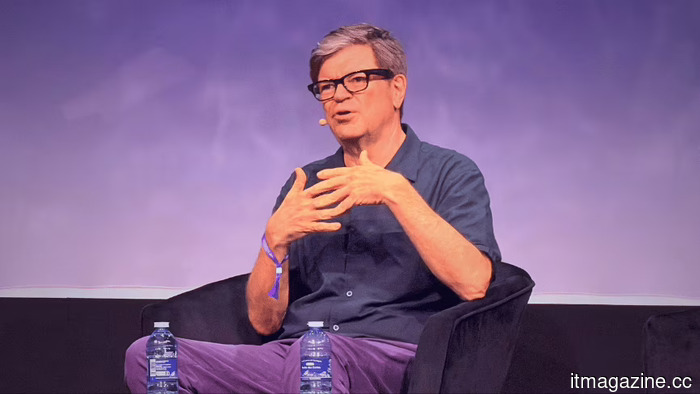 Yann LeCun's venture capital fund, Extelligence, collapses within hours.
Yann LeCun was appointed as a partner at the new venture capital firm Extelligence Invest. However, the fund was dissolved within eight hours due to undisclosed 'exclusive relationships'.
Yann LeCun's venture capital fund, Extelligence, collapses within hours.
Yann LeCun was appointed as a partner at the new venture capital firm Extelligence Invest. However, the fund was dissolved within eight hours due to undisclosed 'exclusive relationships'.
 Meta's AI detector overlooks 50% of its own cropped forgeries.
A Reuters test revealed that the Meta AI detector was unable to identify 55% of its Muse Image pictures after they were cropped, highlighting the limitations of AI watermarks.
Meta's AI detector overlooks 50% of its own cropped forgeries.
A Reuters test revealed that the Meta AI detector was unable to identify 55% of its Muse Image pictures after they were cropped, highlighting the limitations of AI watermarks.
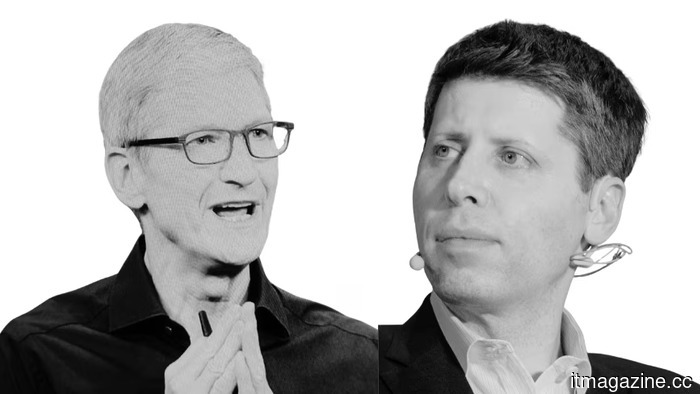 Apple's lawsuit is already negatively impacting OpenAI's competitor to the iPhone.
Apple's trade-secret lawsuit could span several years, but according to Bloomberg, it is already impacting OpenAI's recruitment efforts and casting a shadow over its device release prior to any judgment.
Apple's lawsuit is already negatively impacting OpenAI's competitor to the iPhone.
Apple's trade-secret lawsuit could span several years, but according to Bloomberg, it is already impacting OpenAI's recruitment efforts and casting a shadow over its device release prior to any judgment.
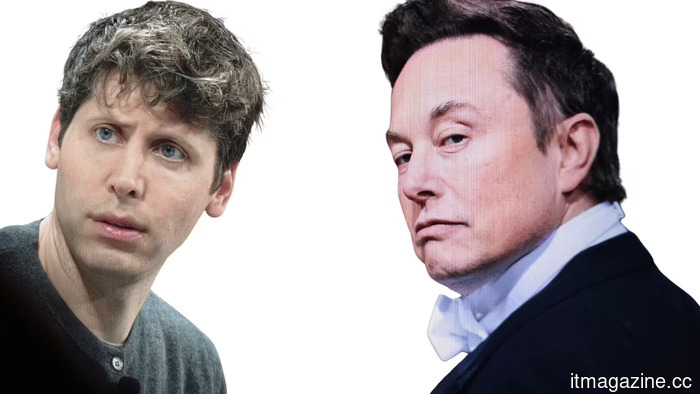 'Scam Altman': Musk and Altman's weekend conflict on X
Musk labeled Sam Altman a 'scammer' throughout the weekend on X following Apple's lawsuit against OpenAI. Altman responded by stating that it merely demonstrated the effectiveness of his new model. Here's a look at the clash.
'Scam Altman': Musk and Altman's weekend conflict on X
Musk labeled Sam Altman a 'scammer' throughout the weekend on X following Apple's lawsuit against OpenAI. Altman responded by stating that it merely demonstrated the effectiveness of his new model. Here's a look at the clash.
 The AI penalty: employees penalized for using AI in good faith
Managers encourage employees to utilize AI, only to give credit to the technology instead. Researchers refer to this phenomenon as the AI penalty, and workers claim it is impacting their chances for promotions and salary increases.
The AI penalty: employees penalized for using AI in good faith
Managers encourage employees to utilize AI, only to give credit to the technology instead. Researchers refer to this phenomenon as the AI penalty, and workers claim it is impacting their chances for promotions and salary increases.
 Australia's AI copyright dispute: creators against data centers.
AI companies, such as Anthropic, are offering billions for datacentres in exchange for a specific Australian AI copyright exemption to utilize domestic work for training. There is a division within the Labor Party on this issue.
Australia's AI copyright dispute: creators against data centers.
AI companies, such as Anthropic, are offering billions for datacentres in exchange for a specific Australian AI copyright exemption to utilize domestic work for training. There is a division within the Labor Party on this issue.
The AI consequence: employees penalized for using AI in good faith.
Managers encourage employees to utilize AI, but then attribute the success to the technology. Researchers refer to this as the AI penalty, and workers claim it is harming their chances for promotions and salary increases.