
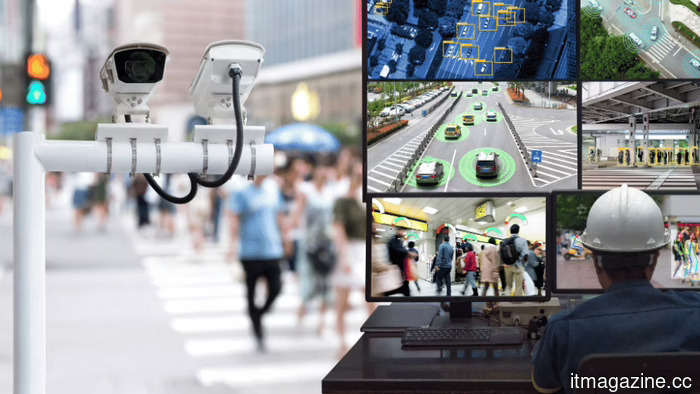
Facewatch will notify UK police within seconds if you're flagged.
Entering a store with an incorrect facial profile might alert the police in just four seconds. This is the proposed feature and the associated concern.
More than 100 shops in the UK are set to implement a facial recognition system that will notify the police in real-time upon identifying a flagged individual. Facewatch, whose cameras already monitor aisles in establishments like Sainsbury’s, B&M, and Spar, claims this is a UK first. However, civil liberties organizations view it as a concerning escalation.
The Guardian disclosed this feature, indicating that Facewatch will "instantly alert police when the most serious offenders trigger a live facial recognition match." This new tool is set to launch in the autumn.
Chief Executive Nick Fisher described it as a “unique technical development,” claiming it alerts the police in an average of four seconds when it identifies a match for the “worst offenders” within the network.
Transitioning from Monitoring to Alerting
Facewatch already performs a function by scanning faces at store entrances and notifying staff if someone on its watchlist enters. It utilizes the same facial recognition technology found in consumer devices and directs it towards shoppers. The new update alters the process, allowing the system to contact the police directly rather than just informing store staff.
This change has raised concerns among legal experts. Charlie Whelton, a policy officer at Liberty, expressed that “it’s not illegal to enter a shop even if you have a criminal history.” He argued that notifying the police about someone potentially misbehaving fundamentally alters established practices.
Moreover, these systems are prone to errors, Whelton noted, making it difficult for individuals affected to contest mistakes when they happen.
The Case for Implementation
Retailers claim they are overwhelmed. Facewatch reported that its system flagged a “known repeat offender” entering stores nearly 300,000 times in the first half of 2026. This allows staff to intervene “before theft, abuse, or violence can occur or escalate.”
Official statistics indicate over 509,000 shoplifting incidents in England and Wales for the year ending December 2025. The British Retail Consortium has raised alarms regarding rising theft and violence, which it describes as “spinning out of control.”
Sainsbury’s is expanding its implementation, growing from 55 stores to over 200 by year-end. The cameras are spreading here more rapidly than regulations can keep pace.
A Hidden Blacklist
Critics highlight a significant risk regarding accountability. Shoppers may be matched against “a secret blacklist compiled by unaccountable businesses and private security personnel,” according to Big Brother Watch, which also criticized police involvement in this operation.
The repercussions of errors are tangible. Shoppers mistakenly identified as thieves have been forced to leave stores, describing their experiences as “Orwellian,” suggesting a presumption of guilt. Evidence points to higher misidentification rates for Black and Asian individuals compared to white shoppers.
“Scanning people’s faces without their consent and adding them to lists is concerning,” stated Sarah Lasoye from the Open Rights Group. She cautioned that the potential for police encounters “in the midst of their daily shopping” represents “a really dangerous escalation.”
The Regulatory Shortfall
The UK is advancing live facial recognition at a pace that exceeds the creation of regulatory frameworks. The Metropolitan Police plan to expand their use across central London by Christmas. Biometrics oversight bodies are warning that the regulation is failing to keep pace with technology, mirroring the government’s swift approach to regulating online activity.
Experts are particularly alarmed about the gap between oversight and technology. Proposed laws on facial recognition will apply to police but not to private companies such as Facewatch.
Nuala Polo from the Ada Lovelace Institute remarked that if the technology poses significant risks when used by law enforcement, allowing its unchecked usage in the private sector creates a discrepancy. She cautioned that this might lead to “backdoors” that link private surveillance to policing standards while avoiding regulatory guidelines.
Why It’s Important
Facewatch promotes its tool as a quicker method for preventing crime, with some advocates suggesting that continuous surveillance may improve behavior. However, critics observe a more troubling issue: a private entity determines who is deemed a threat, with a direct four-second connection to law enforcement.
The UK has spent the past year debating facial recognition in public spaces, and this development brings the debate into retail environments, where cameras are no longer mere observers—they can take action.
Other articles
 Mercor targets a $20 billion valuation and acquires Deeptune.
Mercor is in discussions to increase its valuation to $20 billion and has acquired Deeptune, an AI training startup that was supported by its own CEO. The details are found in the footnotes.
Mercor targets a $20 billion valuation and acquires Deeptune.
Mercor is in discussions to increase its valuation to $20 billion and has acquired Deeptune, an AI training startup that was supported by its own CEO. The details are found in the footnotes.
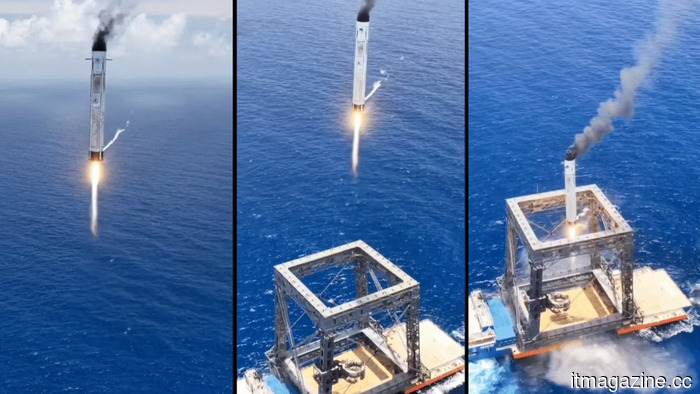 China successfully lands a reusable rocket booster for the first time.
China successfully captured a Long March-10B booster in a net at sea, marking its initial recovery of a reusable rocket. This places it alongside SpaceX and Blue Origin, though it significantly lags behind them.
China successfully lands a reusable rocket booster for the first time.
China successfully captured a Long March-10B booster in a net at sea, marking its initial recovery of a reusable rocket. This places it alongside SpaceX and Blue Origin, though it significantly lags behind them.
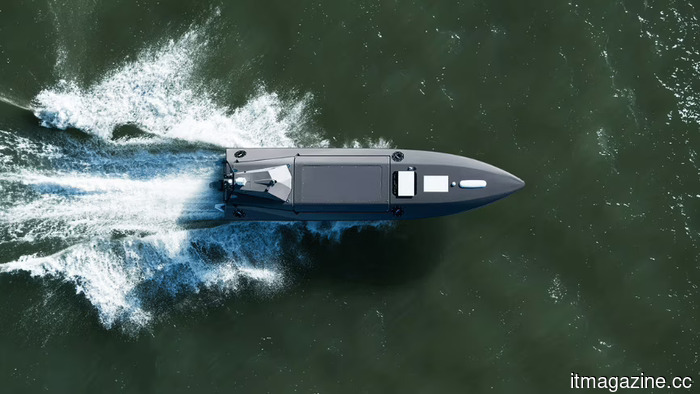 Kraken secures $175 million to achieve unicorn status in maritime defense.
The British company Kraken secured $175 million (€152.9 million), with DTCP leading the round, achieving a valuation of $1 billion to develop uncrewed war boats for NATO, the United States, and the United Kingdom.
Kraken secures $175 million to achieve unicorn status in maritime defense.
The British company Kraken secured $175 million (€152.9 million), with DTCP leading the round, achieving a valuation of $1 billion to develop uncrewed war boats for NATO, the United States, and the United Kingdom.
 Google has recently updated the way it evaluates the AI models employed in Android development.
Google has updated its Android Bench leaderboard by introducing a new testing framework and adding eight new models.
Google has recently updated the way it evaluates the AI models employed in Android development.
Google has updated its Android Bench leaderboard by introducing a new testing framework and adding eight new models.
 The Prime Minister of Malaysia is introducing an AI replica of himself.
Anwar Ibrahim's administration will soon launch PMX AI, an avatar designed to mimic his speech, which will assist citizens in navigating government services.
The Prime Minister of Malaysia is introducing an AI replica of himself.
Anwar Ibrahim's administration will soon launch PMX AI, an avatar designed to mimic his speech, which will assist citizens in navigating government services.
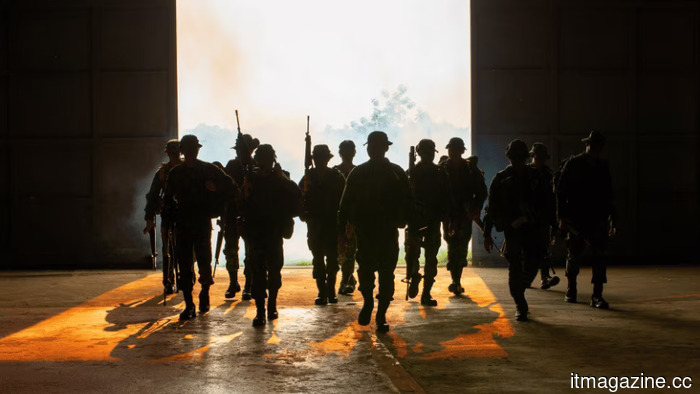 The British Army's £2 billion AI 'Combat Laboratory' in the UK
Britain's new £2 billion AI 'Combat Laboratory' will prepare 60,000 soldiers annually. A US company is at the forefront of the initiative, while Germany's Rheinmetall secures almost half of it.
The British Army's £2 billion AI 'Combat Laboratory' in the UK
Britain's new £2 billion AI 'Combat Laboratory' will prepare 60,000 soldiers annually. A US company is at the forefront of the initiative, while Germany's Rheinmetall secures almost half of it.
Facewatch will notify UK police within seconds if you're flagged.
Facewatch will shortly notify police within approximately four seconds when a flagged customer steps into a store in the UK. Civil liberties organizations describe it as a "risky escalation."