
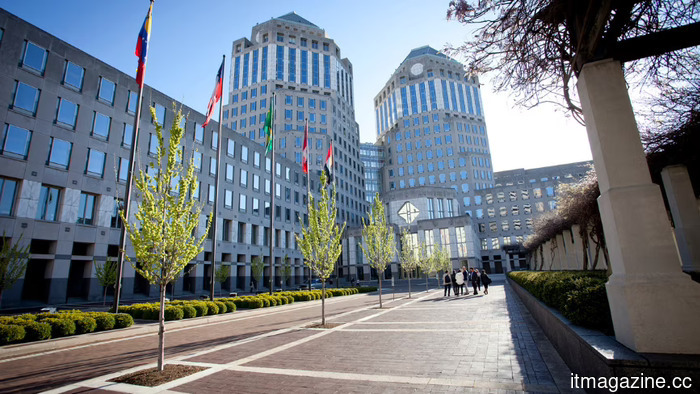
Shampoo and cookies undergo an AI transformation as major consumer brands revamp their laboratories.
The narrative surrounding AI has primarily revolved around chips, data centers, and the companies developing the models. Now, it has begun to unfold in the shampoo aisle. Major manufacturers of everyday products—the companies responsible for the bottles and packages found in most kitchens and bathrooms—are now implementing artificial intelligence to create products and manage the marketing campaigns that promote them, transforming software-associated technology into an essential element of consumer goods research and development.
This wave of corporate adoption has introduced AI tools into business software systems, extending into areas as seemingly mundane as body wash and biscuits. Procter & Gamble exemplifies this trend within its research and development processes. The company claims it utilized AI to analyze tens of thousands of peptides while creating a formula for a Pantene product, using an internal database of over 8,500 formulations to forecast how a mixture would feel on skin or hair prior to physical mixing.
The aim is not merely to innovate for the sake of it; it’s about efficiency. Processes that previously required extensive physical testing can now be streamlined computationally, allowing potential candidates to reach consumer trials more quickly. Mondelez, the company known for several popular biscuit and chocolate brands, reports a similar transformation in its food sector. They indicate that an AI product development tool has facilitated the creation of numerous new formulations, enabling developers to work two to five times faster than traditional approaches.
Furthermore, generative systems are also being applied in marketing, producing personalized images, text, and videos at a speed that conventional studios cannot achieve. Unilever has focused heavily on the marketing aspect. Its Dove brand launched a cookie-scented body care line in collaboration with Crumbl, utilizing AI throughout the process, from product development to influencer selection and creative content.
The company noted that the campaign garnered billions of impressions and attracted many new customers to the brand. Regardless of opinions about a cookie-scented soap, the underlying mechanics are informative: a singular AI-assisted process that spans from formulation to social media feed. What connects these examples is efficiency. In the consumer goods sector, traditional experimentation costs are defined by months of lab work and test batches, while traditional campaign expenses are measured in agency hours. AI addresses both aspects.
Reformulation evolves into a search issue involving known ingredients, while content becomes something that can be generated and modified on demand. This approach aligns with the advertising strategies showcased when OpenAI presented AI-generated advertisements at Cannes. However, such claims should be approached with caution. Many specific figures are provided by the companies themselves, and major consumer brands have ample motivation to portray their AI initiatives as being more advanced than they truly are.
Product development still relies on human taste tests and dermatological assessments, and a formula preferred by an algorithm doesn't guarantee that it will be one customers purchase repeatedly. Industry researchers have noted that AI-generated marketing often tends toward the generic, lacking the brand-specific qualities that make a campaign resonate.
Nonetheless, there is a consistent trend across companies, even those that typically disagree on many issues. The shifting of enterprise budgets toward AI tools and agents has become a common aspect among large corporations, from Tencent’s enterprise solutions to the consumer goods research and development mentioned here, and the packaged goods sector is actively participating in this evolution.
For consumers, the visible outcome will be relatively ordinary: a greater variety of products, quicker updates, and scents and textures that emerge and disappear at a much faster pace than before. The processes behind the shelves are evolving, even if the products appear unchanged. Increasingly, a bottle of shampoo is the result of a search.
Other articles
 An AI agent has allegedly conducted an entire ransomware attack independently.
Security researchers state that an autonomous AI agent conducted a fully-fledged ransomware attack, adjusting to setbacks and performing the infiltration with very little human involvement.
An AI agent has allegedly conducted an entire ransomware attack independently.
Security researchers state that an autonomous AI agent conducted a fully-fledged ransomware attack, adjusting to setbacks and performing the infiltration with very little human involvement.
 Novartis acquires UK biotech Myricx for up to $1.5 billion in pursuit of a new class of cancer drugs.
Novartis will make an upfront payment of $1.1 billion and could pay an additional $400 million in milestone payments for Myricx Bio, a UK company focused on creating a new payload for antibody-drug conjugates.
Novartis acquires UK biotech Myricx for up to $1.5 billion in pursuit of a new class of cancer drugs.
Novartis will make an upfront payment of $1.1 billion and could pay an additional $400 million in milestone payments for Myricx Bio, a UK company focused on creating a new payload for antibody-drug conjugates.
 Novartis acquires UK biotech Myricx for as much as $1.5 billion to pursue a new class of cancer drugs.
Novartis will provide an initial payment of $1.1 billion and potential milestone payments of up to $400 million for Myricx Bio, a UK-based company working on an innovative payload for antibody-drug conjugates.
Novartis acquires UK biotech Myricx for as much as $1.5 billion to pursue a new class of cancer drugs.
Novartis will provide an initial payment of $1.1 billion and potential milestone payments of up to $400 million for Myricx Bio, a UK-based company working on an innovative payload for antibody-drug conjugates.
 Samsung is on track for an 18-fold increase in profits due to a surge in demand for AI memory.
Analysts predict that Samsung will announce an operating profit of approximately 86 trillion won for Q2, which is about 18 times higher than last year, due to a rise in AI memory prices.
Samsung is on track for an 18-fold increase in profits due to a surge in demand for AI memory.
Analysts predict that Samsung will announce an operating profit of approximately 86 trillion won for Q2, which is about 18 times higher than last year, due to a rise in AI memory prices.
 The UN states that AI is advancing more rapidly than regulations, and it has a report to back this claim.
As a UN discussion on AI governance begins in Geneva, António Guterres cautions that AI is progressing more swiftly than governments can assess or regulate it.
The UN states that AI is advancing more rapidly than regulations, and it has a report to back this claim.
As a UN discussion on AI governance begins in Geneva, António Guterres cautions that AI is progressing more swiftly than governments can assess or regulate it.
 The Washington Post forecasted technological advancements 50 years ago, and the accuracy of those predictions is quite humbling.
The Washington Post revisited a 1976 article that predicted life in 2026, highlighting the accuracy of its forecasts concerning smartphones, solar energy, gene editing, and various other technological advancements.
The Washington Post forecasted technological advancements 50 years ago, and the accuracy of those predictions is quite humbling.
The Washington Post revisited a 1976 article that predicted life in 2026, highlighting the accuracy of its forecasts concerning smartphones, solar energy, gene editing, and various other technological advancements.
Shampoo and cookies undergo an AI transformation as major consumer brands revamp their laboratories.
P&G, Unilever, and Mondelez are leveraging AI to develop products and execute campaigns, shortening timelines that previously spanned years to just a few weeks.