
NASA is allocating $590 million to private companies for the construction of the first Moon outpost for humanity.
NASA is relying on private companies to realize its vision of a Moon Base.
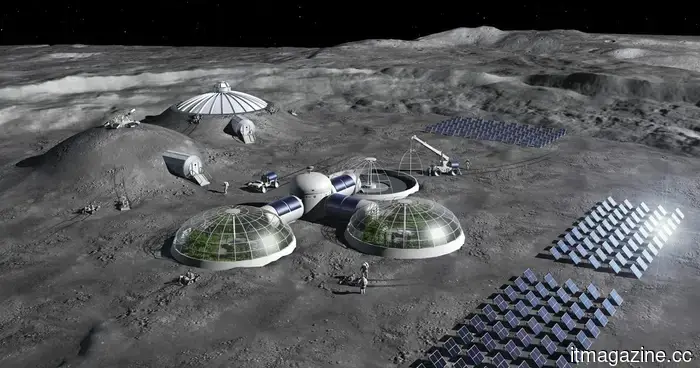
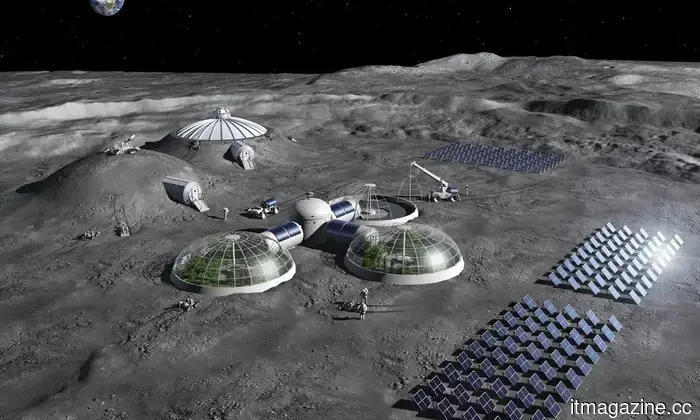
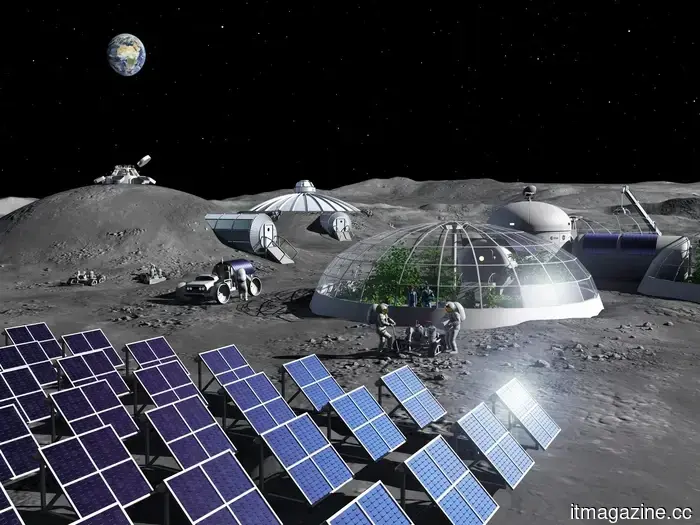
An artist's depiction of a Moon Base concept shows solar arrays for energy production, greenhouses for food cultivation, and habitats protected by regolith.
Building a permanent Moon base may seem like a concept from science fiction, but NASA is taking significant steps to make it a reality. The agency has just awarded $590 million in contracts to three private companies for four uncrewed lunar lander missions set to launch in late 2028.
These missions are part of Phase 1 of NASA’s larger $30 billion Moon Base initiative, aimed at providing landers, rovers, and scientific equipment to the Moon before astronauts arrive. These initiatives are closely linked to NASA’s Artemis program, which conducted a lunar flyby with humans in April, marking the first time since the Apollo days.
Who is developing NASA’s Moon outpost?
An artistic representation of Moon Base activities, including solar power, greenhouse food production, and construction via mobile 3D printer-rovers.
According to NBC News, Astrobotic received the highest contract amount of $297.9 million for two missions. Firefly Aerospace was awarded $144.2 million for one lander, while Intuitive Machines secured $148.3 million for another. NASA states that these repeated robotic missions are vital because future human crews will rely on these systems functioning seamlessly.
However, the current record is mixed. Firefly is the only private entity to achieve a successful Moon landing, with its Blue Ghost vehicle landing upright in March 2025. Astrobotic’s Peregrine mission did not reach beyond Earth’s orbit, while Intuitive Machines accomplished two landings but tipped over both times.
NASA is also investigating the possibility of repurposing a Mars rover prototype named Promise for lunar missions, which could enhance the scientific capabilities of the lunar outpost.
Why is NASA speeding up the timeline?
Phase 1 will cost around $10 billion and extend until 2028, but the urgency stems from concerns beyond engineering. China is quickly advancing its lunar program, and both nations are focusing on the Moon’s south pole due to the potential presence of water ice, which could be converted into drinking water or rocket fuel.
NASA
NASA is also facing challenges, such as the explosion of Blue Origin’s New Glenn rocket on the launchpad in May, which has postponed its planned Blue Moon lander mission. The agency has begun to investigate alternative launch options to prevent delays.
If everything proceeds as anticipated, this Moon Base will evolve into a settlement for astronauts to live and work. Although it entails significant expenses and risks, and remains years away, NASA has taken one of its most decisive steps towards achieving this goal.
Manisha Priyadarshini is a tech and entertainment writer with more than nine years of editorial experience.
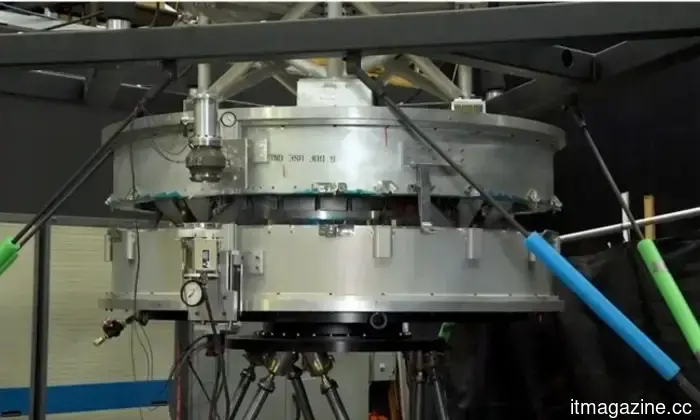
Reaching Mars may necessitate a stop in orbit, and NASA has just tested a nozzle to facilitate this.
A gas pump nozzle for spacecraft may seem simple, but it is complex, making this test noteworthy.
Transporting a spacecraft to Mars or beyond requires an immense amount of fuel, most of which must be brought from Earth, adding to the overall cost and weight. NASA is pursuing a different strategy that could prove more efficient and practical: refueling a spacecraft in orbit before it embarks on its mission. Notably, the space agency has recently completed testing a component that could enable this: a cryocoupler.
Elon Musk’s Starlink may soon introduce mobile services as a US carrier.
Elon Musk’s Starlink has transformed internet access for millions, especially in areas where conventional broadband is unreliable. Now, the satellite internet service might be gearing up for an even greater expansion—becoming a mobile carrier. According to a Financial Times report, SpaceX has informed investors it is considering launching a retail Starlink mobile service in the US, potentially selling mobile plans directly to consumers instead of merely partnering with existing wireless carriers, which could position it against Verizon, AT&T, and T-Mobile.
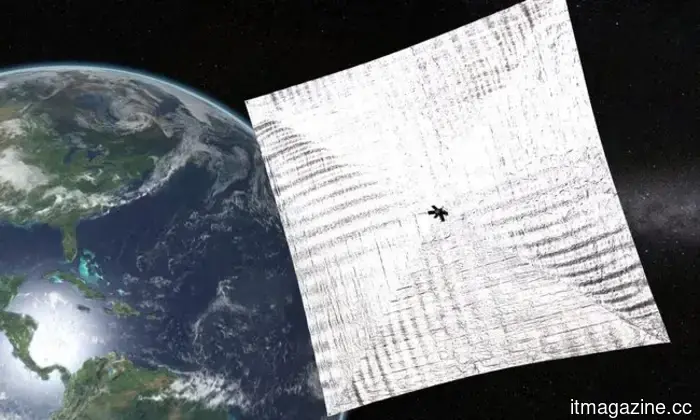
Lightsails encounter another obstacle on the path to interstellar travel.
The most intriguing idea for interstellar travel may be hindered by the light that propels it.
Laser-powered lightsails represent a fascinating solution for space travel. While it may not sound as futuristic as a warp drive, its practicality has recently come under scrutiny. Utilizing lightsails, a spacecraft could deploy an ultra-thin reflective sail and allow a powerful laser to propel it toward another star without relying on traditional fuel. The technology appears straightforward; however, it is more complicated than it seems. A new preprint from researchers Chao Shen and Jiaze Li at the Harbin Institute of Technology indicates that relativistic lightsails could encounter an unforeseen propulsion issue once they reach extremely high speeds.

Other articles
 Ashton Kutcher is departing from Sound Ventures to establish a new venture capital firm alongside Morgan Beller.
Kutcher leaves Sound Ventures after 11 years to co-found a new company with former a16z partner Morgan Beller, focusing on early-stage investments in AI, energy, and deep technology.
Ashton Kutcher is departing from Sound Ventures to establish a new venture capital firm alongside Morgan Beller.
Kutcher leaves Sound Ventures after 11 years to co-found a new company with former a16z partner Morgan Beller, focusing on early-stage investments in AI, energy, and deep technology.
 Reports indicate that SpaceX presented an AI device prototype to investors; however, Musk claims that the report is untrue.
The WSJ reports that SpaceX presented investors with a sleek AI prototype resembling a handset, which is thinner than an iPhone. Musk labeled the report as "completely false" on X.
Reports indicate that SpaceX presented an AI device prototype to investors; however, Musk claims that the report is untrue.
The WSJ reports that SpaceX presented investors with a sleek AI prototype resembling a handset, which is thinner than an iPhone. Musk labeled the report as "completely false" on X.
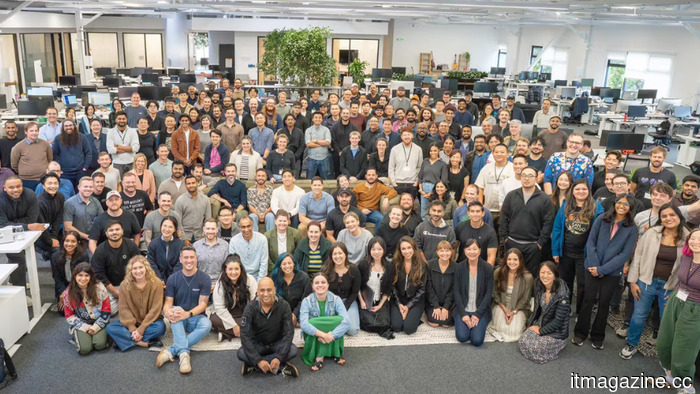 Together AI secures 800 million dollars in a Series C funding round led by Aramco Ventures.
Together AI has secured 800 million dollars in a Series C funding round, achieving a valuation of eight billion dollars, with Aramco Ventures leading the investment, driven by the increasing demand for open-source AI computing.
Together AI secures 800 million dollars in a Series C funding round led by Aramco Ventures.
Together AI has secured 800 million dollars in a Series C funding round, achieving a valuation of eight billion dollars, with Aramco Ventures leading the investment, driven by the increasing demand for open-source AI computing.
 Cambridge experts have discovered a remarkably straightforward solution for prolonging the lifespan of EV batteries: just apply some pressure.
Researchers from Cambridge discovered that by applying the appropriate constant pressure to lithium-ion battery cells, their lifespan could be doubled without altering the chemistry.
Cambridge experts have discovered a remarkably straightforward solution for prolonging the lifespan of EV batteries: just apply some pressure.
Researchers from Cambridge discovered that by applying the appropriate constant pressure to lithium-ion battery cells, their lifespan could be doubled without altering the chemistry.
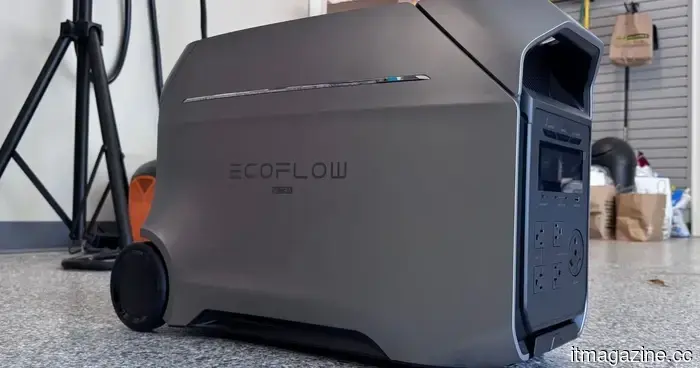 EcoFlow DELTA 3 Ultra Plus Review: Where Portability Combines with Remarkable Power
Brief Overview The EcoFlow DELTA 3 Ultra Plus is a robust portable power station designed for homeowners seeking dependable emergency backup without the need for a fixed whole-home battery system. Featuring a 3,072Wh LFP battery, a continuous inverter output of 3,600W, and the capacity to expand up to 11kWh with extra battery packs, it strikes an ideal balance. [...]
EcoFlow DELTA 3 Ultra Plus Review: Where Portability Combines with Remarkable Power
Brief Overview The EcoFlow DELTA 3 Ultra Plus is a robust portable power station designed for homeowners seeking dependable emergency backup without the need for a fixed whole-home battery system. Featuring a 3,072Wh LFP battery, a continuous inverter output of 3,600W, and the capacity to expand up to 11kWh with extra battery packs, it strikes an ideal balance. [...]
 Alibaba and its US payment processor will pay $600 million to resolve a DOJ investigation into unlawful drug sales.
Alibaba acknowledged that its platform did not stop 80,000 illegal pharmaceutical transactions amounting to more than 200 million dollars from 2016 to 2024.
Alibaba and its US payment processor will pay $600 million to resolve a DOJ investigation into unlawful drug sales.
Alibaba acknowledged that its platform did not stop 80,000 illegal pharmaceutical transactions amounting to more than 200 million dollars from 2016 to 2024.
NASA is allocating $590 million to private companies for the construction of the first Moon outpost for humanity.
NASA has granted $590 million in contracts to Astrobotic, Firefly, and Intuitive Machines for the purpose of transporting landers and cargo to the Moon, as a component of its $30 billion Moon Base initiative.