
Developers have expressed that Microsoft's three-year support period for .NET is insufficient for enterprises.
TL;DR Developers express dissatisfaction with .NET’s three-year LTS support, noting that many deployed versions are unsupported, while Java offers five years or more. A developer has reopened an ongoing concern regarding Microsoft’s support policy for the .NET platform, stating that the three-year duration for long-term support (LTS) releases is inadequate for enterprise upgrade cycles. The current model allocates three years of free support for even-numbered versions and 18 months for odd-numbered versions. Meanwhile, the legacy .NET Framework, linked to Windows and offering longer support, is increasingly being neglected by the wider ecosystem.
The primary issue, as described in a recent GitHub issue, is that by the time a new LTS release is launched, two of the three years of support for the previous version have already passed. This effectively gives enterprises about one year for upgrades, a timeframe that feels tight even for well-resourced teams. The developer also mentioned that potential customers hesitate to adopt software nearing its end-of-life date.
Another developer noted that telemetry indicated around 50 percent of the deployed versions of their software were using versions no longer supported by Microsoft. They mentioned an effort to utilize the legacy .NET Framework wherever feasible, given its support aligns with the Windows lifecycle, though this is becoming increasingly difficult as libraries and frameworks discontinue support for it.
This complaint is not new. A similar issue in 2023 prompted a response from Microsoft program manager Richard Lander, who explained that the company designed its support timelines to balance stable deployment periods with the team’s capacity for innovation. He mentioned that discussions about longer support periods and paid extended support had occurred but that the decision was made to stick with the free model.
Microsoft's free support period is notably shorter than that of some competing platforms. For instance, Oracle offers five years of premier support for Java LTS releases and additional extended support, while Python provides five years of security updates for each release. This discrepancy has become a recurring issue for enterprises relying on .NET while working within upgrade cycles that don’t align with Microsoft’s annual release schedule.
Tension resurfaced in March when a Microsoft engineer suggested eliminating legacy .NET Framework support from a database library. A developer replied that the legacy framework and its compatibility layer are currently the only .NET options with suitable support timelines for enterprise deployments. This proposal was ultimately closed as not planned, indicating that the older platform’s longer support lifecycle is still significant for many users.
The central question remains whether Microsoft’s initiative to pivot towards speed and AI can harmonize with enterprise needs for extended platform stability. This complaint arose weeks after the company’s Build developer conference, where Microsoft integrated AI more deeply into its developer tools but did not address the support-lifecycle issue. The GitHub issue remains unresolved.
Other articles
 Following the iPad Pro and MacBook Pro, the iMac may be the next device to receive an upgrade to an OLED display.
The iPad Pro received OLED technology in 2024. The MacBook Pro is next in line. The iMac has also been confirmed to be on the list, although a release date has not been provided yet.
Following the iPad Pro and MacBook Pro, the iMac may be the next device to receive an upgrade to an OLED display.
The iPad Pro received OLED technology in 2024. The MacBook Pro is next in line. The iMac has also been confirmed to be on the list, although a release date has not been provided yet.
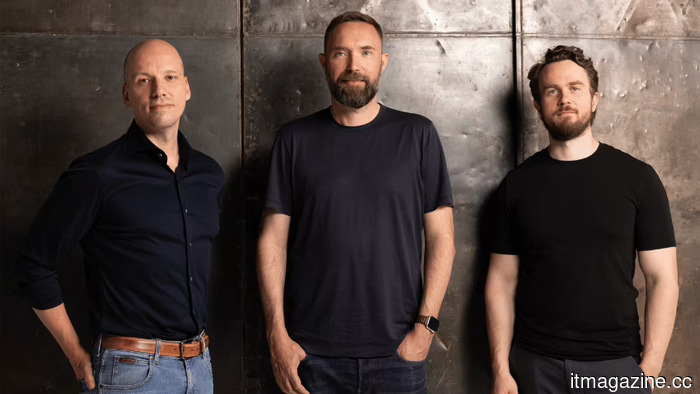 Helsing secures Germany's €580 million combat-cloud contract.
Germany is preparing a €580 million contract with the AI defense company Helsing to develop the CFSN combat-cloud software, which was repurposed from the unsuccessful FCAS fighter project.
Helsing secures Germany's €580 million combat-cloud contract.
Germany is preparing a €580 million contract with the AI defense company Helsing to develop the CFSN combat-cloud software, which was repurposed from the unsuccessful FCAS fighter project.
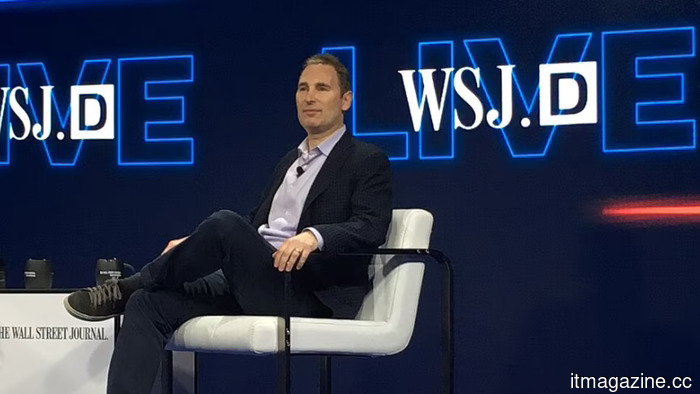 Amazon is exploring more affordable AI options as Anthropic transitions to a token-based pricing model.
Amazon is considering OpenAI as an option to replace Claude following a renegotiated contract with Anthropic that will increase expenses due to token-based pricing.
Developers believe that Microsoft's three-year support window for .NET is insufficient for enterprises.
A GitHub issue contends that Microsoft’s .NET LTS support period is insufficient for enterprise upgrade timelines, leading to 50% of deployments using unsupported versions.
Amazon is exploring more affordable AI options as Anthropic transitions to a token-based pricing model.
Amazon is considering OpenAI as an option to replace Claude following a renegotiated contract with Anthropic that will increase expenses due to token-based pricing.
Developers believe that Microsoft's three-year support window for .NET is insufficient for enterprises.
A GitHub issue contends that Microsoft’s .NET LTS support period is insufficient for enterprise upgrade timelines, leading to 50% of deployments using unsupported versions.
 Tidal sets the standards for AI music. I hope Spotify and others will adhere to them as well.
Beginning on July 15, Tidal will label all music that is 100% AI-generated, eliminate its eligibility for royalties, take down tracks that involve AI impersonation, and allow users to completely filter out AI content.
Tidal sets the standards for AI music. I hope Spotify and others will adhere to them as well.
Beginning on July 15, Tidal will label all music that is 100% AI-generated, eliminate its eligibility for royalties, take down tracks that involve AI impersonation, and allow users to completely filter out AI content.
 Why Quicker Software Is Leading to Slower Issues
The true difficulty begins once the code has been completed. The most noticeable aspect of the AI surge is straightforward to identify. A developer inputs a prompt, and a functional result emerges on the screen. A feature is assembled more swiftly than before, or a product progresses without the similar setbacks that previously characterized initial development. That [...]
Why Quicker Software Is Leading to Slower Issues
The true difficulty begins once the code has been completed. The most noticeable aspect of the AI surge is straightforward to identify. A developer inputs a prompt, and a functional result emerges on the screen. A feature is assembled more swiftly than before, or a product progresses without the similar setbacks that previously characterized initial development. That [...]
Developers have expressed that Microsoft's three-year support period for .NET is insufficient for enterprises.
A GitHub issue contends that Microsoft's .NET LTS support duration is insufficient for enterprise upgrade cycles, resulting in half of the deployments operating on unsupported versions.