

The unseen price of complacency and Jay Roland’s endeavor to tackle the technical debt crisis in corporate America.
Corporate America is losing substantial amounts of money due to inefficient IT business processes, and Jay Roland, the founder of Varex Solutions, believes the industry is becoming too complacent about this issue. Technical debt, representing the hidden costs of postponed IT fixes, misconfigurations, and other operational inefficiencies, is estimated to cost U.S. companies around $2.41 trillion annually, with $1.52 trillion needed just to address these issues. Despite these shocking figures, Roland insists that awareness of the problem remains alarmingly low.
“The figures projected only portray part of the reality,” he asserts. “The challenges faced by companies are much more significant than any statistic presented in a presentation. I've encountered organizations spending $251 million annually on IT, only to find that $51 million is wasted each year on issues they were unaware of.”
In response to the bottlenecks he identified, Roland established Varex Solutions. The firm operates at a critical juncture, addressing the discrepancy between what companies think they are spending on IT and what their actual costs are. Headquartered in Nashville, Tennessee, Varex provides a range of consulting services, including implementations of ITSM (IT Service Management) platforms, maturity evaluations, health optimizations, and guidance on SLA practices.
Roland emphasizes that the company’s primary goal is to identify bottlenecks, technical debt, misconfigurations, and workflow inefficiencies, turning these insights into actionable enhancements that boost ROI. This is facilitated by Varex’s exclusive technical debt calculator, which requires only three inputs from a company: industry type, employee count, and annual revenue.
Using these three data points, Roland's algorithm—which he notes is based on years of industrial modeling—automatically generates a comprehensive financial overview. The output aims to provide a thorough analysis of expenditures, wasted resources, actionable steps, and anticipated ROI.
“There’s no AI in this entire process. It’s all algorithmically structured technical debt assessments. There’s no value in telling someone they’re wasting money unless you can show them how to rectify it. Otherwise, it’s just noise. When I provide a figure, I can demonstrate exactly how I reached it, and your IT department can verify it.”
Unlike many who enter the industry through conventional means, Roland’s journey into IT began unexpectedly. In November 1999, he accompanied a friend to a local internet service provider in Pontiac, Michigan, planning to play video games on their T3 line. Instead, he found a broken computer placed on his desk and began repairing it. “Ten minutes later, a manager walked by, noticed my screen, and said they’d put me on the payroll,” he recalls. “That was my entry point into IT.”
He carried that ingenuity throughout a varied career that saw him navigate the dot-com crash, co-found a tech support subscription startup, and contribute to a popular role-playing game, which equipped him with the spreadsheet modeling skills vital for developing Varex. Roland considers this ability to adapt as his defining professional trait.
“No matter what I undertake, I bring all my experiences with me,” he states. “What began as projective analysis for character leveling in a Dungeons and Dragons-style game evolved into optimizing a quoting process using spreadsheet software, and ultimately into the algorithms behind Varex Solutions. You never know when those skills will come in handy.”
Growing up with limited resources and without the cushion of inherited wealth, Roland views that experience as the foundation for his refusal to accept inefficiency as simply a standard operating cost. “The same water that boils the egg also softens the potato,” he reflects. “People react differently to the same situations. It was pure will and determination that brought me here, striving to create something to provide for my children.”
He rejects the typical approach of entering a boardroom with abstract consulting promises. Instead, Roland insists on presenting executives with specific, verifiable numbers. “I demonstrate to them: this is how much you’re wasting, here’s the evidence, and this is the solution,” he explains. The calculator, he adds, was developed to bridge the gap between ambiguous projections and clear accountability.
The pushback he often faces tells its own story. “Once, I asked a CIO if I could help reveal $25 to $40 million annually in unnecessary IT expenses,” he recalls. “However, the response was one of indifference.” Roland believes this mindset persists because most executives would rather avoid a discussion about uncovering years of unnecessary waste. “Would you want to inform your CFO that you have been squandering tens of millions of dollars each year?” he questions.
The recurring question Roland poses is straightforward: how severe must a problem become before those responsible acknowledge it? How many misconfigurations must accumulate before the overall damage is no longer sustainable? This is the vital conversation that Varex Solutions aims to advance, and according to Roland, it’s already overdue.

Other articles
 OpenAI reports that 98% of its staff are currently utilizing Codex agents, although all the information is based on self-reporting.
An OpenAI paper indicates that almost all employees transitioned from chatbots to agents, with non-developer usage increasing by 137 times. However, all metrics are sourced from OpenAI itself.
OpenAI reports that 98% of its staff are currently utilizing Codex agents, although all the information is based on self-reporting.
An OpenAI paper indicates that almost all employees transitioned from chatbots to agents, with non-developer usage increasing by 137 times. However, all metrics are sourced from OpenAI itself.
 Microsoft has recently increased the prices of Xbox consoles by as much as $150.
In the US, the cost of the 512GB storage model will increase by $100, whereas the 1TB version will experience a price hike of $150.
Microsoft has recently increased the prices of Xbox consoles by as much as $150.
In the US, the cost of the 512GB storage model will increase by $100, whereas the 1TB version will experience a price hike of $150.
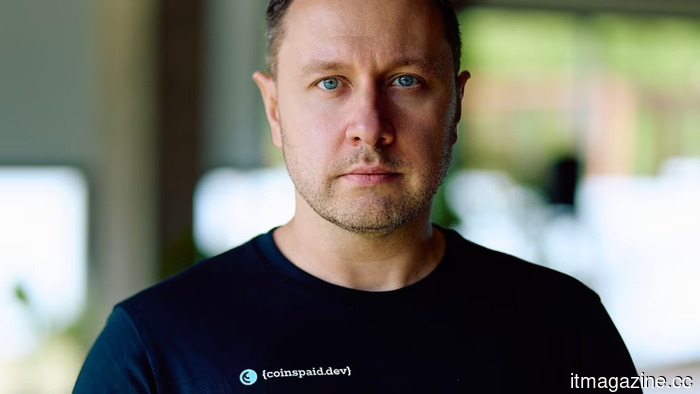 Coinspaid Dev stands out as a committed brand in blockchain infrastructure engineering.
The engineering team responsible for Coinspaid Solutions is launching as a standalone brand after over ten years of developing production blockchain infrastructure across more than 20 networks, aiming to enhance engineering standards within the digital asset ecosystem.
Coinspaid Dev stands out as a committed brand in blockchain infrastructure engineering.
The engineering team responsible for Coinspaid Solutions is launching as a standalone brand after over ten years of developing production blockchain infrastructure across more than 20 networks, aiming to enhance engineering standards within the digital asset ecosystem.
 Apple may bypass the Pro and Max versions of the M6 chip, focusing instead on the M7 for significant enhancements.
Apple might introduce the M6 chip only in a base configuration, bypassing the Pro and Max versions completely, and reserving those enhancements, along with a new Ultra variant, for the M7 series expected in early 2027.
Apple may bypass the Pro and Max versions of the M6 chip, focusing instead on the M7 for significant enhancements.
Apple might introduce the M6 chip only in a base configuration, bypassing the Pro and Max versions completely, and reserving those enhancements, along with a new Ultra variant, for the M7 series expected in early 2027.
 OpenAI states that 98% of its workforce currently utilizes Codex agents, although the data is based on self-reporting.
An OpenAI paper indicates that almost all employees transitioned from chatbots to agents, with non-developer usage increasing by 137 times. However, all metrics are sourced from OpenAI itself.
OpenAI states that 98% of its workforce currently utilizes Codex agents, although the data is based on self-reporting.
An OpenAI paper indicates that almost all employees transitioned from chatbots to agents, with non-developer usage increasing by 137 times. However, all metrics are sourced from OpenAI itself.
 Apple may bypass the Pro and Max variations for the M6 chip, focusing instead on the M7 for significant enhancements.
Apple might introduce the M6 chip only in a base configuration, completely bypassing the Pro and Max versions, and reserving those enhancements, as well as a new Ultra variant, for the M7 series set to arrive in early 2027.
Apple may bypass the Pro and Max variations for the M6 chip, focusing instead on the M7 for significant enhancements.
Apple might introduce the M6 chip only in a base configuration, completely bypassing the Pro and Max versions, and reserving those enhancements, as well as a new Ultra variant, for the M7 series set to arrive in early 2027.
The unseen price of complacency and Jay Roland’s endeavor to tackle the technical debt crisis in corporate America.
Jay Roland established Varex Solutions to demonstrate that U.S. companies are squandering billions on IT issues they are not even aware of, utilizing a unique calculator that converts three data points into a confirmed waste amount.