
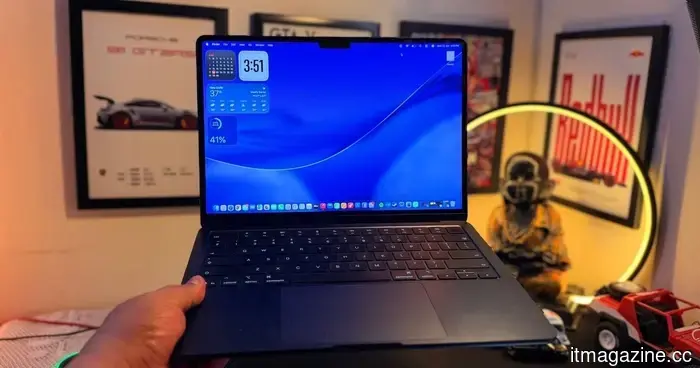
The Macflation crisis has arrived, and I narrowly escaped it.
When Apple finally succumbed to the memory shortage and raised prices for the Mac and iPad on June 25, 2026, the reactions ranged from disbelief to frustration and resigned acceptance. My response was a quiet, slightly mischievous smile, and soon, around two to three minutes from now, you’ll see exactly why.
My M1 MacBook Air (8GB, 256GB) had been struggling for some time, showing its age over the past year. It began to falter under load; opening more than 10 or 15 Chrome tabs would lead to discontented protests followed by crashes, which forced me to limit my tabs. Even casual video exports were taking much longer than before. I followed all the recommended tips to improve performance, but none made a significant impact.
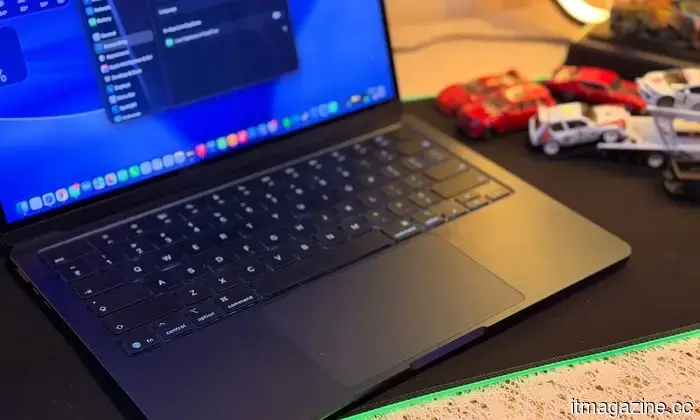
My M1 MacBook Air finally stopped working after four years.
Despite the persistent lag and slow performance urging me to buy a new laptop, I delayed the purchase for as long as I could. Then one day, my MacBook just wouldn’t power on. That was the turning point. I started weighing all the options within my budget, and one device stood out: the M4 MacBook Air.
On paper, it seemed wise to get the discounted M4 MacBook Air (13-inch). However, upon calculating the numbers, I found that the M4 model with 16GB of RAM and 256GB of storage was only $70 to $80 less than the discounted M5 model in India. That wasn’t really savings; rather, it was insignificant.
The M5 MacBook Air, for a slightly higher cost, offered double the storage at 512GB, considerably better performance, and ample room for use over the next three to four years, potentially five. That made my choice clear.
The M5 vs. M4 calculations didn’t make sense.
Apple introduced the 13-inch M5 MacBook Air in the US for $1,099. In India, the launch price was INR 119,900, roughly $1,270 at current exchange rates. I managed to save about $200 due to various discounts, which was significant as it was an unforeseen expense.
On June 15, 2026, I purchased the M5 MacBook Air in India for INR 101,824, around $1,078, through a third-party online store. Even then, I wasn’t entirely sure I had made the right choice. A part of me wondered if I should have just repaired my old MacBook.
Then, unexpectedly, Apple made me feel much better about my decision.
The twist occurred 10 days after my MacBook Air arrived when Apple raised the retail prices of many of its products, including the M5 MacBook Air.
Apple
Then Apple changed everything.
The company briefly took its entire online store offline, and when it returned, the price for the baseline M5 MacBook Air in the US increased by $200 to $1,299. In India, the price rose from about $1,270 to $1,587 (over $300). Now, even through third-party retailers, the price is in line with Apple’s earlier MSRP in the region.
I couldn’t believe my eyes when I saw the price changes. If I had hesitated a few more days, purchased from the same seller, and had it shipped from the same warehouse, I would have incurred an additional $200 expense.
The discount I received is no longer available, and there’s no indication that Apple will lower prices anytime soon.
I narrowly escaped the Macflation crisis by just 10 days.
Considering how long I intend to use this device, that margin is quite thin. The memory crisis finally caught up with Apple, and I'm just thankful I secured my MacBook before the increase.
Now, I’m curious whether Apple will hike the price of the iPhone 18 Pro later this year, as recent reports hint that the launch price won’t be favorable.
Other articles
 Your Windows 10 computer has received an additional year of security updates. Here's how to obtain it at no cost.
Millions of Windows 10 PCs that are unable to run Windows 11 have received some relief, as Microsoft has extended its free security update program until October 2027.
Your Windows 10 computer has received an additional year of security updates. Here's how to obtain it at no cost.
Millions of Windows 10 PCs that are unable to run Windows 11 have received some relief, as Microsoft has extended its free security update program until October 2027.
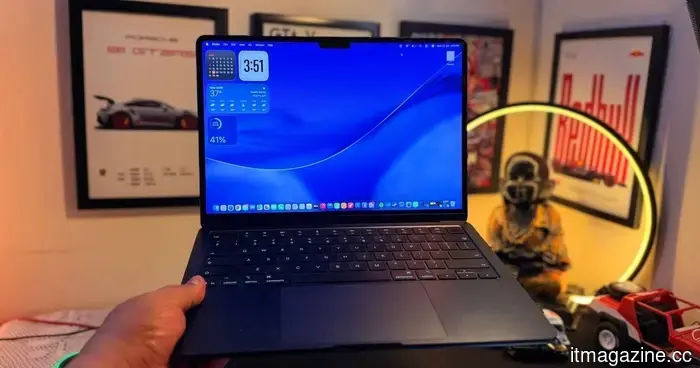 The Macflation crisis has arrived, and I narrowly escaped it.
Apple increased the prices of MacBooks this week. I purchased mine just 10 days ago, and now I feel incredibly grateful.
The Macflation crisis has arrived, and I narrowly escaped it.
Apple increased the prices of MacBooks this week. I purchased mine just 10 days ago, and now I feel incredibly grateful.
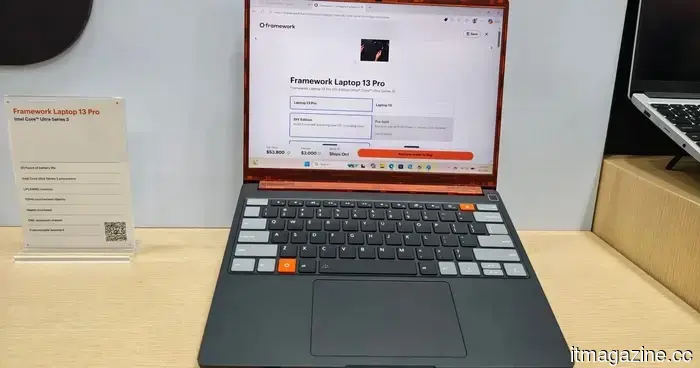 Framework discovered a method to reduce the cost of its new laptop, but hold off on the celebrations for now.
Certain purchasers of the Framework Laptop 13 Pro will receive an upgrade from 500GB to 1TB SSD storage, along with a reduction in their order price.
Framework discovered a method to reduce the cost of its new laptop, but hold off on the celebrations for now.
Certain purchasers of the Framework Laptop 13 Pro will receive an upgrade from 500GB to 1TB SSD storage, along with a reduction in their order price.
 Swatch is seeking $170 million from Samsung due to allegations of copied watch faces.
Swatch is demanding $170 million from Samsung for 26 smartwatch faces that a London court has previously determined infringed upon its trademarks. Samsung describes the amount as inflated.
Swatch is seeking $170 million from Samsung due to allegations of copied watch faces.
Swatch is demanding $170 million from Samsung for 26 smartwatch faces that a London court has previously determined infringed upon its trademarks. Samsung describes the amount as inflated.
 We finally got a glimpse of Android 17's gaming technique reminiscent of the Nintendo DS.
Android 17's foldable gaming mode divides the screen into areas for gameplay and virtual controls, giving folding phones a feel similar to that of portable gaming devices.
We finally got a glimpse of Android 17's gaming technique reminiscent of the Nintendo DS.
Android 17's foldable gaming mode divides the screen into areas for gameplay and virtual controls, giving folding phones a feel similar to that of portable gaming devices.
 YouTube Shorts is introducing double speed and a neater appearance, but it will also be removing the dislike button.
Today, four new updates for Shorts were released. While the 2x playback and Clear Screen mode are positive additions, the elimination of the dislike button may be more challenging to accept.
YouTube Shorts is introducing double speed and a neater appearance, but it will also be removing the dislike button.
Today, four new updates for Shorts were released. While the 2x playback and Clear Screen mode are positive additions, the elimination of the dislike button may be more challenging to accept.
The Macflation crisis has arrived, and I narrowly escaped it.
This week, Apple increased the prices of MacBooks. I purchased mine just 10 days ago, and now, I couldn't be more grateful.