
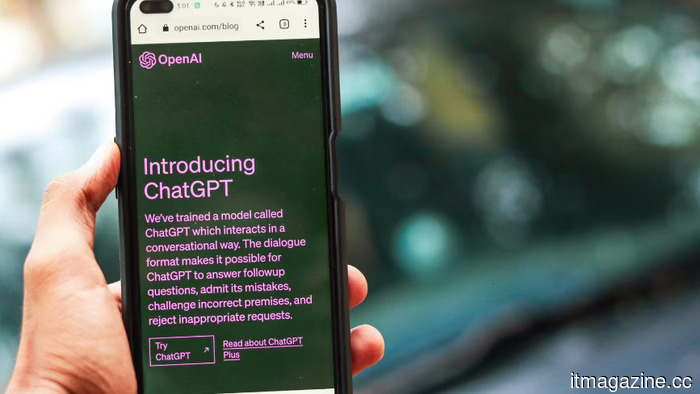
OpenAI states that 98% of its workforce is currently utilizing Codex agents, although all the information is based on self-reports.
TL;DR: OpenAI claims that 98% of its employees now use Codex agents, with non-developer adoption increasing by 137 times; however, all statistics come from the company itself, which has a vested interest in promoting its product.
According to a paper released by OpenAI titled “The Shift to Agentic AI: Evidence from Codex,” nearly 98 percent of the company's employees currently utilize Codex, their AI coding agent, a rise from about 40 percent in August 2025. The paper illustrates a significant shift in how the company's workforce engages with AI—transitioning from using conversational chatbots to autonomous agents capable of executing multi-step tasks. However, all data provided in the paper is self-reported by OpenAI, a company that directly benefits financially from promoting the product it measures.
The highlighted statistics are noteworthy: active Codex users increased fivefold in the first half of 2026, while task requests estimated to require eight or more hours surged nearly tenfold. OpenAI’s legal team generated 13 times the number of tokens in June compared to November 2025, a figure the company cites as evidence that agents are becoming prevalent in departments beyond engineering.
The growth in non-developer usage is the central focus of OpenAI’s narrative. Individual non-developer use of Codex rose 137 times since August 2025, while organizational non-developer usage increased 189 times, and internal non-developer adoption was twelve times higher. Recently, the company enhanced Codex with enterprise plugins that connect 62 business applications, with non-developers now comprising approximately 20 percent of the platform's five million weekly users, adopting it three times faster than engineers.
The paper presents this as proof of a market-wide shift from chatbots to agents. OpenAI suggests that the trend observed within its own company, where departments such as legal and recruiting regard Codex as an essential tool, indicates how enterprise AI adoption may develop more broadly. The company references external data indicating Codex usage at about 17 percent among organizations and under one percent among individuals, signifying considerable potential for growth.
However, the disparity between internal and external adoption raises questions about how representative OpenAI’s workforce is. The paper does not clarify if the company incentivizes or encourages employees to use Codex, a notable omission given that nearly universal adoption within a company selling the product should not be equated with organic demand. No third-party verification has been provided for the usage statistics.
The issue of self-reporting also extends to claims of productivity, where OpenAI asserts that longer task requests and increased token generation demonstrate that agents are managing more complex tasks. As The Register pointed out, a faster code generation rate does not necessarily lead to proportional productivity increases, as verification, testing, and deployment times might expand to accommodate the speed gains. The paper lacks data showing whether the shift to agents has improved output quality or shortened overall completion times.
In the larger context, there is competition among AI companies to establish that agents signify the next evolutionary step in the market. OpenAI unified ChatGPT and Codex under Greg Brockman in May, centralizing its product strategy around a single agentic platform in anticipation of a possible IPO in Q4. Similar agentic strategies are being pursued by Anthropic with Claude Code and Google with Gemini, creating intense competitive pressure to demonstrate growth in adoption.
Meta offers a comparable reference with its introduction of a “Claudeonomics” leaderboard in April, which tracks token consumption by team, effectively translating AI usage into a visible performance metric. This method, like OpenAI’s paper, measures input rather than output value, which is significant when the reporting companies are also the ones selling the tools.
Overall, the paper serves as an indicator of OpenAI's perspective on market direction and aims to shape investor expectations ahead of its IPO. The shift from chatbot interactions to autonomous agent actions is evident across the industry, yet whether it is occurring at the rate and scale that OpenAI's self-reported data suggests remains a question that can only be answered through independent measurement.
Other articles
 Establishing trust in AI health intelligence: the importance of privacy, transparency, and human oversight
FacialDx CEO Doug Benoit contends that to gain trust in AI-driven healthcare, it is essential to have a transparent methodology, robust privacy protections, and human supervision at each decision-making stage, rather than merely focusing on improving technology.
Establishing trust in AI health intelligence: the importance of privacy, transparency, and human oversight
FacialDx CEO Doug Benoit contends that to gain trust in AI-driven healthcare, it is essential to have a transparent methodology, robust privacy protections, and human supervision at each decision-making stage, rather than merely focusing on improving technology.
 Microsoft has recently increased the prices of Xbox consoles by as much as $150.
In the US, the cost of the 512GB storage model will increase by $100, whereas the 1TB version will experience a price hike of $150.
Microsoft has recently increased the prices of Xbox consoles by as much as $150.
In the US, the cost of the 512GB storage model will increase by $100, whereas the 1TB version will experience a price hike of $150.
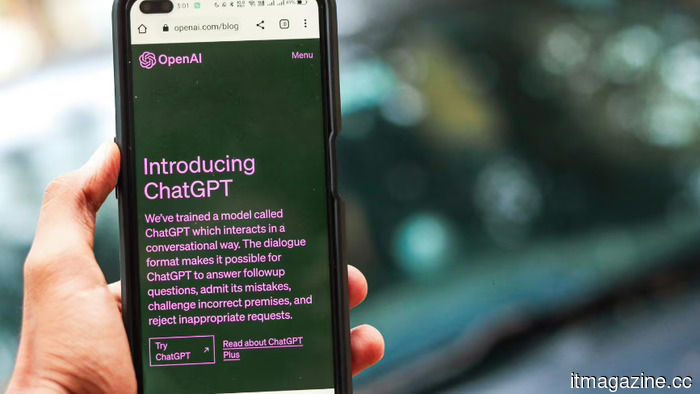 OpenAI states that 98% of its workforce currently utilizes Codex agents, although the data is based on self-reporting.
An OpenAI paper indicates that almost all employees transitioned from chatbots to agents, with non-developer usage increasing by 137 times. However, all metrics are sourced from OpenAI itself.
OpenAI states that 98% of its workforce currently utilizes Codex agents, although the data is based on self-reporting.
An OpenAI paper indicates that almost all employees transitioned from chatbots to agents, with non-developer usage increasing by 137 times. However, all metrics are sourced from OpenAI itself.
 Apple may bypass the Pro and Max variations for the M6 chip, focusing instead on the M7 for significant enhancements.
Apple might introduce the M6 chip only in a base configuration, completely bypassing the Pro and Max versions, and reserving those enhancements, as well as a new Ultra variant, for the M7 series set to arrive in early 2027.
Apple may bypass the Pro and Max variations for the M6 chip, focusing instead on the M7 for significant enhancements.
Apple might introduce the M6 chip only in a base configuration, completely bypassing the Pro and Max versions, and reserving those enhancements, as well as a new Ultra variant, for the M7 series set to arrive in early 2027.
 iPads recently saw a price increase, making this your final opportunity to save significantly with Prime Day offers.
Apple has increased iPad prices by as much as $200; however, Amazon continues to offer multiple Prime Day discounts on iPad, iPad Air, iPad mini, and iPad Pro models.
iPads recently saw a price increase, making this your final opportunity to save significantly with Prime Day offers.
Apple has increased iPad prices by as much as $200; however, Amazon continues to offer multiple Prime Day discounts on iPad, iPad Air, iPad mini, and iPad Pro models.
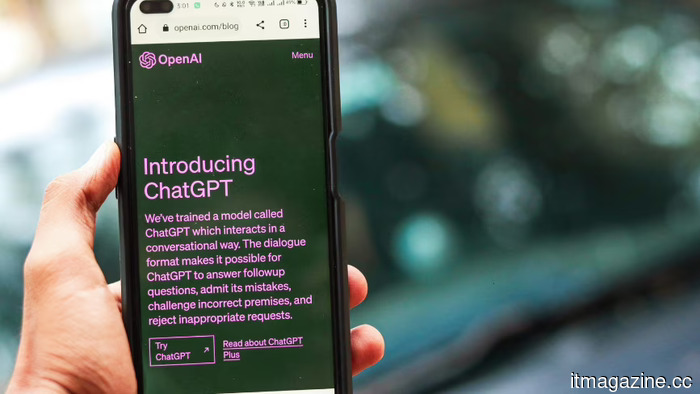 OpenAI reports that 98% of its staff are currently utilizing Codex agents, although all the information is based on self-reporting.
An OpenAI paper indicates that almost all employees transitioned from chatbots to agents, with non-developer usage increasing by 137 times. However, all metrics are sourced from OpenAI itself.
OpenAI reports that 98% of its staff are currently utilizing Codex agents, although all the information is based on self-reporting.
An OpenAI paper indicates that almost all employees transitioned from chatbots to agents, with non-developer usage increasing by 137 times. However, all metrics are sourced from OpenAI itself.
OpenAI states that 98% of its workforce is currently utilizing Codex agents, although all the information is based on self-reports.
The OpenAI paper indicates that almost all employees have transitioned from chatbots to agents, with non-developer usage increasing by 137 times. However, all metrics are sourced from OpenAI itself.