

Establishing trust in AI health intelligence: the importance of privacy, transparency, and human oversight.
Artificial intelligence is becoming a more prominent aspect of healthcare. Organizations are investigating how AI can enhance information processing and improve visibility into health-related data, covering areas from administrative tasks and clinical decision support to remote monitoring and wellness technologies. However, as adoption increases, one significant challenge persists in influencing the meaningful acceptance of these technologies.
Trust has emerged as a critical topic in the overall discussion of artificial intelligence. According to the World Economic Forum’s Global Risks Report 2026, misinformation and disinformation were ranked as the second most significant short-term global threat, while worries regarding the negative impacts of AI technologies notably increased in the report’s long-term assessment. As organizations implement AI in increasingly sensitive sectors like healthcare, these findings highlight the necessity of transparency, governance, and accountability in fostering public trust.
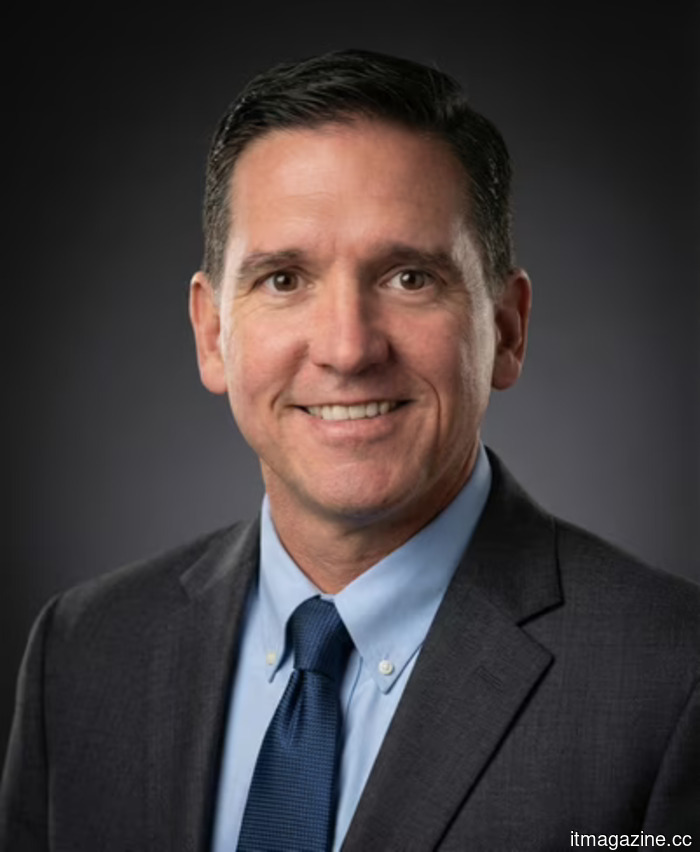
Doug Benoit, CEO of FacialDx, asserts that building trust begins with clarity. FacialDx, an AI-driven wellness intelligence company, employs facial analysis technology to recognize visual biomarkers linked to wellness indicators and offers structured observations meant to enhance awareness. Benoit points out that users are increasingly interested in understanding how conclusions are drawn instead of merely receiving results.
“People want access to the information behind the outcome,” says Benoit. “Trust increases when organizations are willing to reveal the methodology, the data, and the reasoning supporting what the technology presents.”
This expectation signifies a broader transformation occurring within healthcare and technology. Organizations face rising demands from regulators, providers, employers, and consumers to clarify how AI systems operate, how data is handled, and where human judgment plays a role. “Transparency is no longer considered an add-on,” Benoit observes. “For many stakeholders, it is becoming an essential requirement for adoption.”
Privacy also represents a vital factor. Benoit clarifies that healthcare information is among the most sensitive types of personal data, placing a considerable obligation on organizations that create AI-enabled solutions. Research indicates that AI systems managing sensitive health information provoke significant concerns regarding privacy, data protection, and the risk of data breaches, emphasizing the need to ensure that AI aids rather than eclipses the judgment of healthcare professionals. Benoit believes these factors underscore the necessity for robust governance, security measures, and clearly defined human oversight as AI increasingly integrates into health-related settings.
Benoit notes that discussions about AI have evolved significantly over the past few years. He states that many organizations have progressed beyond questioning whether AI should be employed and are now seeking to understand how it can be responsibly incorporated into existing workflows.
“The most common concern we encounter is not about the existence of AI,” Benoit explains. “Organizations want to know how it fits into their current practices, how information is safeguarded, and if the technology supports those making decisions.”
Human oversight remains a key element of this discourse. He explains that while AI can help identify patterns, organize information, and enhance efficiency, healthcare decisions often require context, judgment, and interpersonal factors that go beyond mere data analysis.
Benoit envisions AI as a supportive tool rather than a standalone authority. “Technology can help surface information more quickly and consistently,” he remarks. “However, there remains a need for human interaction. Human oversight offers accountability, interpretation, and the application of professional judgment in ways that technology alone cannot achieve.”
This distinction is increasingly crucial as organizations establish governance frameworks around AI implementation. “Successful deployment often relies on clearly clarifying a system’s intended function, what it is not meant to do, and how its results should be understood within existing professional processes,” Benoit states.
For FacialDx, this philosophy influences the company’s role within the healthcare landscape. Benoit underlines that the platform is meant to deliver wellness intelligence and observational insights, rather than definitive diagnostic conclusions. He believes that maintaining well-defined limits supports responsible usage while affirming the role of healthcare professionals in assessing information and determining the appropriate course of action.
He also emphasizes governance and controlled access as vital aspects of trust. “The aim is to make information accessible, comprehensible, and secure,” Benoit asserts. “Individuals should know who can access their data, how it is being managed, and what protections are in place.”
As AI continues to broaden its reach across healthcare, enterprise wellness, and telehealth settings, trust may ultimately determine the distinction between short-term trials and long-term adoption. Innovation is essential, but enduring success will likely hinge on whether organizations can balance technological progress with accountability, transparency, privacy protection, and human oversight.
Benoit is confident that the future of AI health intelligence will depend on achieving that balance. “The organizations that cultivate trust will be those that remain transparent, maintain focus on their purpose, and utilize AI to facilitate better decision-making,” he asserts. “When innovation and accountability advance together, people develop confidence in the technology and in its application.”
Other articles
 Microsoft has recently increased the prices of Xbox consoles by as much as $150.
In the US, the cost of the 512GB storage model will increase by $100, whereas the 1TB version will experience a price hike of $150.
Microsoft has recently increased the prices of Xbox consoles by as much as $150.
In the US, the cost of the 512GB storage model will increase by $100, whereas the 1TB version will experience a price hike of $150.
 iPads recently saw a price increase, making this your final opportunity to save significantly with Prime Day offers.
Apple has increased iPad prices by as much as $200; however, Amazon continues to offer multiple Prime Day discounts on iPad, iPad Air, iPad mini, and iPad Pro models.
iPads recently saw a price increase, making this your final opportunity to save significantly with Prime Day offers.
Apple has increased iPad prices by as much as $200; however, Amazon continues to offer multiple Prime Day discounts on iPad, iPad Air, iPad mini, and iPad Pro models.
 Coinspaid Dev has established itself as a committed brand in blockchain infrastructure engineering.
The engineering team responsible for Coinspaid Solutions is now launching as a standalone brand following over ten years of developing production blockchain infrastructure across more than 20 networks, aiming to elevate engineering standards within the digital asset ecosystem.
Coinspaid Dev has established itself as a committed brand in blockchain infrastructure engineering.
The engineering team responsible for Coinspaid Solutions is now launching as a standalone brand following over ten years of developing production blockchain infrastructure across more than 20 networks, aiming to elevate engineering standards within the digital asset ecosystem.
 OpenAI reports that 98% of its staff are currently utilizing Codex agents, although all the information is based on self-reporting.
An OpenAI paper indicates that almost all employees transitioned from chatbots to agents, with non-developer usage increasing by 137 times. However, all metrics are sourced from OpenAI itself.
OpenAI reports that 98% of its staff are currently utilizing Codex agents, although all the information is based on self-reporting.
An OpenAI paper indicates that almost all employees transitioned from chatbots to agents, with non-developer usage increasing by 137 times. However, all metrics are sourced from OpenAI itself.
 Microsoft has increased the price of Xbox consoles by as much as $150.
In the US, the 512GB storage model will increase in price by $100, whereas the 1TB version will have a price increase of $150.
Microsoft has increased the price of Xbox consoles by as much as $150.
In the US, the 512GB storage model will increase in price by $100, whereas the 1TB version will have a price increase of $150.
 Establishing trust in AI health intelligence: the importance of privacy, transparency, and human oversight
FacialDx CEO Doug Benoit contends that to gain trust in AI-driven healthcare, it is essential to have a transparent methodology, robust privacy protections, and human supervision at each decision-making stage, rather than merely focusing on improving technology.
Establishing trust in AI health intelligence: the importance of privacy, transparency, and human oversight
FacialDx CEO Doug Benoit contends that to gain trust in AI-driven healthcare, it is essential to have a transparent methodology, robust privacy protections, and human supervision at each decision-making stage, rather than merely focusing on improving technology.
Establishing trust in AI health intelligence: the importance of privacy, transparency, and human oversight.
Doug Benoit, the CEO of FacialDx, contends that to build trust in AI-driven healthcare, it is essential to have a well-defined methodology, robust privacy protections, and human oversight at every decision-making stage, rather than solely focusing on improving technology.