
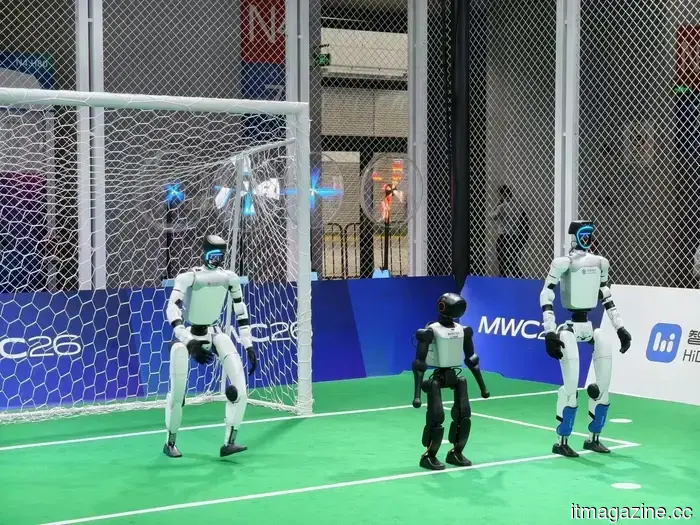
Disregard the final score; the humanoid robot penalty shootout at MWC Shanghai challenged embodied AI.
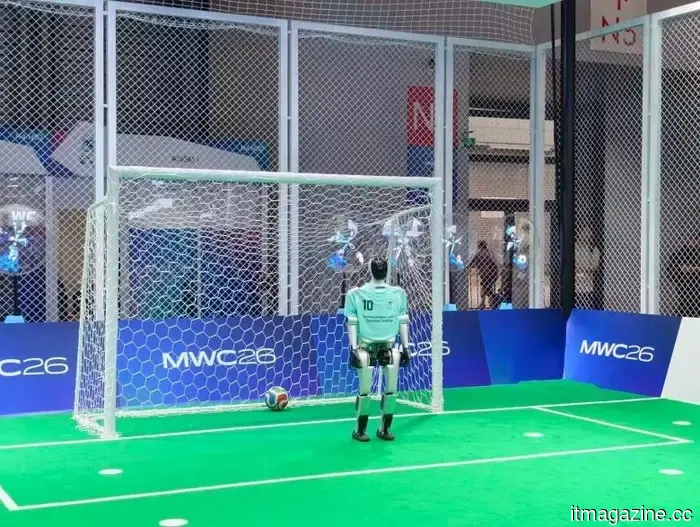
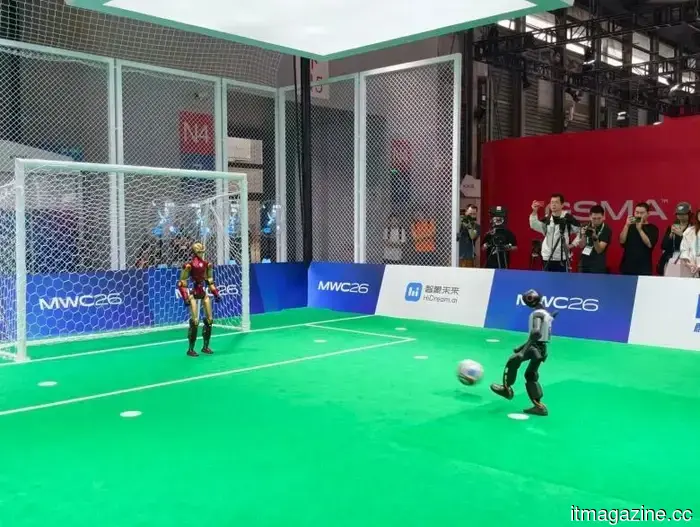
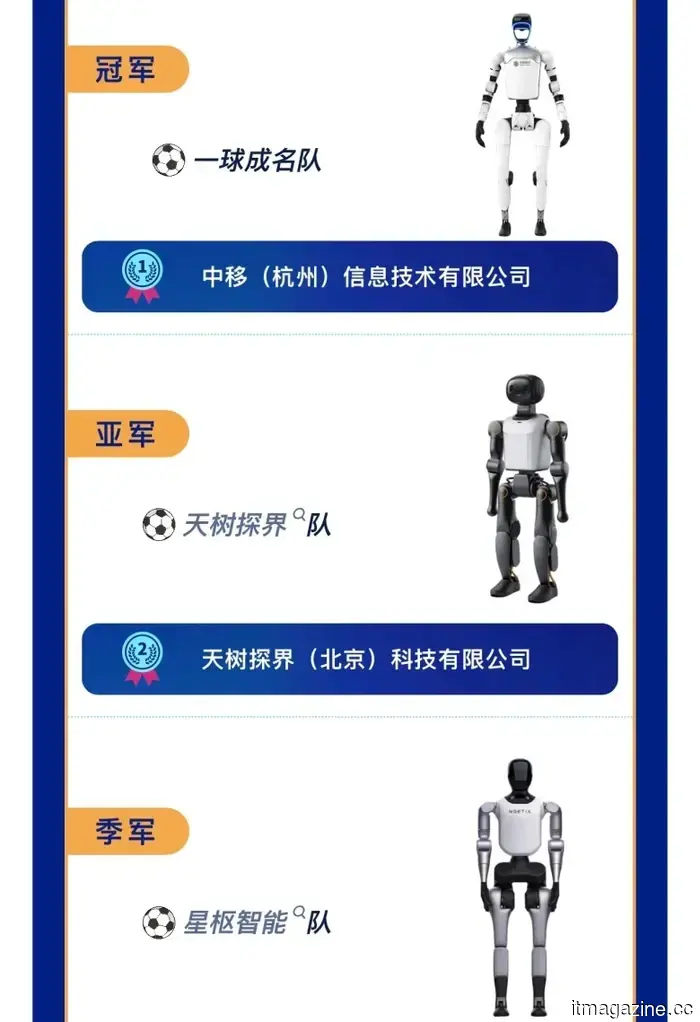
One of the main attractions at MWC Shanghai 2026 was a fully autonomous humanoid robot penalty shootout, overshadowing smartphone launches and AI keynote presentations. The event, which took place over two days at the Shanghai New International Expo Centre, attracted over 10,000 spectators as eight Chinese embodied AI teams competed in nearly 100 rounds of penalty kicks. The top three positions were secured by China Mobile (Hangzhou) Information Technology, Tianshu Tanjie (Beijing) Technology, and Hangzhou Xingshu Intelligent Robot, reflecting the advancements in China's humanoid robotics sector.
Despite the robots missing many shots during the event, the few goals they scored elicited gasps from the audience, highlighting the remarkable nature of those moments.
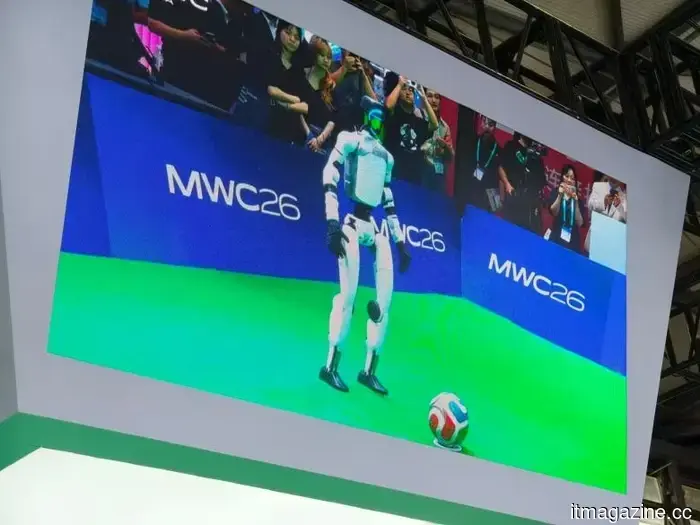
In a departure from typical robotics demonstrations, the organizer prohibited human remote control and pre-programmed motion scripts. The robots had to autonomously find the ball, position themselves, take shots, defend the goal, and regain their balance using their own perception, planning, and motion control systems. Essentially, this was not a polished exhibition, but rather a live stress test in a dynamic setting.
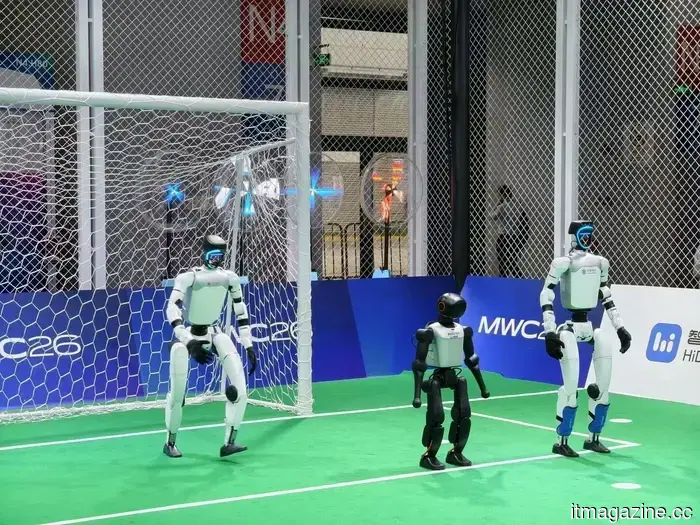
The performance disparities among the teams quickly became clear. The winning robot from China Mobile (Hangzhou) distinguished itself due to its consistency, completing multiple rounds with minimal vision errors or balance problems. Engineers on-site noted that its system integrates low-latency 5G connectivity with edge AI computing.
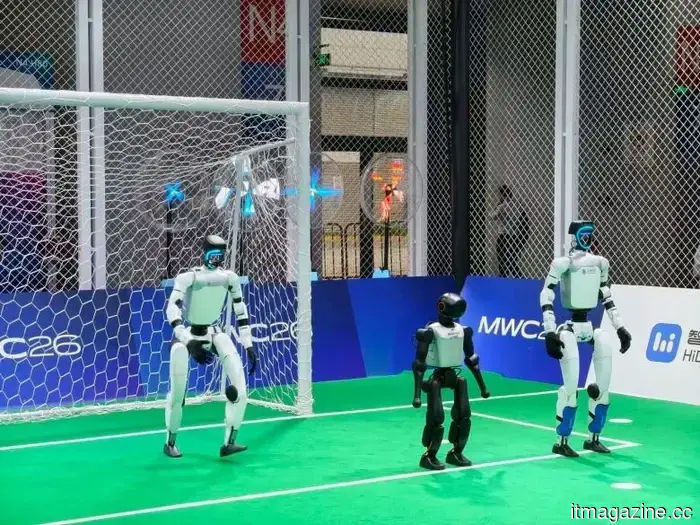
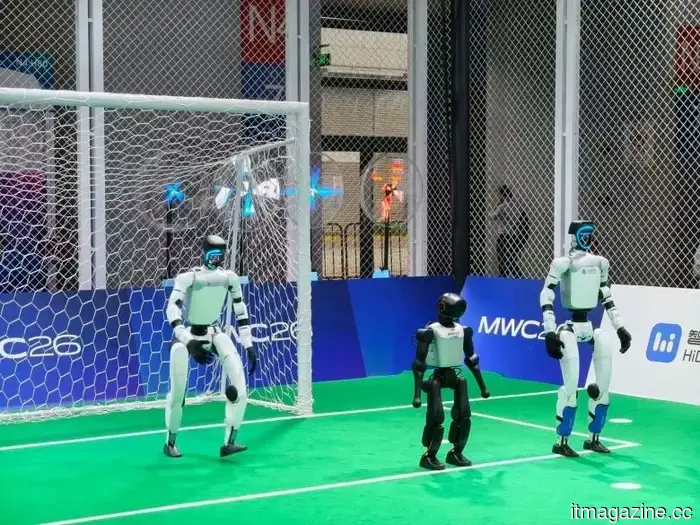
The runner-up, Tianshu Tanjie, exhibited strong motion control abilities. Its compact goalkeeper robot could adjust its stance and respond to shots from various angles with notable stability, showcasing the team’s expertise in servo control, dynamic balancing, and joint actuation.
The third-place team, Hangzhou Xingshu, represented a newer generation of startups with an alternative approach. Its lightweight platform weighs approximately 30% less than some other robots, offering greater agility in turning and repositioning. Although there were occasional movement errors, its overall performance surpassed expectations for a first competition robot.
Many attendees humorously remarked that the robots "played worse than elementary school kids," which, from a football perspective, might have been accurate. However, the aim of the competition was to assess whether humanoid robots could make autonomous decisions in an unpredictable environment rather than merely executing pre-rehearsed moves.
The arena, unlike a controlled lab setting, presented numerous variables. Robots needed to perceive their environment, plan their movements, and maintain balance in real-time. These capabilities are crucial for humanoid robots to transition from research labs to practical commercial applications.
Rather than featuring polished promotional videos, the event revealed the current state of embodied AI to the public. Although they are still a long way from becoming everyday household assistants, the progress made in recent years is increasingly hard to overlook.
Jessie Wu is a technology reporter located in Shanghai, covering consumer electronics, the semiconductor sector, and the gaming industry for TechNode. You can reach her via email at jessie.wu@technode.com.
Other articles
 iPads recently saw a price increase, making this your final opportunity to save significantly with Prime Day offers.
Apple has increased iPad prices by as much as $200; however, Amazon continues to offer multiple Prime Day discounts on iPad, iPad Air, iPad mini, and iPad Pro models.
iPads recently saw a price increase, making this your final opportunity to save significantly with Prime Day offers.
Apple has increased iPad prices by as much as $200; however, Amazon continues to offer multiple Prime Day discounts on iPad, iPad Air, iPad mini, and iPad Pro models.
 The concealed price of complacency and Jay Roland's initiative to combat the technical debt crisis in corporate America.
Jay Roland established Varex Solutions to demonstrate that American companies are squandering billions on IT issues they are unaware of, utilizing a unique calculator that converts three data points into an accurate assessment of waste.
The concealed price of complacency and Jay Roland's initiative to combat the technical debt crisis in corporate America.
Jay Roland established Varex Solutions to demonstrate that American companies are squandering billions on IT issues they are unaware of, utilizing a unique calculator that converts three data points into an accurate assessment of waste.
 The unseen price of complacency and Jay Roland’s endeavor to tackle the technical debt crisis in corporate America.
Jay Roland established Varex Solutions to demonstrate that U.S. companies are squandering billions on IT issues they are not even aware of, utilizing a unique calculator that converts three data points into a confirmed waste amount.
The unseen price of complacency and Jay Roland’s endeavor to tackle the technical debt crisis in corporate America.
Jay Roland established Varex Solutions to demonstrate that U.S. companies are squandering billions on IT issues they are not even aware of, utilizing a unique calculator that converts three data points into a confirmed waste amount.
 Disregard the score; the penalty shootout featuring humanoid robots at MWC Shanghai challenged embodied AI.
One of the main attractions at MWC Shanghai 2026 was a fully autonomous humanoid robot engaging in a penalty shootout, rather than a new smartphone release or an AI announcement.
Disregard the score; the penalty shootout featuring humanoid robots at MWC Shanghai challenged embodied AI.
One of the main attractions at MWC Shanghai 2026 was a fully autonomous humanoid robot engaging in a penalty shootout, rather than a new smartphone release or an AI announcement.
Disregard the final score; the humanoid robot penalty shootout at MWC Shanghai challenged embodied AI.
One of the major attractions at MWC Shanghai 2026 was a fully autonomous humanoid robot participating in a penalty shootout, rather than the unveiling of a smartphone or an AI.