

Samsung is planning a buyback worth 90 trillion won to finance a bonus for its chip workers.
Samsung Electronics is reportedly preparing to initiate a share buyback estimated at around 90 trillion won, marking one of the most substantial repurchase programs attempted by a South Korean firm, according to the Yonhap News Agency, which cited unnamed industry sources.
This amount translates to approximately $58.61 billion based on the current exchange rate, and the announcement led to a more than 6% increase in Samsung's stock in Seoul. The buyback is less about showing confidence in the share price and more about fulfilling an obligation to provide shares owed to its employees.
As part of a compensation agreement reached last month, the company committed to allocating about 10.5% of its operating profit as a special bonus for its staff within the Device Solutions semiconductor division, to be provided in shares instead of cash.
To meet this requirement, Samsung needs to repurchase treasury stock, which is the purpose of the 90 trillion won budget. The total cost for these bonuses is estimated to be around 154 trillion won over three years, factoring in approximately 40% withholding tax on the payouts.
The buybacks will occur in phases over three years, starting as early as July, subject to board approval and other procedural requirements, as reported. Employees will have the option to sell one-third of their bonus shares immediately, another third after one year, and the final portion after an additional year, creating a vesting schedule that will help manage the volume of shares entering the market.
The agreement was reached after a challenging negotiation. Samsung's largest labor union had prepared for an 18-day strike, which the prime minister warned could result in losses of $668 million daily, until discussions mediated by the government culminated in a tentative deal in May. Workers initially sought 15% of operating profits outlined in their contracts, while Samsung proposed 10%. Ultimately, the agreed-upon 10.5% was closer to Samsung's initial offer, but it acknowledged the principle of profit-linked compensation.
The significant size of the bonus is supported by the underlying profits generated by Samsung’s operations. The company's memory division has thrived due to the demand for high-bandwidth memory utilized in AI accelerators, making South Korea’s chipmakers key players in the Kospi.
The recent boom has altered the competitive landscape, with memory rival SK Hynix surpassing Samsung as South Korea’s most valuable publicly listed company this year for the first time in over 20 years, backed by its advantage in HBM technology.
For Samsung, executing such a large buyback not only addresses the wage agreement but also sends a broader signal. South Korean conglomerates have been under pressure from investors regarding the "Korea discount," the enduring disparity between the actual value of their assets and their share prices, often attributed to inadequate shareholder returns.
A repurchase of nearly 90 trillion won, even if primarily motivated by a bonus obligation, effectively serves as the type of capital return that foreign investors have long requested.
However, the buyback plan is not yet officially confirmed by Samsung. The company has yet to validate the program, and Yonhap characterized it as a decision anticipated to receive board approval rather than one already finalized.
The board's resolution, which may come as soon as next month, will mark the transition of the 90 trillion won figure from a mere report to an official commitment. Until then, the amount relies on sources from the industry, and the exact dollar amount will fluctuate based on the exchange rate at the time of the actual transactions.
Other articles
 Ryan Cohen of GameStop relinquishes a compensation package valued at as much as $35 billion to pursue eBay.
Ryan Cohen requested that GameStop's board withdraw his suggested performance award, which analysts estimated could be worth as much as $35 billion, in order to maintain focus on its bid for eBay.
Ryan Cohen of GameStop relinquishes a compensation package valued at as much as $35 billion to pursue eBay.
Ryan Cohen requested that GameStop's board withdraw his suggested performance award, which analysts estimated could be worth as much as $35 billion, in order to maintain focus on its bid for eBay.
 A Swiss study reveals a decrease in job advertisements for new graduates as AI transforms entry-level positions.
An analysis by Jobs.ch of 7.3 million job advertisements in Switzerland reveals a significant decline in entry-level job postings since the pre-AI era, with the most pronounced drop occurring in sectors most affected by AI.
A Swiss study reveals a decrease in job advertisements for new graduates as AI transforms entry-level positions.
An analysis by Jobs.ch of 7.3 million job advertisements in Switzerland reveals a significant decline in entry-level job postings since the pre-AI era, with the most pronounced drop occurring in sectors most affected by AI.
 ByteDance is pursuing a record offshore loan of $20 billion to finance its AI development.
According to Bloomberg, ByteDance is in preliminary discussions for an approximately $20 billion offshore loan, nearly twice its record for 2024, due to increased spending on AI infrastructure and chips.
ByteDance is pursuing a record offshore loan of $20 billion to finance its AI development.
According to Bloomberg, ByteDance is in preliminary discussions for an approximately $20 billion offshore loan, nearly twice its record for 2024, due to increased spending on AI infrastructure and chips.
 A Swiss study reveals a decline in job advertisements for entry-level positions as artificial intelligence transforms the landscape of initial employment.
An analysis by Jobs.ch of 7.3 million job advertisements in Switzerland reveals a significant decline in entry-level postings since the pre-AI era, with the most pronounced drops occurring in sectors heavily impacted by AI.
A Swiss study reveals a decline in job advertisements for entry-level positions as artificial intelligence transforms the landscape of initial employment.
An analysis by Jobs.ch of 7.3 million job advertisements in Switzerland reveals a significant decline in entry-level postings since the pre-AI era, with the most pronounced drops occurring in sectors heavily impacted by AI.
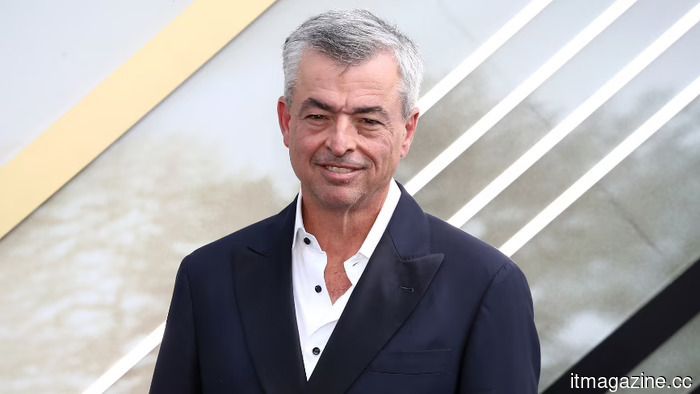 Eddy Cue from Apple states that the company aims to create 'better' and 'more' entertainment.
At the Cannes Lions event, Apple’s Eddy Cue outlined the strategy for Apple TV, emphasizing original content exclusively, prioritizing quality over quantity, and promising more offerings in the future.
Eddy Cue from Apple states that the company aims to create 'better' and 'more' entertainment.
At the Cannes Lions event, Apple’s Eddy Cue outlined the strategy for Apple TV, emphasizing original content exclusively, prioritizing quality over quantity, and promising more offerings in the future.
 HSBC has discovered that AI falls short compared to human wealth managers when it comes to the actual movement of funds.
An HSBC survey conducted among nearly 10,000 affluent investors reveals that while AI handles the research, a human advisor ultimately makes the final decision.
HSBC has discovered that AI falls short compared to human wealth managers when it comes to the actual movement of funds.
An HSBC survey conducted among nearly 10,000 affluent investors reveals that while AI handles the research, a human advisor ultimately makes the final decision.
Samsung is planning a buyback worth 90 trillion won to finance a bonus for its chip workers.
Samsung Electronics intends to execute a 90 trillion won buyback over the next three years, linked to a special bonus for its semiconductor division. Shares increased by more than 6%.