

UK considers requiring social media platforms to highlight reliable news sources.
Ministers are evaluating regulations that would facilitate the discovery of content from the BBC, ITV, and Channel 4 on platforms like Facebook, YouTube, and TikTok, as an increasing number of Britons are sourcing their news from these feeds. On Monday, the UK's culture department expressed its intention to potentially mandate social media platforms to enhance the visibility of content from public service media and other reputable news organizations in users' feeds and search results.
The Department for Culture, Media and Sport (DCMS) identified Meta’s Facebook, Alphabet’s YouTube, and TikTok as platforms that could be subject to these regulations, which aim to elevate the presence of outlets such as the BBC, ITV, and Channel 4 in the venues where people currently seek news. This consideration is informed by statistics from Ofcom, indicating that social media has become a primary news source for the majority of UK adults, and for approximately 75% of individuals aged 16 to 24.
The underlying issue is that the traditional role of broadcasters and front pages has shifted to recommendation algorithms, with publicly funded and regulated media competing for visibility against various other content in users’ feeds. A concern exists regarding what fills the void when reliable news is difficult to access. Separate research from Ofcom in 2024 revealed that 40% of UK adults encountered misinformation within a month, predominantly online.
Ministers propose the prominence rules as a possible solution, reasoning that promoting established news organizations is simpler than actively monitoring misinformation surrounding them. While the emphasis is on prominence, this proposal is part of a broader reevaluation of public service broadcasting amid the streaming era.
DCMS is also contemplating expanding public service media status to include online-only providers, a category that was not considered under the current framework. This could extend benefits and responsibilities associated with such designations beyond traditional broadcasters.
Additionally, two more measures are being considered. The department is deliberating whether to broaden current free-to-air protections that cover significant sporting events to include on-demand viewing, ensuring that highlights and replays remain accessible without paywalls. It is also preparing to initiate discussions on a shift towards internet-based television, with a planned transition from traditional broadcast signals expected between 2034 and 2044.
The platforms are likely to resist these measures, as companies in similar positions have previously claimed that prominence rules undermine user choice by replacing individuals' preferences with regulators' decisions about content visibility. They have also cautioned that favoring designated news providers could marginalize other creators, who might find themselves ranked lower than state-selected outlets.
The debate surrounding YouTube’s policies concerning creators has highlighted how quickly content visibility issues can become contentious. This initiative aligns with a broader European desire to assert control over digital infrastructures shaping public life—evident in content regulations and tech sovereignty discussions across Europe.
Although Britain has exited the European Union, it continues to grapple with the same platforms and is exploring how far a national regulator can influence their ranking systems. As it stands, no definitive conclusions have been drawn. These measures remain under review, and the consultations, along with any resulting legislation, will take several months at minimum.
The mentioned platforms have yet to provide an official response, and the specifics of how prominence would be gauged and implemented still need to be defined. The department has, however, indicated its direction, warning major social networks that the question of which news content is prioritized is not solely theirs to determine.
Другие статьи
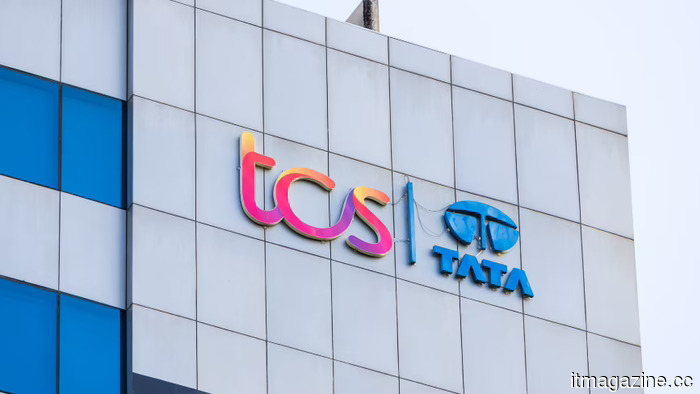 Tata Electronics breach reportedly reveals trade secrets of Apple and Tesla.
A ransomware gang claims to have stolen 630GB of data from Tata Electronics in India, which allegedly includes files related to components for Apple and Tesla. Tata has acknowledged the breach, but the authenticity of the files has not been verified.
Tata Electronics breach reportedly reveals trade secrets of Apple and Tesla.
A ransomware gang claims to have stolen 630GB of data from Tata Electronics in India, which allegedly includes files related to components for Apple and Tesla. Tata has acknowledged the breach, but the authenticity of the files has not been verified.
 IBM collaborates with OpenAI's cyber initiative to incorporate advanced AI into enterprise security.
IBM has become a member of OpenAI’s Daybreak Cyber Partner Program and introduced an AI application-security service that accelerates the detection of software vulnerabilities.
IBM collaborates with OpenAI's cyber initiative to incorporate advanced AI into enterprise security.
IBM has become a member of OpenAI’s Daybreak Cyber Partner Program and introduced an AI application-security service that accelerates the detection of software vulnerabilities.
 The UK considers requiring social media platforms to highlight reliable news sources.
The culture department of Britain is contemplating regulations that would mandate Facebook, YouTube, and TikTok to ensure that news from the BBC, ITV, and Channel 4 is more accessible in searches and feeds.
The UK considers requiring social media platforms to highlight reliable news sources.
The culture department of Britain is contemplating regulations that would mandate Facebook, YouTube, and TikTok to ensure that news from the BBC, ITV, and Channel 4 is more accessible in searches and feeds.
 BP, Walmart, and 7-Eleven have been sued regarding petrol prices set by AI in California.
Drivers in California have filed a lawsuit against BP, Walmart, 7-Eleven, and three other companies, claiming that an AI pricing tool was utilized to synchronize increased fuel prices.
BP, Walmart, and 7-Eleven have been sued regarding petrol prices set by AI in California.
Drivers in California have filed a lawsuit against BP, Walmart, 7-Eleven, and three other companies, claiming that an AI pricing tool was utilized to synchronize increased fuel prices.
 Micron and Anthropic have entered into a multi-year agreement for AI memory supplies.
Micron and Anthropic have entered into a multi-year contract that includes the supply of AI memory and storage, the integration of Claude within Micron, and an investment by Micron in Anthropic.
Micron and Anthropic have entered into a multi-year agreement for AI memory supplies.
Micron and Anthropic have entered into a multi-year contract that includes the supply of AI memory and storage, the integration of Claude within Micron, and an investment by Micron in Anthropic.
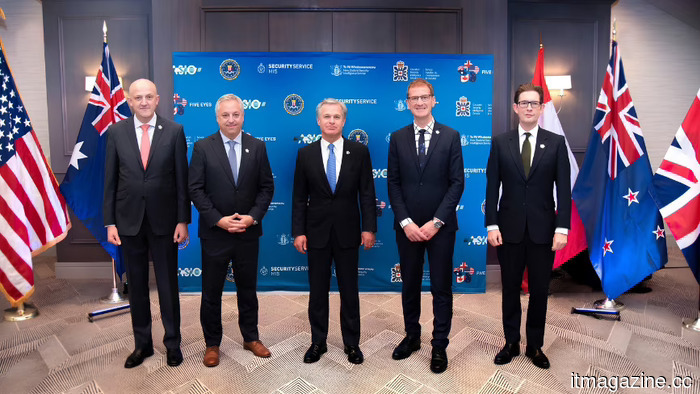 The Five Eyes alliance has cautioned that cyber threats from advanced frontier AI are just "months" away.
The Five Eyes intelligence alliance has cautioned that advanced AI, which could significantly enhance cyberattacks, is only a few months away from being publicly available, rather than years.
The Five Eyes alliance has cautioned that cyber threats from advanced frontier AI are just "months" away.
The Five Eyes intelligence alliance has cautioned that advanced AI, which could significantly enhance cyberattacks, is only a few months away from being publicly available, rather than years.
UK considers requiring social media platforms to highlight reliable news sources.
Britain's culture department is contemplating regulations that would mandate Facebook, YouTube, and TikTok to enhance the visibility of BBC, ITV, and Channel 4 news in their feeds and search results.