
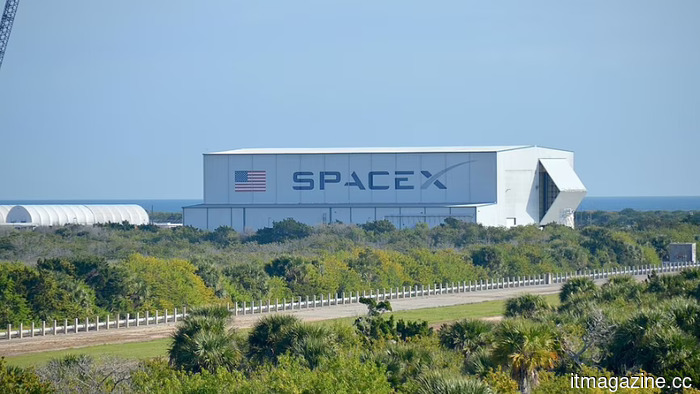
SpaceX's deal with Reflection AI: $6.3 billion for computing resources.
Reflection AI will be paying SpaceX $150 million monthly for Nvidia chips at Colossus 2, a contract estimated to total approximately $6.3 billion by 2029. This deal positions Nvidia on both ends of the transaction.
SpaceX has secured another major computing client, this time in the form of Reflection AI, an open-source startup that is hardly two years old. Reflection will pay $150 million a month to utilize Nvidia chips at SpaceX’s data center in Memphis, with payments starting from July 1, 2026, through 2029, accumulating to around $6.3 billion, as reported by CNBC. The Information was the first to disclose the agreement. Either party has the option to exit the deal with 90 days’ notice after the initial three months, and the computational tasks will utilize Nvidia’s latest GB300 systems.
Nvidia plays a dual role in this arrangement. The company manufactures the chips involved in the deal and is also an investor in Reflection. Tech Funding News indicated that Nvidia invested approximately $800 million in the startup last year. Thus, the same company both supplies the hardware and financially supports the customer using it.
This circularity is becoming increasingly prevalent in the AI development landscape, with capital and silicon circulating among a select group of companies, consistently appearing on both sides of contracts.
Regarding the founders, Reflection was established in 2024 by Misha Laskin and Ioannis Antonoglou, the latter of whom contributed to the development of AlphaGo at Google DeepMind. The startup raised $2 billion last October, achieving an $8 billion valuation with backing from Nvidia, Sequoia, and Lightspeed. Recently, it is attempting to raise additional funds at a valuation of $25 billion, according to Bloomberg.
Reflection has yet to release a public frontier model. Its focus is on open weights, which provides a clear distinction from closed labs like OpenAI and Anthropic. The company stated, “More compute means more runway to build the world’s best open models at scale,” framing its efforts as “American open intelligence.” It is also connected to AI projects within the Energy Department’s Genesis Mission and the Pentagon.
As for SpaceX, it has transitioned into a computing landlord. Colossus was developed for xAI’s Grok and has since been repurposed as a rental operation, partly due to challenges in utilizing the data center for its own models. Reflection is the latest addition to a rapidly expanding roster of tenants. SpaceX already leases capacity to Anthropic for roughly $1.25 billion a month and to Google for $920 million monthly.
Additionally, SpaceX is scaling up its approach with the option to purchase the AI coding startup Cursor for $60 billion following its record IPO. Collectively, these contracts are projected to bring in over $80 billion in committed compute revenue for SpaceX through 2029, as per Tech Funding News.
Colossus 2 is the more recent of SpaceX’s two campuses in Memphis, with the original Colossus 1 currently housing over 220,000 Nvidia GPUs. SpaceX aims for the broader complex to achieve two gigawatts of power, which would position Memphis among the largest AI compute concentrations globally.
Investors remain cautious regarding this strategy, as SpaceX's shares experienced a significant decline after its June IPO, despite the accumulation of compute contracts.
In conclusion, while the Reflection deal is relatively small compared to the Anthropic agreement—amounting to $150 million a month, roughly an eighth of Anthropic's payment—it signifies important developments. SpaceX’s compute division is now backing the open-source facet of the AI competition, though its growth narrative still largely hinges on Grok. For Nvidia, this transaction represents yet another case of the company supplying the necessary tools while also holding a stake in the venture.
Other articles
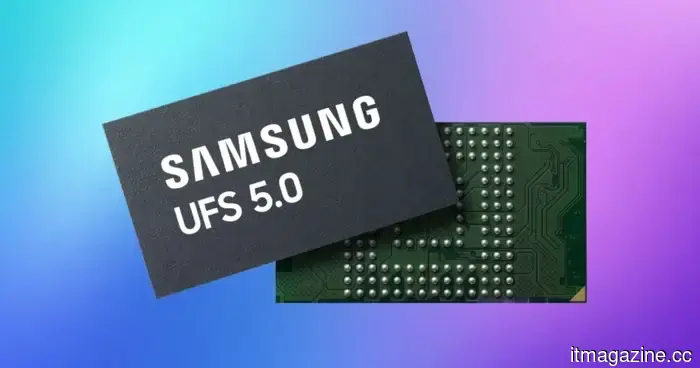 Samsung's latest UFS 5.0 chip offers improved on-device AI performance and extended battery life for your smartphone.
Samsung has introduced its quickest UFS 5.0 storage chip to date, achieving transfer speeds of 10.8GB per second to enhance on-device AI performance.
Samsung's latest UFS 5.0 chip offers improved on-device AI performance and extended battery life for your smartphone.
Samsung has introduced its quickest UFS 5.0 storage chip to date, achieving transfer speeds of 10.8GB per second to enhance on-device AI performance.
 Devil May Cry has just arrived on your Switch 2, and it’s available for only $30 until July 7.
Devil May Cry 5: Devil Hunter Edition is making its debut on Switch 2, marking its first appearance on a portable Nintendo device, and is available for $30 until July 7.
Devil May Cry has just arrived on your Switch 2, and it’s available for only $30 until July 7.
Devil May Cry 5: Devil Hunter Edition is making its debut on Switch 2, marking its first appearance on a portable Nintendo device, and is available for $30 until July 7.
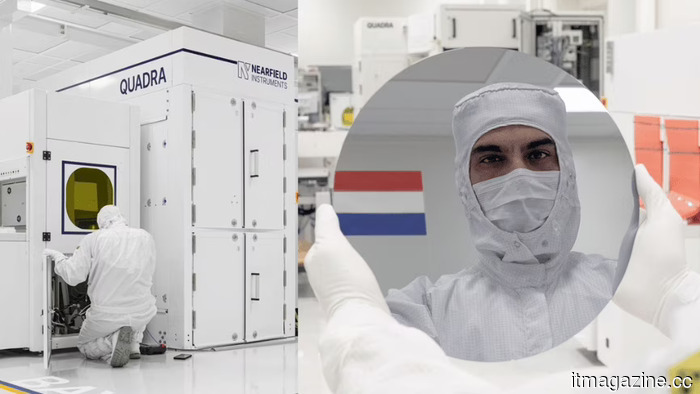 Nearfield Instruments achieves a record $380 million in chip funding.
Nearfield Instruments has secured $380 million at a valuation of $1.6 billion, marking the largest deep-tech funding round in Dutch history, driven by the increasing importance of AI in chip inspection.
Nearfield Instruments achieves a record $380 million in chip funding.
Nearfield Instruments has secured $380 million at a valuation of $1.6 billion, marking the largest deep-tech funding round in Dutch history, driven by the increasing importance of AI in chip inspection.
 The cybersecurity sector has created a $200 billion industry by selling you problems, while no one has been compensated for resolving them.
The cybersecurity market has excelled in discovery but has overlooked remediation. Reclaim Security contends that the next stage of the industry will be characterized by the effectiveness with which organizations address known risks, rather than the quantity of risks they can identify.
The cybersecurity sector has created a $200 billion industry by selling you problems, while no one has been compensated for resolving them.
The cybersecurity market has excelled in discovery but has overlooked remediation. Reclaim Security contends that the next stage of the industry will be characterized by the effectiveness with which organizations address known risks, rather than the quantity of risks they can identify.
 Groq has raised $650 million to rebuild itself following Nvidia's dominance.
Groq has announced a $650 million funding round to transform into an AI inference cloud, six months following Nvidia's acquisition of its founder and the licensing of its chip technology.
Groq has raised $650 million to rebuild itself following Nvidia's dominance.
Groq has announced a $650 million funding round to transform into an AI inference cloud, six months following Nvidia's acquisition of its founder and the licensing of its chip technology.
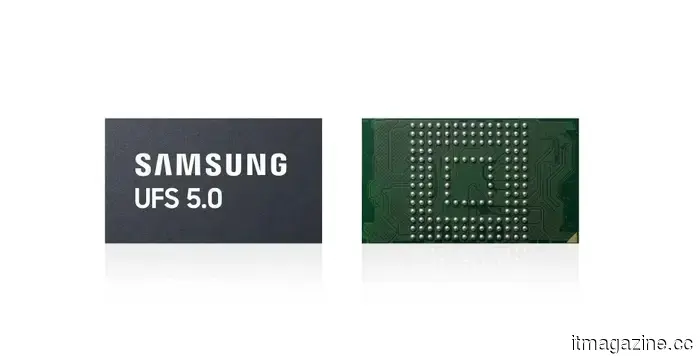 Samsung's latest UFS 5.0 chip offers enhanced on-device AI performance and improves your smartphone's battery life.
Samsung has introduced its quickest UFS 5.0 storage chip to date, achieving transfer speeds of 10.8GB per second to enhance on-device AI performance.
Samsung's latest UFS 5.0 chip offers enhanced on-device AI performance and improves your smartphone's battery life.
Samsung has introduced its quickest UFS 5.0 storage chip to date, achieving transfer speeds of 10.8GB per second to enhance on-device AI performance.
SpaceX's deal with Reflection AI: $6.3 billion for computing resources.
Reflection AI will compensate SpaceX with $150 million per month for computing services until 2029. This agreement between SpaceX and Reflection AI places Nvidia in a unique position, benefiting from both sides of the transaction.