
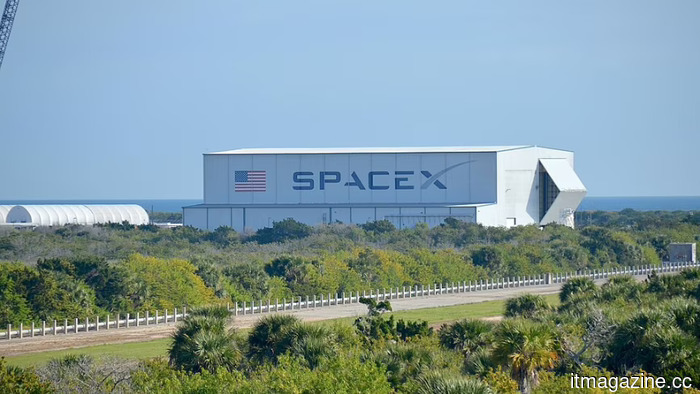
SpaceX's Reflection AI agreement: $6.3 billion for computing resources.
Reflection AI will pay SpaceX $150 million monthly for Nvidia chips at Colossus 2, resulting in a deal valued at approximately $6.3 billion by 2029. This agreement positions Nvidia on both sides of the transaction.
SpaceX has secured another significant computing tenant in Reflection AI, an open-source startup that has been operational for less than two years. Reflection will pay $150 million each month to lease Nvidia chips at SpaceX's Colossus 2 data center in Memphis, with payments starting on July 1, 2026, until 2029, totaling around $6.3 billion, as reported by CNBC.
The deal was initially disclosed by The Information. Both parties have the option to exit with 90 days' notice after the initial three-month period, and the computing will utilize Nvidia’s latest GB300 systems.
Nvidia finds itself on both sides of this deal. The structure is unusual: Nvidia produces the chips used in the agreement and is also an investor in Reflection. According to Tech Funding News, Nvidia invested approximately $800 million into the startup last year. As a result, the same company provides the hardware and funds the client who rents it.
This kind of circular relationship is becoming increasingly common in the AI sector, where funding and technology circulate among a select group of companies that repeatedly feature in various agreements.
Reflection AI was established in 2024 by Misha Laskin and Ioannis Antonoglou, both of whom previously worked at Google DeepMind, with Antonoglou being involved in the development of AlphaGo. The startup raised $2 billion last October at an $8 billion valuation, backed by Nvidia, Sequoia, and Lightspeed. Reports indicate it is now seeking additional funding at a valuation of $25 billion.
Though Reflection has not yet released a public frontier model, its focus is on open weights, contrasting with the closed models of companies like OpenAI and Anthropic. “More compute translates to more runway for developing the world’s best open models at scale,” the company stated, characterizing its mission as “American open intelligence.” The startup also has connections to the Energy Department’s Genesis Mission and Pentagon AI initiatives.
SpaceX has transitioned into the role of a compute landlord. The Colossus facility was originally built for xAI’s Grok but has since been repurposed for renting. The inability to utilize the data center effectively for its own models prompted this shift.
Reflection is the latest addition to a growing list of tenants. Currently, SpaceX also leases capacity to Anthropic for approximately $1.25 billion monthly and to Google for $920 million monthly. Furthermore, SpaceX is exploring higher stakes and has an option to acquire the AI coding firm Cursor for $60 billion following its record IPO.
Collectively, these contracts provide SpaceX with over $80 billion in guaranteed compute revenue through 2029, according to Tech Funding News.
Colossus 2 is the newer facility among SpaceX's two campuses in Memphis. The original Colossus 1 already hosts over 220,000 Nvidia GPUs. SpaceX aims for the broader complex to achieve two gigawatts of power, which would position Memphis as one of the largest AI compute aggregations worldwide.
Investors are still evaluating this strategy, as SpaceX shares experienced a significant decline after its June IPO, even with the accumulation of compute agreements.
In summary, while the Reflection deal is relatively small compared to the Anthropic agreement, at $150 million per month, it represents about one-eighth of what Anthropic pays. Nonetheless, its importance lies in its implications: SpaceX’s computing division now supports the open-source aspect of the AI competition, even as its IPO growth narrative remains dependent on Grok. For Nvidia, it’s yet another case of supplying essential components while holding a stake in the operation.
Other articles
 These Tineco offers include an additional discount that many shoppers may overlook.
Early Prime Day deals are here, and Tineco is providing discounts on several of its top floor care products from June 23 to June 26. Additionally, readers of Digital Trends can enhance their savings on sale prices by applying the exclusive code DIGITALTRENDS for an extra 6% off all Tineco devices (excluding […]
These Tineco offers include an additional discount that many shoppers may overlook.
Early Prime Day deals are here, and Tineco is providing discounts on several of its top floor care products from June 23 to June 26. Additionally, readers of Digital Trends can enhance their savings on sale prices by applying the exclusive code DIGITALTRENDS for an extra 6% off all Tineco devices (excluding […]
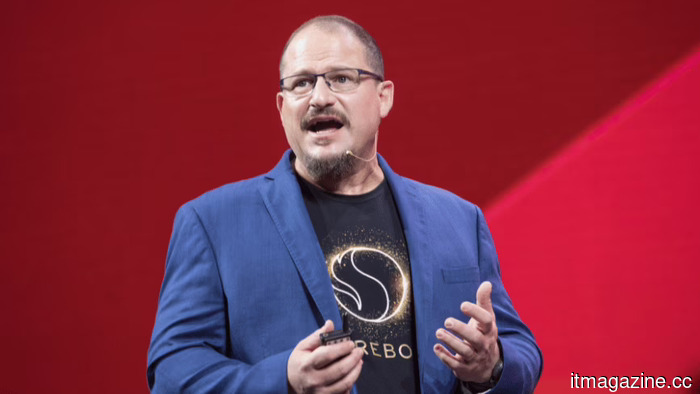 Qualcomm's modular agreement is approaching a $4 billion value to compete with Nvidia.
The Qualcomm Modular agreement would assess the AI-infrastructure software startup at approximately $4 billion, as the chip manufacturer expands its competition against Nvidia.
Qualcomm's modular agreement is approaching a $4 billion value to compete with Nvidia.
The Qualcomm Modular agreement would assess the AI-infrastructure software startup at approximately $4 billion, as the chip manufacturer expands its competition against Nvidia.
 Asus ROG Rapture GT-BE19000AI Router Review: An Excellent, Future-Ready Upgrade
The Asus ROG Rapture GT-BE19000AI is an impressive Wi-Fi router equipped with significant features and avoids the need for a subscription. However, at a price of $899, you really need to desire it in order to purchase one.
Asus ROG Rapture GT-BE19000AI Router Review: An Excellent, Future-Ready Upgrade
The Asus ROG Rapture GT-BE19000AI is an impressive Wi-Fi router equipped with significant features and avoids the need for a subscription. However, at a price of $899, you really need to desire it in order to purchase one.
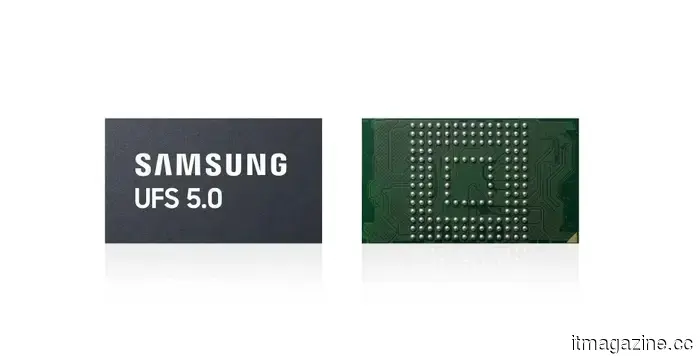 Samsung's latest UFS 5.0 chip offers enhanced on-device AI performance and improves your smartphone's battery life.
Samsung has introduced its quickest UFS 5.0 storage chip to date, achieving transfer speeds of 10.8GB per second to enhance on-device AI performance.
Samsung's latest UFS 5.0 chip offers enhanced on-device AI performance and improves your smartphone's battery life.
Samsung has introduced its quickest UFS 5.0 storage chip to date, achieving transfer speeds of 10.8GB per second to enhance on-device AI performance.
 The MGX AI fund reaches $50 billion as Abu Dhabi seeks to attract external investors.
Abu Dhabi's MGX AI fund has garnered almost $50 billion from external investors and is currently allocating these funds to OpenAI, xAI, semiconductor companies, and data centers.
The MGX AI fund reaches $50 billion as Abu Dhabi seeks to attract external investors.
Abu Dhabi's MGX AI fund has garnered almost $50 billion from external investors and is currently allocating these funds to OpenAI, xAI, semiconductor companies, and data centers.
 Astral Systems aims to raise £23 million to focus on cancer isotopes.
The £23M funding raise by Astral Systems will enhance the production of medical isotopes for cancer imaging, coming from a rare fusion company that is already operating reactors and generating income.
Astral Systems aims to raise £23 million to focus on cancer isotopes.
The £23M funding raise by Astral Systems will enhance the production of medical isotopes for cancer imaging, coming from a rare fusion company that is already operating reactors and generating income.
SpaceX's Reflection AI agreement: $6.3 billion for computing resources.
Reflection AI will compensate SpaceX with $150 million monthly for computing services until 2029. The agreement between SpaceX and Reflection AI positions Nvidia on both ends of the transaction.