
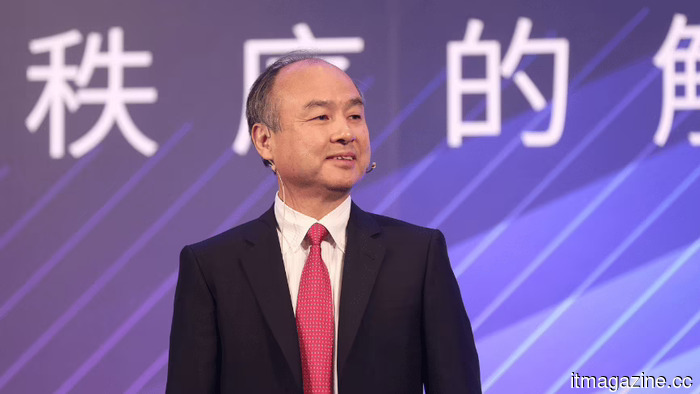
Masayoshi Son regards Musk's space data centers as a gamble in the AI competition.
Masayoshi Son does not believe that the future of artificial intelligence lies in space. The founder of SoftBank Group informed shareholders on June 23, 2026, that constructing data centers in orbit holds little value, an idea promoted by Elon Musk, and forecasted that the AI competition would ultimately be won by computing resources firmly positioned on Earth.
Son shared these insights during the annual meeting for SoftBank’s mobile division, as reported by Bloomberg, arguing his point with cost analysis rather than opposing ambitious visions. He stated that the only benefit of orbital data centers is lower electricity costs, generated from solar panels unobstructed by the atmosphere. However, he emphasized that electricity comprises just a minor portion of data center operational costs, with the majority coming from the expensive hardware, especially chips.
Son pointed out that any savings on electricity in space would likely be offset by the high expenses related to transporting equipment into orbit, ongoing maintenance, and dealing with the communication lags associated with operating servers located hundreds of kilometers above the Earth. While savings could be genuine, he argued they are insignificant compared to the substantial penalties, leading to a net negative outcome.
His timing is just as critical as his calculations. “In the race for AI, the next few years are far more significant than what may occur a decade down the road,” Son stated, according to Seeking Alpha. Space-based data centers are, by definition, long-term projects, and Son is wagering that the outcome of this battle for AI will be determined well before the satellites can be deployed.
Though he did not specifically name his target of skepticism, it is closely linked to Musk, who has proposed launching large networks of orbital data centers, and to Jeff Bezos, who has promoted similar initiatives. Both advocates argue that space provides constant sunlight and lacks nearby complaints regarding heat, water, or noise, issues that increasingly restrict land-based solutions.
SpaceX has acknowledged some of the challenges, with filings indicating that orbital data centers may not be feasible. Son's caution is noteworthy, especially considering his history of embracing ambitious technological bets, and his views add a significant perspective to the ongoing debate among scientists about the complexities of cooling and powering computers in a vacuum.
The heat generated by a densely packed arrangement of chips needs to be managed, and in the vacuum of space, dissipating that heat poses a formidable challenge, which is often overlooked in promotional materials.
Despite this, the concept of orbit-based solutions continues to emerge since terrestrial data centers are facing strain due to limitations in grid capacity, water, and land resources. This is why space has been suggested as a potential solution to the energy demands of AI. However, Son argues that addressing the problem with space solutions would be more costly in the short term.
Timing also plays a crucial role in this competition. SoftBank has invested heavily in AI through its Vision Fund and its stake in Arm, and Son has linked his legacy to achieving success in technology now rather than in the distant future. He views a competitor dedicating the next few years to placing servers in orbit as one who risks being sidetracked from the relevant contest. His statement serves as a caution that the ambitious space endeavor might overlook the critical moment.
SoftBank has not provided any specifics regarding changes to its infrastructure plans following these comments, and Son was addressing investors rather than outlining a strategy.
Other articles
 WiseTech's stock declines as founder Richard White refutes a trafficking allegation.
WiseTech founder Richard White has rejected any connection to human trafficking following reports of a police investigation into a visa-for-sex allegation. Shares experienced a significant drop.
WiseTech's stock declines as founder Richard White refutes a trafficking allegation.
WiseTech founder Richard White has rejected any connection to human trafficking following reports of a police investigation into a visa-for-sex allegation. Shares experienced a significant drop.
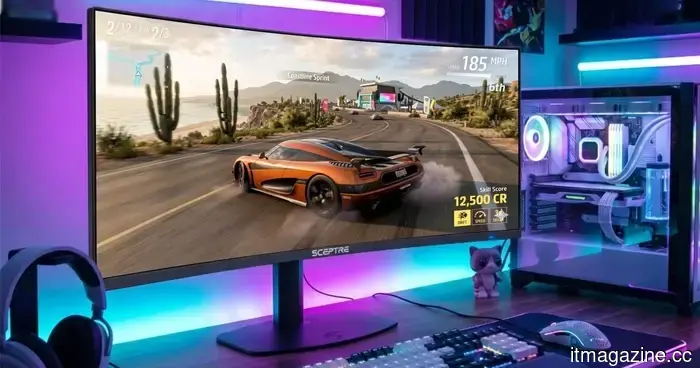 Sceptre Prime Day 2026 Gaming Monitor Discounts: Save Up to $100 on Gaming Displays
Prime Day is an excellent opportunity to enhance your gaming setup, and Sceptre is providing discounts on its range of gaming monitors.
Sceptre Prime Day 2026 Gaming Monitor Discounts: Save Up to $100 on Gaming Displays
Prime Day is an excellent opportunity to enhance your gaming setup, and Sceptre is providing discounts on its range of gaming monitors.
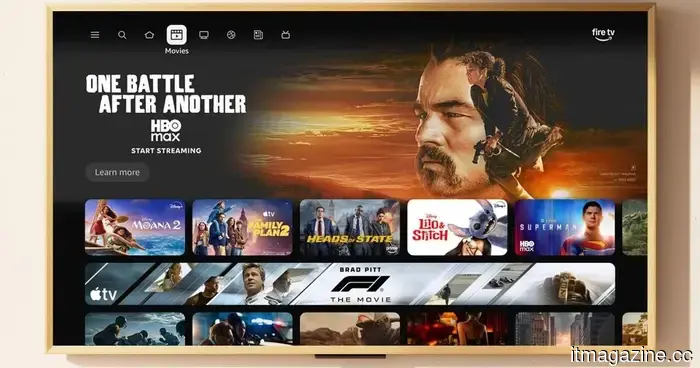 Amazon's updated Fire TV interface is now being made available to additional devices.
Amazon has begun to introduce its revamped Fire TV interface, which features a more polished appearance, improved speed, and integrated Alexa+.
Amazon's updated Fire TV interface is now being made available to additional devices.
Amazon has begun to introduce its revamped Fire TV interface, which features a more polished appearance, improved speed, and integrated Alexa+.
 Instead of purchasing a Steam Machine, Valve encourages you to construct your own.
Valve has announced that SteamOS 3.8 will enable gamers to create their own Steam Machines using conventional PC components, and development for Nvidia support is currently in progress.
Instead of purchasing a Steam Machine, Valve encourages you to construct your own.
Valve has announced that SteamOS 3.8 will enable gamers to create their own Steam Machines using conventional PC components, and development for Nvidia support is currently in progress.
 WiseTech's stock declines after founder Richard White refutes a trafficking allegation.
WiseTech's founder, Richard White, has rejected any connection to human trafficking following reports of a police investigation into a visa-for-sex allegation. As a result, the company's shares dropped significantly.
WiseTech's stock declines after founder Richard White refutes a trafficking allegation.
WiseTech's founder, Richard White, has rejected any connection to human trafficking following reports of a police investigation into a visa-for-sex allegation. As a result, the company's shares dropped significantly.
 Google leverages its alumni network to create a new incubator for AI startups.
According to Bloomberg, Google is creating an AI startup incubator that leverages its network of former employees, as they depart to start their own businesses.
Google leverages its alumni network to create a new incubator for AI startups.
According to Bloomberg, Google is creating an AI startup incubator that leverages its network of former employees, as they depart to start their own businesses.
Masayoshi Son regards Musk's space data centers as a gamble in the AI competition.
SoftBank's founder, Masayoshi Son, regards orbital data centers, a concept promoted by Elon Musk, as having minimal value, and he believes that the race for AI will be determined by computing resources located on Earth.