
Google leverages its alumni network to create a new incubator for AI startups.
According to Bloomberg, Google is establishing an AI startup incubator that leverages its network of former employees, referred to as “Xooglers.” The rationale is straightforward: as some of Google’s most talented individuals leave to pursue their own AI projects, an incubator focused on alumni ensures that Google remains connected to them and to their new endeavors. This initiative aligns with existing structures already in place at Google.
The company oversees the AI Futures Fund, a collaborative effort between Google DeepMind and Google Labs that combines equity investment with technical support and early access to DeepMind’s models, usually co-investing up to about $2 million in early-stage innovative startups. Additionally, there are the Google for Startups accelerators, which do not require equity and are cohort-based. An alumni incubator would introduce a third approach, specifically targeting individuals who are already familiar with Google’s operations due to their previous employment.
The practicality of this focus is clear: a former employee needs no introduction to the organization’s processes, its researchers, or its models, making the relationship easier and faster to establish. This new channel addresses the talent drain being experienced. Former staff from Google and DeepMind, as well as alumni from OpenAI, Anthropic, and xAI, have secured hundreds of millions of dollars for ventures that are just a few months old.
Venture capitalists have invested around $18.8 billion into AI startups founded since the beginning of 2025, much of it targeting names recognizable from the labs that developed today's leading models. For a company witnessing senior researchers leave to start their own businesses, an incubator offers a method to transform a loss into an early-stage investment.
These departures are concrete examples; David Silver, a key figure behind AlphaGo, left DeepMind to start Ineffable Intelligence, which has since been backed by Sequoia and Nvidia at a valuation of approximately $5.1 billion before it had launched any products. Another group of former DeepMind founders secured $20 million for Airspeed’s AI sales agents. Additionally, Nobel laureate John Jumper left DeepMind for Anthropic, reinforcing the idea that the pull is not just toward entrepreneurship but also toward competitors.
In this context, an incubator appears both defensive and opportunistic. If the most ambitious individuals are going to leave regardless, Google prefers to be the first investor and technical partner rather than an onlooker reading about funding rounds afterward. This approach reflects the company’s overall investment strategy; DeepMind's CEO has indicated that Google intends to outpace Microsoft in AI funding, and an alumni incubator expands this goal from infrastructure to founders.
The design presents a neat symmetry. The individuals most likely to depart a cutting-edge lab are those who best understand its tools, making them the exact founders that such a lab would want to support. An incubator that keeps alumni within Google’s sphere, providing access to models and investment, reduces the potential costs of leaving while retaining the company’s stake in the success that follows.
Whether the former employees view it in this light or prefer the independence that originally motivated their departure remains an unanswered question. Google is reported to be developing the incubator, but details regarding its structure, the size of its funding, the amounts it would invest, and its launch date have not been made public. Google has not commented officially on the matter.
Other articles
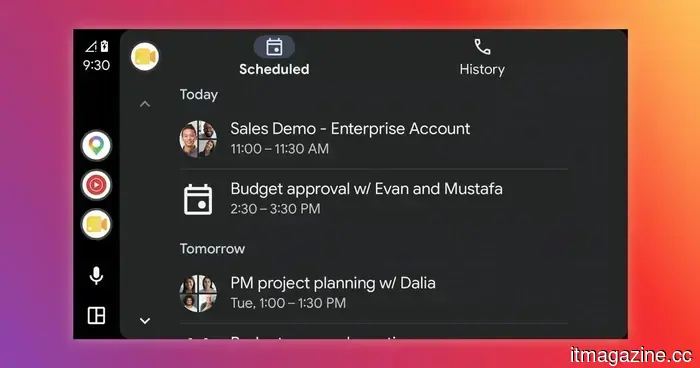 Google Meet has finally arrived on Android Auto, providing you with one less reason to miss a meeting.
Google Meet is now being widely released on Android Auto, allowing drivers to join scheduled meetings and audio calls directly from their car's display, a few months after this feature was introduced on Apple CarPlay.
Google Meet has finally arrived on Android Auto, providing you with one less reason to miss a meeting.
Google Meet is now being widely released on Android Auto, allowing drivers to join scheduled meetings and audio calls directly from their car's display, a few months after this feature was introduced on Apple CarPlay.
 Tencent is considering withdrawing from Marvelous and other investments in Japanese gaming.
Tencent is discussing the sale of minority shares in Japanese game studios, such as Marvelous, which is listed in Tokyo, occasionally returning them to their founders and at a loss, according to Bloomberg.
Tencent is considering withdrawing from Marvelous and other investments in Japanese gaming.
Tencent is discussing the sale of minority shares in Japanese game studios, such as Marvelous, which is listed in Tokyo, occasionally returning them to their founders and at a loss, according to Bloomberg.
 Prosus has introduced ToqanClaw, a tool builder reminiscent of OpenClaw, designed for its 5 million merchants.
Prosus has introduced ToqanClaw, a no-code platform that creates business applications through conversation, offering OpenClaw-like tools to over 5 million merchants.
Prosus has introduced ToqanClaw, a tool builder reminiscent of OpenClaw, designed for its 5 million merchants.
Prosus has introduced ToqanClaw, a no-code platform that creates business applications through conversation, offering OpenClaw-like tools to over 5 million merchants.
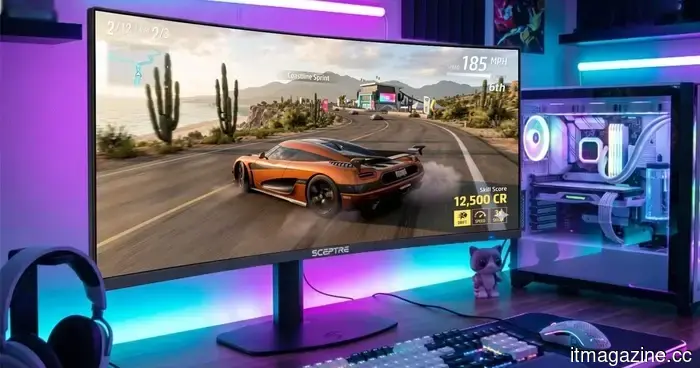 Sceptre Prime Day 2026 Deals on Gaming Monitors: Save Up to $100 on Gaming Displays
Prime Day is an excellent opportunity to enhance your gaming setup, and Sceptre is providing discounts on its range of gaming monitors.
Sceptre Prime Day 2026 Deals on Gaming Monitors: Save Up to $100 on Gaming Displays
Prime Day is an excellent opportunity to enhance your gaming setup, and Sceptre is providing discounts on its range of gaming monitors.
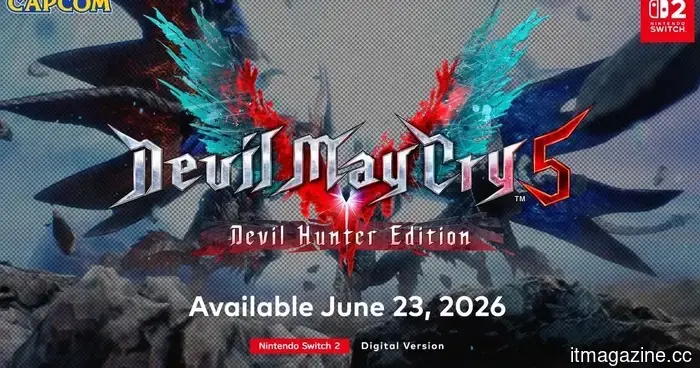 Devil May Cry has just arrived on your Switch 2, and it's available for just $30 until July 7.
Devil May Cry 5: Devil Hunter Edition makes its debut on the Switch 2, marking its first appearance on any portable Nintendo device, and is available for $30 until July 7.
Devil May Cry has just arrived on your Switch 2, and it's available for just $30 until July 7.
Devil May Cry 5: Devil Hunter Edition makes its debut on the Switch 2, marking its first appearance on any portable Nintendo device, and is available for $30 until July 7.
 WiseTech's stock declines after founder Richard White refutes a trafficking allegation.
WiseTech's founder, Richard White, has rejected any connection to human trafficking following reports of a police investigation into a visa-for-sex allegation. As a result, the company's shares dropped significantly.
WiseTech's stock declines after founder Richard White refutes a trafficking allegation.
WiseTech's founder, Richard White, has rejected any connection to human trafficking following reports of a police investigation into a visa-for-sex allegation. As a result, the company's shares dropped significantly.
Google leverages its alumni network to create a new incubator for AI startups.
According to Bloomberg, Google is creating an AI startup incubator that leverages its network of former employees, as they depart to start their own businesses.