

AI agents require more than just reasoning skills; they also need to actively utilize the web.
A company introduces an AI customer service assistant that is equipped with an adequate and up-to-date model for the task. The assistant goes live, but within a week, the number of support tickets is worsening rather than improving.
The issue lies not with the model but with the company’s website. The assistant needs to refer to the return policy found in a PDF. The shipping calculator it is supposed to use requires a multi-step form. The product specifications it should access are located behind a tabbed interface that only activates after a click. While the site functions well for human visitors, it presents challenges for the AI, rendering portions of the site inaccessible.
This obstacle is a common issue faced by many deployments of agentic AI, which is not primarily related to the model.
According to McKinsey’s 2025 State of AI report, 23% of organizations are currently scaling agentic AI systems in at least one aspect of their business, with an additional 39% in the experimentation phase. Many of these implementations will encounter the same barrier: a website designed for human interaction that must be navigated by software requiring data in a format that humans have never needed. The next major advancement for AI agents is not enhanced reasoning abilities but rather the capacity to effectively browse and utilize the live internet.
The essential tasks for an AI agent on the web can be summarized in three main functions, all of which must be performed effectively for the agent to be valuable in operational settings.
1. **Search**: The agent must locate the correct information, not merely URLs leading to links but the actual content that it can analyze. For instance, if a customer queries an insurance chatbot about their policy's coverage for a specific incident, the agent must retrieve the relevant policy section rather than just a page of search results.
2. **Scrape**: After locating the page, the agent needs to extract the content accurately. Most contemporary websites complicate this process, as pages often load through JavaScript, with content hidden within expandable accordions, tabs, or lazy-loaded segments. The HTML format received by the agent frequently differs significantly from what a human perceives in their browser.
3. **Interact**: This is where many agent demonstrations falter in real-world applications. Much of the information that matters to humans is not simply available via a URL. Instead, it can be found behind buttons prompting "load more," search fields, multi-step forms, navigation bars, or login requirements. A scraper that only processes static pages is unable to access these resources, whereas an agent capable of interaction (clicking, navigating, filling out forms, submitting information) can successfully retrieve this data. The ability to interact distinguishes whether the AI can fulfill its intended role.
Among these tasks, interaction presents the most recent and challenging development. Additionally, this is where the most valuable applications of AI agents exist: shopping assistants that compare prices across different sites, research tools aggregating data from interactive dashboards, and customer support bots navigating documentation portals like actual users.
Firecrawl serves as a foundational layer for this functionality.
Firecrawl is one company focused on building the infrastructure necessary to support all three capabilities. Their platform acts as a bridge between AI agents and the live web, managing search, scraping, and interaction via a single API. Their open-source project has received over 120,000 stars on GitHub. Notable customers such as Lovable, Replit, and Zapier integrate Firecrawl into their operations. In 2025, Nexus Venture Partners led a $14.5 million Series A funding round for the company, with Shopify CEO Tobi Lütke coming on board as an investor after using Firecrawl as a customer.
The proposition is clear: an AI agent utilizing Firecrawl does not require its development team to write customized code for every website it interacts with. Instead, it calls an API, which simplifies much of the essential technical tasks: rendering JavaScript, navigating dynamic pages, interacting with website components, and returning organized output that AI systems can utilize.
"Every AI company needed clean web data, and no one was addressing it effectively," stated Eric Ciarla, a co-founder of Firecrawl. "So we built Firecrawl."
Ciarla and his co-founders encountered these issues directly while establishing their previous venture, Mendable, an AI search platform serving various organizations. While the search product was effective, the underlying infrastructure for extracting data from each customer’s website failed. Each new integration required reconstructing fragile extraction code that would often break with any change to the customer's site. Mendable's experience was not unique; many AI companies integrating web data faced similar hurdles, repetitively rebuilding internal extraction tools.
There is also a transformation occurring alongside this technical evolution, altering the dynamics for businesses that haven't yet considered how AI agents access their websites.
For the past two decades, the transition from “a customer is searching for something” to “a customer discovers your business” predominantly involved traditional search engines. However, AI assistants
Other articles
 Seventeen fusion startups have now secured more than $100 million each, and the total continues to rise.
Private investment in fusion has exceeded $13 billion, with 17 startups securing more than $100 million each. However, no company has yet demonstrated that energy generation on a commercial scale is viable.
Seventeen fusion startups have now secured more than $100 million each, and the total continues to rise.
Private investment in fusion has exceeded $13 billion, with 17 startups securing more than $100 million each. However, no company has yet demonstrated that energy generation on a commercial scale is viable.
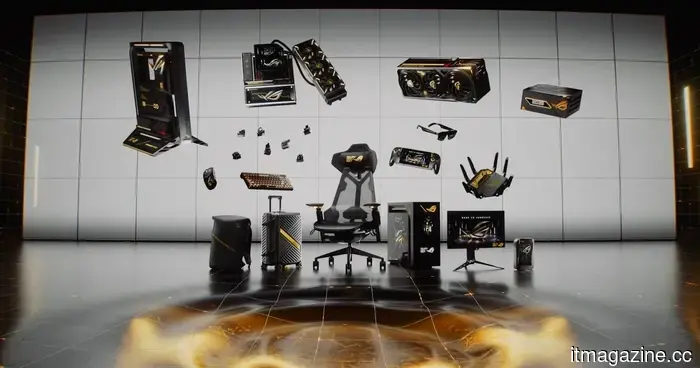 ASUS enthusiasts can now invest $16,578 in its gaming gear to celebrate the 20th anniversary.
The ROG 20th Anniversary Family Bucket Collector’s Edition from Asus includes a collection of limited-edition gaming hardware, peripherals, and lifestyle items, priced at approximately $16,578.
ASUS enthusiasts can now invest $16,578 in its gaming gear to celebrate the 20th anniversary.
The ROG 20th Anniversary Family Bucket Collector’s Edition from Asus includes a collection of limited-edition gaming hardware, peripherals, and lifestyle items, priced at approximately $16,578.
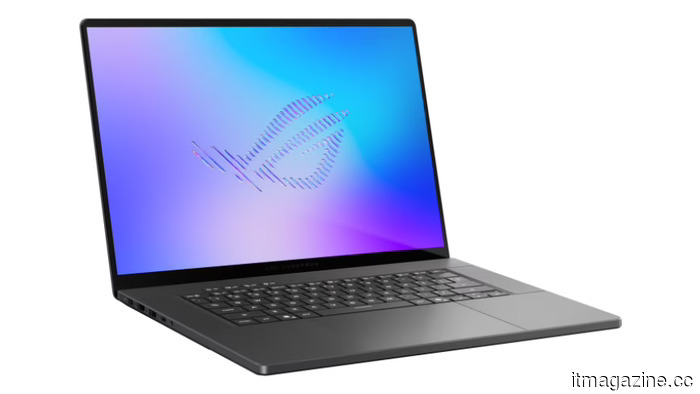 Asus is pricing an RTX 5080 gaming laptop at $4,799, which is higher than the cost of last year's RTX 5090 model.
Asus has priced the 2026 ROG Zephyrus G16 with an RTX 5080 at $4,799. In comparison, the 2025 model featuring a quicker RTX 5090 and 64GB of RAM is available for $200 less.
Asus is pricing an RTX 5080 gaming laptop at $4,799, which is higher than the cost of last year's RTX 5090 model.
Asus has priced the 2026 ROG Zephyrus G16 with an RTX 5080 at $4,799. In comparison, the 2025 model featuring a quicker RTX 5090 and 64GB of RAM is available for $200 less.
 Nobel Prize winner John Jumper is departing Google DeepMind to join Anthropic after close to nine years.
John Jumper, the recipient of the 2024 Nobel Prize in Chemistry for AlphaFold, is departing Google DeepMind to join Anthropic, just one day after Shazeer moved to OpenAI.
Nobel Prize winner John Jumper is departing Google DeepMind to join Anthropic after close to nine years.
John Jumper, the recipient of the 2024 Nobel Prize in Chemistry for AlphaFold, is departing Google DeepMind to join Anthropic, just one day after Shazeer moved to OpenAI.
 This massive ASUS gaming laptop is priced equivalent to three new MacBook Pros.
The Asus ROG Strix SCAR 18 2026 is now globally released, featuring state-of-the-art hardware and a high price that makes MacBook Pros seem affordable.
This massive ASUS gaming laptop is priced equivalent to three new MacBook Pros.
The Asus ROG Strix SCAR 18 2026 is now globally released, featuring state-of-the-art hardware and a high price that makes MacBook Pros seem affordable.
 Nobel Prize winner John Jumper is departing from Google DeepMind to join Anthropic after almost nine years.
John Jumper, who received the 2024 Nobel Prize in Chemistry for AlphaFold, is departing from Google DeepMind to join Anthropic, just one day after Shazeer made his move to OpenAI.
Nobel Prize winner John Jumper is departing from Google DeepMind to join Anthropic after almost nine years.
John Jumper, who received the 2024 Nobel Prize in Chemistry for AlphaFold, is departing from Google DeepMind to join Anthropic, just one day after Shazeer made his move to OpenAI.
AI agents require more than just reasoning skills; they also need to actively utilize the web.
A company launches an AI customer service assistant. The underlying model is up-to-date and proficient for the role. The assistant becomes operational. However, after a week, support tickets are increasing rather than decreasing. The model itself isn't at fault. The issue lies with the company’s website. The return policy that the assistant must reference is located in […]