
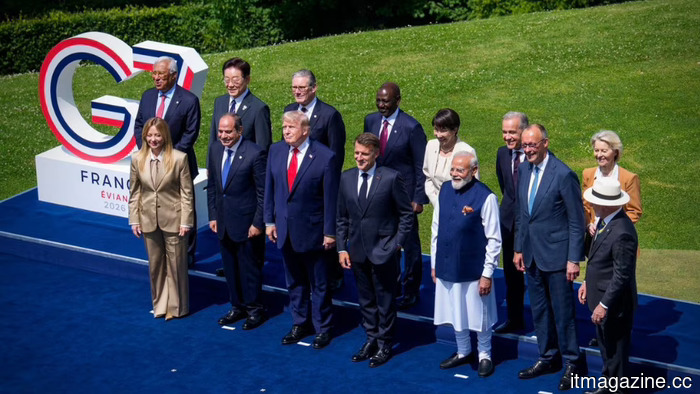
Europe worries about American AI as the tech industry converges in France.
The timing was almost too convenient. Just days before over 180,000 attendees were set to arrive at VivaTech in Paris, and prior to the gathering of G7 leaders at the lakeside resort of Evian-les-Bains, the United States tightened restrictions on access to Anthropic’s most advanced models for foreign nationals.
Europe arrived at its event having been reminded once more that the tools its companies rely on can be easily disabled by decisions made in Washington. Technological sovereignty has always been a key focus for both gatherings, but it now carries additional significance. Policymakers and executives spent the lead-up to the events expressing concerns, as carefully articulated this week, about American AI and the limited options available as credible European alternatives.
While such concerns are not new, the revelation that this dependency is not merely theoretical is. When the US mandated Anthropic to restrict access to foreign nationals for its top systems, the company found it impractical to selectively enforce this on a shared cloud and subsequently disabled access to the models for everyone worldwide, including European users who were uninvolved with the order.
Europe’s response, for better or worse, is often associated with a single name: Mistral. This company has emerged as the most frequently mentioned within the EU’s sovereignty discussion, supported by the French government which promotes it, and scrutinized by critics across the bloc who argue that relying on one national champion is an inadequate foundation for a continental strategy.
The Paris-based firm has secured funding to acquire Nvidia chips, committed to new data centers, and established itself as a European alternative. However, the question of whether one company can shoulder the expectations placed upon it is one that few at VivaTech are willing to address openly.
Underlying the speeches is a structural issue: Much of Europe’s cutting-edge AI work still operates on American cloud infrastructure, and GPU-as-a-service models tend to maintain the dependency they aim to alleviate. Renting computational resources from a US provider differs significantly from owning them, and this distinction becomes glaringly apparent when access policies change.
The EU has proposed five AI gigafactory locations and has awarded contracts related to sovereign cloud initiatives, but the timeline for construction spans years, while the political risks are evaluated within news cycles.
At Evian, discussions took a more transactional direction. Representatives from several G7 nations used the summit's start to discuss with US Commerce Secretary Howard Lutnick the concept of a ‘trusted partners’ arrangement that would allow allied nations or companies access to the very American models that are currently restricted. This request is quite telling.
While Europe presents an image of striving for independence publicly, its private appeal this week was for a better position at the American negotiating table.
VivaTech remains, as it always does, a representation of a continent moving forward with confidence: AWS and Nvidia showcasing French startups in their Startup Village, robotics demonstrations, voice and decision intelligence pitches, and the typical presentation of a sector eager for recognition. This display is genuine, as is the underlying anxiety. Both can coexist.
What the week illustrates is that Europe has reached a consensus on the diagnosis but is still debating the solution. The dependency has been identified, vulnerabilities acknowledged, and gigafactories are in the works. The continent now has four days in France to determine whether sovereignty is something to be constructed or negotiated. Based on this week’s discussions, it appears to be hedging its bets on both fronts.
Other articles
 According to The Information, OpenAI incurred a loss of $3.7 billion in the first quarter.
In the first quarter of 2026, OpenAI incurred expenses of $3.7 billion, which is more than half of its revenue of $5.7 billion, with both amounts having tripled compared to the previous year, according to The Information. The company currently has $73 billion in cash.
According to The Information, OpenAI incurred a loss of $3.7 billion in the first quarter.
In the first quarter of 2026, OpenAI incurred expenses of $3.7 billion, which is more than half of its revenue of $5.7 billion, with both amounts having tripled compared to the previous year, according to The Information. The company currently has $73 billion in cash.
.jpg) What Distinguishes Success from Failure in AI Implementation (Insights from Automotive Retail)
Dek: AI necessitates a commitment to responsibility and purposeful use. Below are illustrations of how car retailers are applying AI successfully and securely. Recall the classic Spider-Man saying? The one his Uncle Ben imparts (or Aunt May in the latest films) regarding how "with great power comes great responsibility"? If there was ever a […]
What Distinguishes Success from Failure in AI Implementation (Insights from Automotive Retail)
Dek: AI necessitates a commitment to responsibility and purposeful use. Below are illustrations of how car retailers are applying AI successfully and securely. Recall the classic Spider-Man saying? The one his Uncle Ben imparts (or Aunt May in the latest films) regarding how "with great power comes great responsibility"? If there was ever a […]
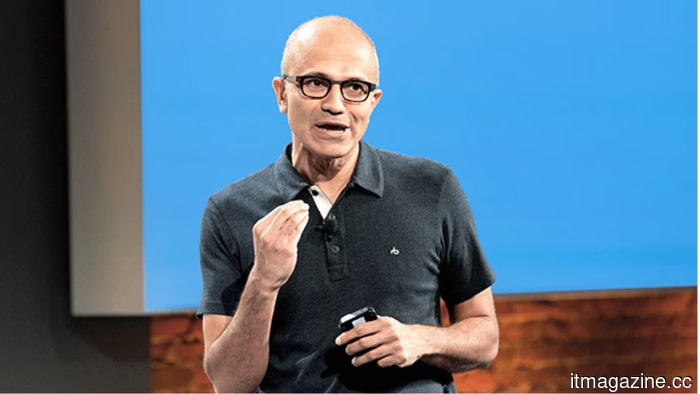 Shareholders have filed a lawsuit against Microsoft regarding the slowdown in Azure and expenditures on AI.
A pension fund in Michigan claims that Microsoft hid a slowdown in Azure and rising AI expenses prior to a January decline that resulted in a loss of $357 billion in market value.
Shareholders have filed a lawsuit against Microsoft regarding the slowdown in Azure and expenditures on AI.
A pension fund in Michigan claims that Microsoft hid a slowdown in Azure and rising AI expenses prior to a January decline that resulted in a loss of $357 billion in market value.
 Shrek 5 trailer: A 'caked up' Gingerbread Man takes the spotlight as Donkey and friends find themselves behind bars.
The first trailer for Shrek 5 has just been released, and it's as wild as always, though not everyone is pleased with the franchise's polished new animation approach.
Shrek 5 trailer: A 'caked up' Gingerbread Man takes the spotlight as Donkey and friends find themselves behind bars.
The first trailer for Shrek 5 has just been released, and it's as wild as always, though not everyone is pleased with the franchise's polished new animation approach.
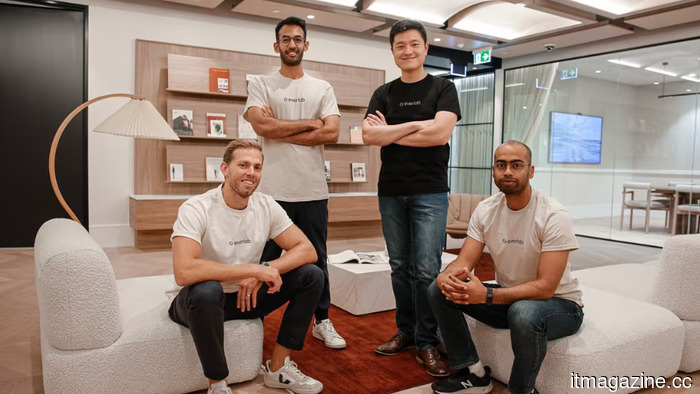 Everlab secures AU$65 million to shift primary care focus from treatment to prevention.
Melbourne-based healthtech company Everlab has secured an oversubscribed AU$65 million in a Series A funding round led by Airtree, which will support its expansion into the UK and a focus on preventative care.
Everlab secures AU$65 million to shift primary care focus from treatment to prevention.
Melbourne-based healthtech company Everlab has secured an oversubscribed AU$65 million in a Series A funding round led by Airtree, which will support its expansion into the UK and a focus on preventative care.
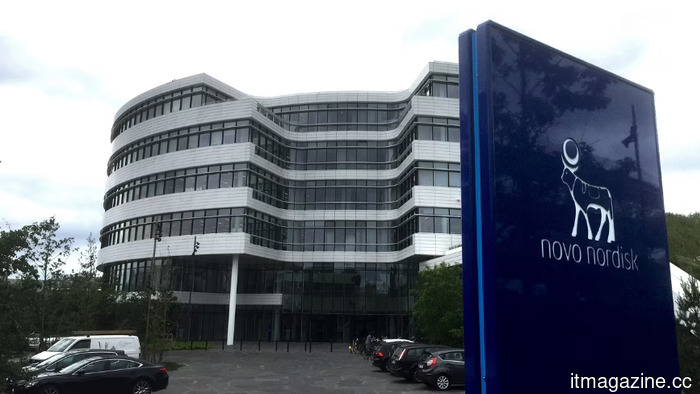 A hacking group alleges that it has infiltrated Novo Nordisk and is requesting $25 million.
FulcrumSec claims to have stolen 1.3TB from Novo Nordisk and has demanded $25 million. The manufacturer of Ozempic has acknowledged the breach but has declined to make the payment.
A hacking group alleges that it has infiltrated Novo Nordisk and is requesting $25 million.
FulcrumSec claims to have stolen 1.3TB from Novo Nordisk and has demanded $25 million. The manufacturer of Ozempic has acknowledged the breach but has declined to make the payment.
Europe worries about American AI as the tech industry converges in France.
The G7 in Evian and VivaTech in Paris commence this week, focusing on European AI sovereignty, just days after the US restricted access to Anthropic's leading models.