

Europe is concerned about American AI as the technology sector gathers in France.
The timing was almost too coincidental. Just days before over 180,000 attendees were set to enter VivaTech in Paris and G7 leaders convened at the lakeside resort of Evian-les-Bains, the United States restricted access to Anthropic’s most advanced models for foreign nationals. Europe arrived at its gathering reminded once again that the tools its companies rely on can be disabled by decisions made in Washington.
Technological sovereignty was always going to be a prominent topic at both events, and it now holds an even stronger position. Policymakers and executives expressed concerns leading up to the gatherings about American AI dominance and the lack of credible European alternatives.
These concerns are not new, but what is new is the clear demonstration that this dependency is real. When the US instructed Anthropic to prevent foreign nationals from using its top systems, the company found it impractical to selectively enforce the restriction on a shared cloud, leading to a complete shut down of access for everyone globally, including European users unrelated to the order.
Europe's response seems to be centered around one name more than any other: Mistral. This company has been frequently referenced in discussions about European sovereignty, both by the French government that supports it and by critics within the EU who believe relying on a single national champion is insufficient for a continental approach.
The Paris-based firm has secured funding to purchase Nvidia chips, committed to developing new data centers, and positioned itself as the European alternative. However, the question of whether one company can shoulder the burden of the expectations placed upon it remains unanswered, especially as many at VivaTech may be reluctant to voice it.
Beneath the speeches lies a structural issue. Much of Europe’s cutting-edge AI work still operates on American cloud infrastructure, and GPU-as-a-service models tend to reinforce the dependency they are intended to mitigate. Renting computing power from a US provider does not equate to ownership, a reality that becomes starkly evident when access policies shift.
The EU has outlined plans for five AI gigafactory sites and awarded sovereign cloud contracts, yet the timeline for these developments stretches over several years, while the political risks are gauged in news cycles.
At Evian, the dialogue took on a more transactional tone. Representatives from several G7 nations utilized the summit's beginning to discuss with US Commerce Secretary Howard Lutnick the notion of a ‘trusted partners’ arrangement, which would enable allied nations or companies access to the very American models currently being restricted. This request is telling.
Publicly, Europe promotes a narrative of independence; privately, this week, its plea was for a more favorable position at the American table.
VivaTech will continue to present, as it always does, the image of a continent in confident progression: AWS and Nvidia highlighting French startups in their Startup Village, robotics demonstrations, voice and decision intelligence pitches, and the typical display of a sector seeking serious recognition. Both the performance and the underlying anxiety are real, with both coexisting.
The week underscores that Europe recognizes its dependency, acknowledges its vulnerabilities, and plans for gigafactories. The continent has four days in France to determine whether sovereignty is something to be constructed or negotiated. Evidence from this week suggests it is attempting to pursue both avenues simultaneously.
Other articles
 Intel advances 18A-P into risk production to demonstrate its manufacturing capabilities.
Intel has announced that the next version of its 18A process has begun risk production, asserting a 9% increase in performance as it aims to attract external foundry clients.
Intel advances 18A-P into risk production to demonstrate its manufacturing capabilities.
Intel has announced that the next version of its 18A process has begun risk production, asserting a 9% increase in performance as it aims to attract external foundry clients.
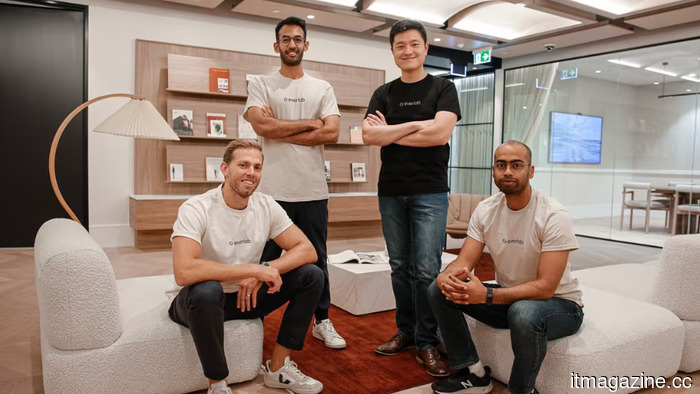 Everlab secures AU$65 million to shift primary care focus from treatment to prevention.
Melbourne-based healthtech company Everlab has secured an oversubscribed AU$65 million in a Series A funding round led by Airtree, which will support its expansion into the UK and a focus on preventative care.
Everlab secures AU$65 million to shift primary care focus from treatment to prevention.
Melbourne-based healthtech company Everlab has secured an oversubscribed AU$65 million in a Series A funding round led by Airtree, which will support its expansion into the UK and a focus on preventative care.
 A hacking group alleges that it has infiltrated Novo Nordisk and is requesting $25 million.
FulcrumSec claims to have stolen 1.3TB from Novo Nordisk and has demanded $25 million. The manufacturer of Ozempic has acknowledged the breach but has declined to make the payment.
A hacking group alleges that it has infiltrated Novo Nordisk and is requesting $25 million.
FulcrumSec claims to have stolen 1.3TB from Novo Nordisk and has demanded $25 million. The manufacturer of Ozempic has acknowledged the breach but has declined to make the payment.
 A hacking group has asserted that it infiltrated Novo Nordisk and is requesting a ransom of $25 million.
FulcrumSec claims to have extracted 1.3TB of data from Novo Nordisk and is requesting $25 million. The manufacturer of Ozempic acknowledged the breach but declined to make any payment.
A hacking group has asserted that it infiltrated Novo Nordisk and is requesting a ransom of $25 million.
FulcrumSec claims to have extracted 1.3TB of data from Novo Nordisk and is requesting $25 million. The manufacturer of Ozempic acknowledged the breach but declined to make any payment.
.jpg) What Distinguishes Success from Failure in AI Implementation (Insights from Automotive Retail)
Observe: AI necessitates careful and intentional usage for effective outcomes. Below are instances of how car dealerships are successfully and safely utilizing AI. Recall the famous Spider-Man saying? The one that Uncle Ben (or Aunt May in the recent films) imparts, about how "with great power comes great responsibility"? If there was ever a […]
What Distinguishes Success from Failure in AI Implementation (Insights from Automotive Retail)
Observe: AI necessitates careful and intentional usage for effective outcomes. Below are instances of how car dealerships are successfully and safely utilizing AI. Recall the famous Spider-Man saying? The one that Uncle Ben (or Aunt May in the recent films) imparts, about how "with great power comes great responsibility"? If there was ever a […]
 According to The Information, OpenAI incurred losses of $3.7 billion in the first quarter.
In the first quarter of 2026, OpenAI incurred expenses of $3.7 billion, which is over half of its $5.7 billion revenue, with both numbers having tripled compared to the previous year, according to The Information. The company currently has $73 billion in cash.
According to The Information, OpenAI incurred losses of $3.7 billion in the first quarter.
In the first quarter of 2026, OpenAI incurred expenses of $3.7 billion, which is over half of its $5.7 billion revenue, with both numbers having tripled compared to the previous year, according to The Information. The company currently has $73 billion in cash.
Europe is concerned about American AI as the technology sector gathers in France.
The G7 meeting in Evian and VivaTech in Paris begin this week, with a strong focus on European AI sovereignty, just days after the US restricted access to Anthropic’s leading models.