
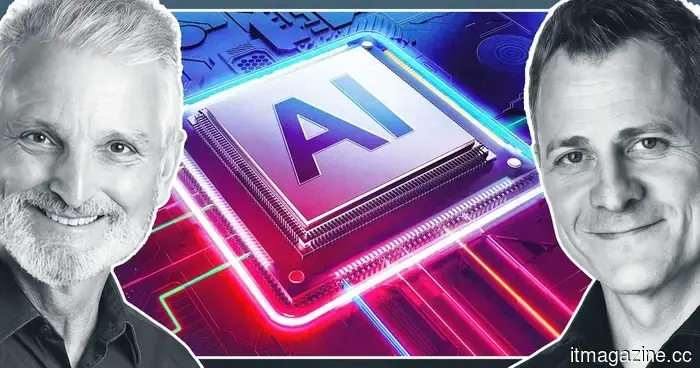
AI Is Set to Impact Employment. The Key Issue Is Whether Governments Are Noticing.
Subscribe to Trending Forward: YouTube | Spotify | Apple Podcast
When Marco Riedesser approached me with the idea of having a serious discussion about AI and employment, my initial response was likely the same as yours: haven't we already covered this topic extensively?
It seems that every day brings a new article about a company laying off thousands and attributing part of the reasoning to AI. Weekly, we hear reports of college graduates realizing that the entry-level positions they prepared for may no longer exist in the same capacity. And every few days, someone confidently claims we are either entering a golden age or facing the end of work as we know it.
The reality, as is often the case, is likely more complex.
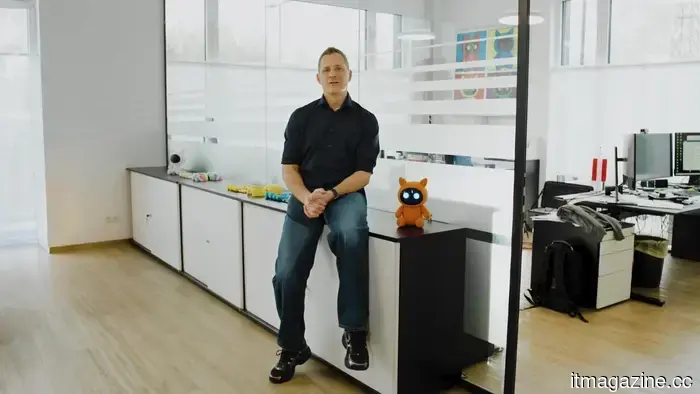
That's why I wanted to engage with Marco. He is an entrepreneur from Innsbruck, Austria, and offers a unique perspective on this matter. He is not an academic theorist nor an AI alarmist attacking the tech industry. He is a hardware expert who has dedicated his career to creating tangible products.
Marco began his journey in electronics, founding one of his early companies that produced laser-based training equipment for law enforcement and military purposes. Later, he established Controlino, a company in industrial automation, and recently introduced Friend, a physical AI companion intended to be more than just another cheerful chatbot.
In essence, Marco is not against technology; he creates it. He comprehends automation, which may explain why his assertions about AI's impact on jobs are received differently.
He is not calling for the destruction of machines but advocating for proactive planning.
This distinction is crucial.
Why This Moment Feels Unique
We have experienced similar situations in the past, at least in broad strokes. Two centuries ago, the industrial revolution leveraged steam, water power, and machinery to transform factory work. Subsequently, agricultural automation redefined farming, and more recently, industrial automation revolutionized manufacturing. Each time, warnings arose about machines eliminating jobs, yet the world did not succumb.
However, Marco contends that AI may hold a unique advantage in one critical area: he does not perceive the same level of job replacement emerging on the other side.
Indeed, there will be new positions in AI compliance, management, and oversight. Yet, if a company lays off 7,000 or 8,000 employees, it will not hire an equal number of AI compliance specialists. That equation simply doesn’t add up. Marco believes the impact might be particularly severe at the entry-level.
The Entry-Level Job Issue
This part of the discussion becomes rather uncomfortable.
For years, the prevailing advice to young people has been straightforward: learn to code, pursue STEM classes, acquire technical skills— the future lies in software. Now, Marco is cautioning his brother’s son not to assume coding will guarantee a secure career path. His perspective is that entry-level coding opportunities are already being diminished, and even higher-level coding roles could evolve significantly over the next five years.
He shared an example of a developer who no longer types code conventionally but rather engages with an AI agent, articulating required changes, correcting inputs, and guiding the outcome. While this still necessitates expertise today, Marco envisions a shift where the role transitions from coder to something akin to a director, with a single visionary potentially steering the AI as much of the coding becomes automated.
Marco noted that he is not suggesting that all types of jobs will vanish. Roles that demand genuine physical interaction, human trust, or craftsmanship may endure longer. A carpenter still needs to construct kitchens; a hairdresser maintains personal relationships with clients. There will still be contexts where people prefer interaction with others, even if technology could accomplish the task.
However, the list of at-risk job categories is extensive. Customer service, call centers, sales support, transportation, factory positions, and entry-level software development are not trivial parts of the economy—they are significant routes into employment.
What If Work Evolves?
AI is not arriving in isolation; it comes alongside robotics as well. Marco pointed to robots operating in factories, autonomous driving technologies, and an overall trend towards greater physical automation. While AI may start out as software, it will inevitably expand beyond computers.
This is where our discussion shifted from technology to governance.
Marco argues that governments need to proactively consider how society will address large-scale disruptions to employment—before the crisis unfolds. Rather than reacting after the fact or waiting until people are incensed enough to "storm data centers," as he suggested, action is needed now.
He believes that some form of universal income will likely be part of the solution. While this concept may sound radical in the U.S., it resonates less so in Europe, where there is a greater tradition of social support and a wider acceptance that society has a responsibility to care for its citizens.
A significant divide in the AI discussion might hinge on this point. In Europe, responses might be informed by robust social security systems, national health care, and a political atmosphere more open to government intervention. In contrast, the U.S.



Other articles
 The US has instructed Anthropic to discontinue Fable 5 and Mythos 5.
Washington compelled Anthropic to deactivate its most advanced AI models due to a contentious jailbreak, just three days following their release. Anthropic claims that this response is excessive.
The US has instructed Anthropic to discontinue Fable 5 and Mythos 5.
Washington compelled Anthropic to deactivate its most advanced AI models due to a contentious jailbreak, just three days following their release. Anthropic claims that this response is excessive.
 The US government has instructed Anthropic to cease operations of Fable 5 and Mythos 5.
Washington compelled Anthropic to deactivate its most advanced AI models due to a contested jailbreak, just three days following the launch. Anthropic claims that the response is excessive.
CoreWeave becomes a part of the Nasdaq-100 just 15 months following its IPO.
CoreWeave is set to join the Nasdaq-100 on June 22, 15 months following its IPO. The AI cloud provider has $25 billion in debt, and its founders have sold $2.3 billion in shares.
The US government has instructed Anthropic to cease operations of Fable 5 and Mythos 5.
Washington compelled Anthropic to deactivate its most advanced AI models due to a contested jailbreak, just three days following the launch. Anthropic claims that the response is excessive.
CoreWeave becomes a part of the Nasdaq-100 just 15 months following its IPO.
CoreWeave is set to join the Nasdaq-100 on June 22, 15 months following its IPO. The AI cloud provider has $25 billion in debt, and its founders have sold $2.3 billion in shares.
 AI Is Poised to Impact Employment. The Key Question Is Whether Governments Are Recognizing This Reality.
Entrepreneur Marco Riedesser has dedicated his career to developing automation systems, which makes his perspectives on AI and employment particularly noteworthy. In a discussion that spans topics from coding and robotics to universal basic income and the meaning of work, he contends that the true dilemma may not be AI per se, but rather if society is ready for the potential transformations in the nature of work.
AI Is Poised to Impact Employment. The Key Question Is Whether Governments Are Recognizing This Reality.
Entrepreneur Marco Riedesser has dedicated his career to developing automation systems, which makes his perspectives on AI and employment particularly noteworthy. In a discussion that spans topics from coding and robotics to universal basic income and the meaning of work, he contends that the true dilemma may not be AI per se, but rather if society is ready for the potential transformations in the nature of work.
.jpg) This overlooked Netflix gem featuring Paul Rudd is one of the three underrated films you should check out this weekend (June 12-14).
This weekend's watchlist features three hidden treasures on Netflix, including an emotional road trip, a heartbreaking family saga, and a supernatural horror movie.
This overlooked Netflix gem featuring Paul Rudd is one of the three underrated films you should check out this weekend (June 12-14).
This weekend's watchlist features three hidden treasures on Netflix, including an emotional road trip, a heartbreaking family saga, and a supernatural horror movie.
.jpg) This underrated Netflix gem featuring Paul Rudd is one of the three films you should check out this weekend (June 12-14).
This weekend's watchlist features three hidden treasures on Netflix, including an emotional journey, a heartbreaking family drama, and a supernatural horror movie.
This underrated Netflix gem featuring Paul Rudd is one of the three films you should check out this weekend (June 12-14).
This weekend's watchlist features three hidden treasures on Netflix, including an emotional journey, a heartbreaking family drama, and a supernatural horror movie.
AI Is Set to Impact Employment. The Key Issue Is Whether Governments Are Noticing.
Entrepreneur Marco Riedesser has dedicated his career to creating automation systems, which makes his insights on AI and employment particularly noteworthy. In a discussion that spans topics from programming and robotics to universal basic income and the meaning of work, he contends that the true challenge might not be AI per se, but rather society's readiness for the potential transformations in the nature of work.