
Your ChatGPT charges may soon see a significant reduction.
The AI price war has begun, and this time, your finances are benefitting from it.
If you've ever grimaced at your monthly AI expenses, there's positive news. As reported by The Wall Street Journal, OpenAI is contemplating significant reductions in its user fees as it competes for customers against Anthropic.
The company is considering substantial decreases in its token pricing, which is the unit that AI companies use for billing their services. Notably, this move comes in anticipation of similar price reductions from Anthropic. Therefore, regardless of which AI service you use, your expenses are likely to decrease.
What is prompting OpenAI's newfound generosity?
The answer is straightforward: businesses are growing weary of exorbitant AI costs. There have even been instances where AI expenses outweighed those of actual staff. OpenAI's CEO, Sam Altman, acknowledged at a recent event that costs have become “a significant issue,” adding, “I believe we’ll find many ways to help people obtain more value while spending less.”
But that's not the only factor. OpenAI is also contending with strong competition. Anthropic has seen its revenue soar following the viral success of its coding tool, Claude Code, which has helped the five-year-old startup surpass OpenAI's valuation for the first time. In response, OpenAI has prioritized its own coding tool, Codex, yet it still lags behind its competitor.
Many corporations have invested so heavily in AI coding tools that their executives are now cutting back on expenditures. An Uber executive noted that the company had already exhausted its 2026 budget for agentic AI. These comments have sparked discussions in Silicon Valley surrounding "tokenmaxxing," the practice of utilizing as many tokens as possible to enhance productivity, even when it does not yield a return.
Additionally, there’s Google. Its Gemini models, particularly the budget Flash tiers, are priced lower than both ChatGPT and Claude, and its commercial plans are nearly half the cost of OpenAI's, intensifying competitive pressure.
What does this price war signify for you?
For the companies involved, it carries risks. Both are already incurring billions in computing expenses and have confidentially filed for IPOs. Reducing prices just before engaging public investors will be the first true test of their business models.
For users, this is promising news. They will soon notice a substantial drop in their AI expenses. Competition often benefits consumers, and a price reduction is a significant advantage. So relax and let the AI giants clash, because for once, we are the ones who benefit.
Rachit is an experienced tech journalist with over a decade of experience covering the consumer technology sector.
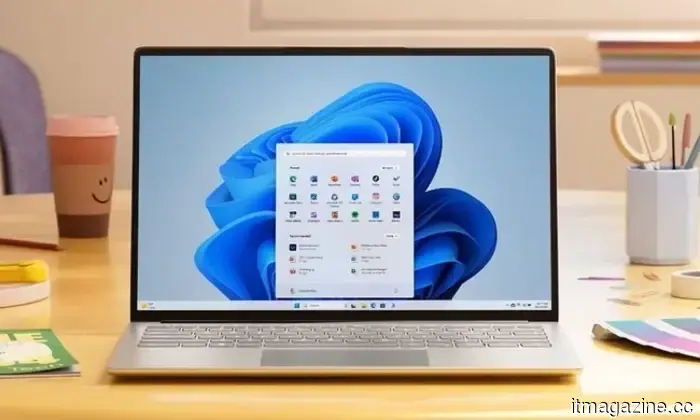
Your Windows 11 PC can now run AI workloads natively, even if it doesn’t carry the Copilot+ designation.
For nearly a year, Microsoft has claimed that the future of AI on Windows is tied to Copilot+ PCs. To access Microsoft's most advanced local AI capabilities, users needed a device equipped with a dedicated Neural Processing Unit (NPU). That was the expectation. Now, Microsoft seems to be changing the game.
Recent documentation indicates that Windows 11's local Language Model APIs can now operate on non-Copilot+ PCs, as long as they feature an Nvidia GeForce RTX 30-series GPU (or newer) with a minimum of 6GB of VRAM. At first glance, this seems like a developer-centric update. However, it may actually signify one of the most important changes in Microsoft's AI PC approach since the introduction of Copilot+ devices last year. More crucially, it raises a lingering question since the onset of the AI PC era: Was it ever necessary to have NPUs for all of this?
The Windows 11 June update significantly enhances the responsiveness of your Start menu and Search.
The Low Latency Profile is the initial specific fix that Microsoft has delivered for shell responsiveness, with the June update extending it to all eligible PCs instead of just Insider preview testers.
If you've ever clicked the Start button and waited a second or two for the menu to appear, you understand the issue Microsoft aims to address with the June 2026 update for Windows 11. The update (KB5094126) was rolled out on June 9, 2026, for Windows 11 24H2 and 25H2, targeting the shell responsiveness problems that have quietly annoyed users since its launch in 2021. The main change is the widespread implementation of the Low Latency Profile.
OpenAI has partnered with Visa to facilitate secure payments through AI agents.
ChatGPT might soon handle purchases on your behalf due to OpenAI's new collaboration with Visa.
Imagine telling ChatGPT to reorder your paper towels or locate the best wireless headphones within your budget, and it simply completes the purchase without requiring any effort from you. That is precisely what OpenAI and Visa are now working towards.
The two companies announced a strategic partnership at the Visa Payments Forum, with plans to integrate Visa's global payment infrastructure directly into OpenAI

Other articles
 Coinbase introduces an AI agent capable of trading cryptocurrency and funding research on your behalf.
Coinbase's new AI agent is capable of executing trades, rebalancing portfolios, and purchasing premium data through the x402 protocol. It operates within ChatGPT and Claude via MCP.
Coinbase introduces an AI agent capable of trading cryptocurrency and funding research on your behalf.
Coinbase's new AI agent is capable of executing trades, rebalancing portfolios, and purchasing premium data through the x402 protocol. It operates within ChatGPT and Claude via MCP.
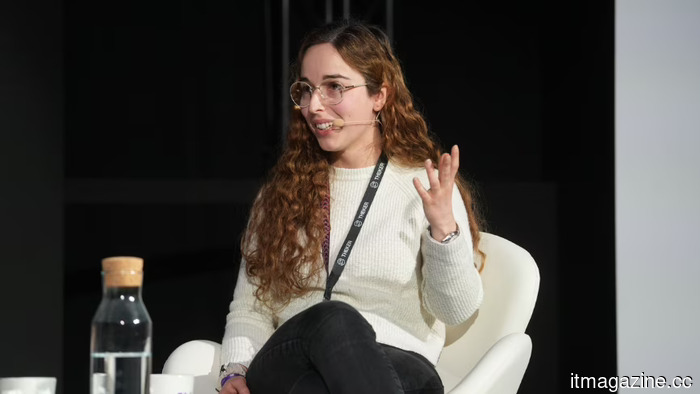
 Why the upcoming AI safety issue is the interaction between models.
When an AI agent is equipped with tools and has access to a real execution environment, it must be regarded as an untrusted process. Bar Mazuz, a former cyber researcher from Unit 8200, discusses why the protection of communication between agents is an underestimated infrastructure issue.
Why the upcoming AI safety issue is the interaction between models.
When an AI agent is equipped with tools and has access to a real execution environment, it must be regarded as an untrusted process. Bar Mazuz, a former cyber researcher from Unit 8200, discusses why the protection of communication between agents is an underestimated infrastructure issue.
 Barcelona's THEKER secures €73M to implement AI-native factory robots that adapt through on-the-job learning.
THEKER secured €73M from CRV, Samsung, and LVMH to develop general-purpose factory robots that can be deployed within days and enhance their capabilities autonomously. This marks Samsung's initial investment in Spain.
Barcelona's THEKER secures €73M to implement AI-native factory robots that adapt through on-the-job learning.
THEKER secured €73M from CRV, Samsung, and LVMH to develop general-purpose factory robots that can be deployed within days and enhance their capabilities autonomously. This marks Samsung's initial investment in Spain.
 Your robot cannot be intelligent, quick, and costless all at once. Evolution has already addressed that issue.
A robot's intelligence can possess attributes like being smart, fast, or independent of network reliance, but it cannot achieve all three simultaneously. This embodied trilemma is rooted in physics, and the design that addresses it was shaped by evolution over the past half a billion years.
Your robot cannot be intelligent, quick, and costless all at once. Evolution has already addressed that issue.
A robot's intelligence can possess attributes like being smart, fast, or independent of network reliance, but it cannot achieve all three simultaneously. This embodied trilemma is rooted in physics, and the design that addresses it was shaped by evolution over the past half a billion years.
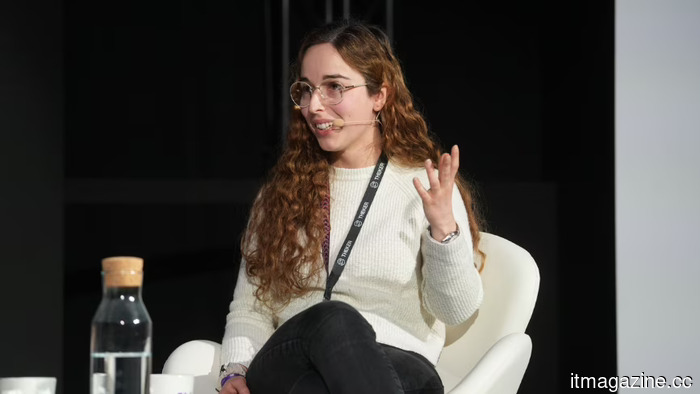 Barcelona's THEKER secures €73M to implement AI-powered factory robots that learn while working.
THEKER secured €73M from CRV, Samsung, and LVMH for versatile factory robots that can be deployed within days and enhance their capabilities autonomously. This marks Samsung's initial investment in Spain.
Barcelona's THEKER secures €73M to implement AI-powered factory robots that learn while working.
THEKER secured €73M from CRV, Samsung, and LVMH for versatile factory robots that can be deployed within days and enhance their capabilities autonomously. This marks Samsung's initial investment in Spain.
 The upcoming phase for Xbox might begin with a challenging inquiry concerning the prices of consoles.
Xbox is applying unexpected pressure on its own console sector, and a recent post on Xbox Wire indicates that players should be vigilant for a potential price increase. Microsoft has noted that the costs of storage and memory are rising rapidly, and that Xbox is currently unable to produce enough consoles to meet demand. The company also mentions that the business [...]
The upcoming phase for Xbox might begin with a challenging inquiry concerning the prices of consoles.
Xbox is applying unexpected pressure on its own console sector, and a recent post on Xbox Wire indicates that players should be vigilant for a potential price increase. Microsoft has noted that the costs of storage and memory are rising rapidly, and that Xbox is currently unable to produce enough consoles to meet demand. The company also mentions that the business [...]
Your ChatGPT charges may soon see a significant reduction.
OpenAI is considering significant price reductions as it competes with Anthropic for clientele. As companies hesitate at the expenses of AI and Google offers lower prices, your AI expenses may finally decrease.