

How B2B brands are gaining mentions in ChatGPT, Claude, and Google's AI Summaries
The B2B marketing playbook has introduced a new key metric: whether a brand is mentioned when a buyer queries an AI assistant. The brands that appear in ChatGPT, Claude, and Google’s AI Overviews typically also rank well on Google, indicating that AI visibility correlates with search rank rather than being a consequence of it.
However, this correlation is more complicated than it seems. SEO growth advisor Kevin Indig conducted a correlation analysis earlier this year, examining 30,000 AI citations across 500 software categories. He found that none of the traditional SEO metrics he assessed had a strong linkage with citation frequency. Indig noted, "LLMs have light preferences: Perplexity and AI Overviews value word and sentence count more highly." In a separate survey of 313 professionals, he discovered that 78 percent believed their current methods for assessing LLM visibility were flawed.
What the data suggests is that the AI answer engines reward similar content qualities as Google does, even if the metrics appear different at first glance. Important aspects such as substantial content, primary-source data, expert authorship, and structured E-E-A-T signals are significant in both contexts. There is a growing agreement within the SEO community that the strategies for achieving AI visibility should mirror those already in place for Google but with a broader focus on diverse sources.
SEO consultant Ben Goodey outlined that “in AI search, visibility relies on three factors: whether AI can find you, whether it trusts you, and whether it can understand and cite your content.” The notion of brand omnipresence, with content available on platforms like YouTube, Reddit, TikTok, and relevant industry forums, effectively addresses the first requirement. AI engines source citations not just from a brand’s site but also from these external platforms.
Hassan Rashid is implementing this strategy for B2B clients in his role as managing editor at GrowthX AI, a content startup that has pioneered the "service-as-software" category, merging AI-enhanced production with editorial discipline. GrowthX AI raised $12 million in Series A funding last year. Prior to his content role, Rashid spent two years as an associate product manager at Addepar, a wealth-tech platform founded by Joe Lonsdale in 2009 with over $9 trillion in assets under management. His experience includes work with venture-backed B2B and healthcare AI startups, such as Alpaca Health.
With one enterprise B2B SaaS client, compelling evidence is found within the AI answer engines. AI assistants now generate approximately 174 referred sessions each month from 26 of the client’s articles, an increase from 23 sessions previously. The content has garnered 794 of the tracked LLM citations across the site, constituting more than a third of the total. Correspondingly, on the Google side, across 44 articles, the content now attracts about 1,731 organic clicks, more than 660,000 impressions, and 5,751 organic sessions monthly, with clicks more than doubling and impressions increasing by 174 percent compared to the preceding month. This performance also resulted in 29 commercial conversions, including free-trial requests and demo completions.
A venture-capital firm for which Rashid created content exhibited similar results. Over a 90-day period, 27 articles on the firm’s site experienced significant traffic growth, with monthly organic clicks rising 33 times from 34 to 1,108 and monthly impressions increasing 14 times from 57,000 to 820,000. Sessions reached 1,672 per month, amounting to a cumulative total of 2,777, exceeding the program’s optimistic projections by 4.8 times. Similarly, this work led to a notable increase in AI search visibility, moving the firm to the second-highest position in its competitive set, with LLM referral traffic up 183 percent month over month, and its page on the “AI wrapper” inquiry now directly referenced by ChatGPT.
At Alpaca Health, a Series A healthcare startup, Rashid oversaw a redesign of the company's programmatic content, replacing 238 generic vendor-template pages with location-specific pages built from primary-source data. The revamped Texas pages alone have generated 109 clicks on the company’s family intake form, with 89 of those coming through the Texas state hub, now the highest-converting of all rebuilt location pages and the second-highest-converting overall on the site. The family intake CTA has recently achieved an all-time high of 66 events in a single week. These pages are starting to fulfill their purpose in an AI-search era, with Alpaca now being cited in Google’s AI Overview responses to over fifteen conversational queries, such as “which ABA therapy providers in San Antonio are in network,” generating between 50 and 110 impressions each.
The common trend across these three engagements is not a distinct AEO discipline. The content leverages an editorial infrastructure that incorporates primary-data substance, human-in

Other articles
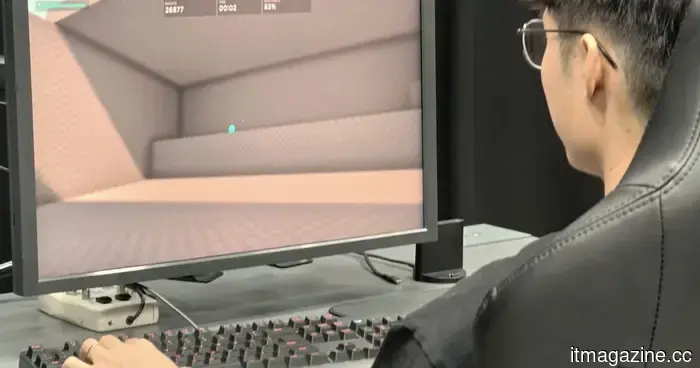 BenQ's ZOWIE is approaching gaming equipment with the mindset of sports science, and as an esports enthusiast, I find it fantastic.
Within BenQ's ZOWIE lab, I witnessed how sports science, player statistics, and the narrow margins that determine the outcomes of competitive matches influence the design of gaming mice and monitors.
BenQ's ZOWIE is approaching gaming equipment with the mindset of sports science, and as an esports enthusiast, I find it fantastic.
Within BenQ's ZOWIE lab, I witnessed how sports science, player statistics, and the narrow margins that determine the outcomes of competitive matches influence the design of gaming mice and monitors.
 75% of C-suite executives are optimistic about agentic AI, while 48% still intend to implement cuts.
A survey of executives from the Fortune 500/1000 revealed that 75% are optimistic about agentic AI, while 48% intend to reduce their workforce. The sample consisted of 29 participants, and broader surveys present a more complicated picture.
75% of C-suite executives are optimistic about agentic AI, while 48% still intend to implement cuts.
A survey of executives from the Fortune 500/1000 revealed that 75% are optimistic about agentic AI, while 48% intend to reduce their workforce. The sample consisted of 29 participants, and broader surveys present a more complicated picture.
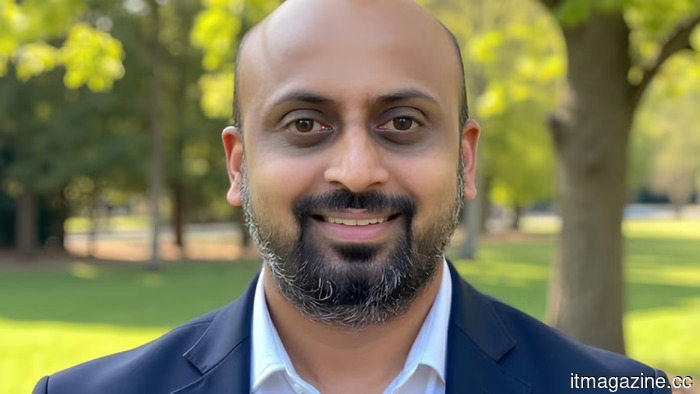 The $2 trillion issue surrounding AI infrastructure that is being overlooked, along with the engineer addressing it.
GPU idle rates exceeding 30%, operational staff increasing proportionally with the size of the cluster, and a lack of insight into ongoing expenses. The construction of the AI infrastructure faces a margin issue, and a solution is beginning to be released as open source.
The $2 trillion issue surrounding AI infrastructure that is being overlooked, along with the engineer addressing it.
GPU idle rates exceeding 30%, operational staff increasing proportionally with the size of the cluster, and a lack of insight into ongoing expenses. The construction of the AI infrastructure faces a margin issue, and a solution is beginning to be released as open source.
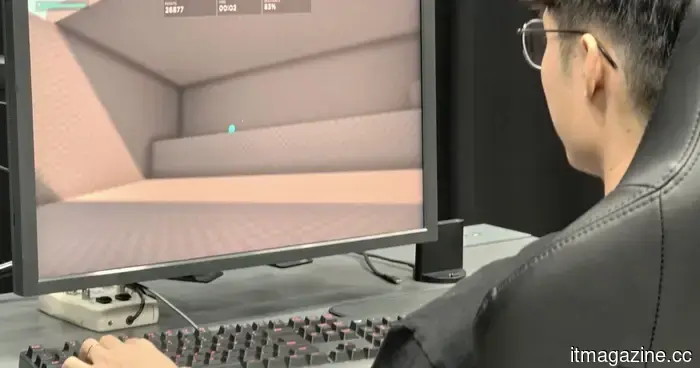 BenQ's ZOWIE is approaching gaming equipment with the same rigor as sports science, and as an esports enthusiast, I find it fantastic.
Within BenQ's ZOWIE lab, I observed how gaming mice and monitors are influenced by sports science, player statistics, and the minute differences that determine the outcomes of competitive games.
BenQ's ZOWIE is approaching gaming equipment with the same rigor as sports science, and as an esports enthusiast, I find it fantastic.
Within BenQ's ZOWIE lab, I observed how gaming mice and monitors are influenced by sports science, player statistics, and the minute differences that determine the outcomes of competitive games.
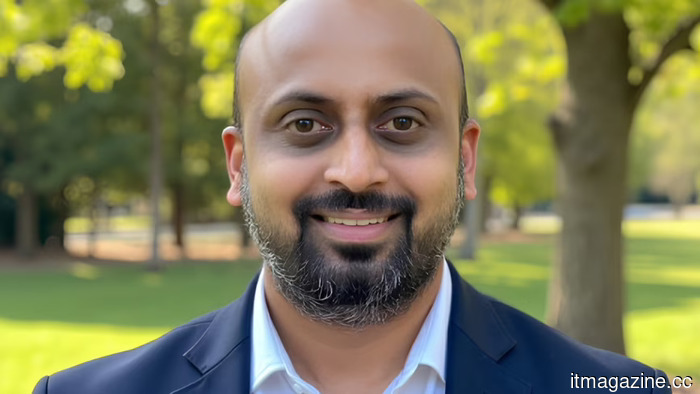 The $2 trillion challenge of AI infrastructure that is going unnoticed, along with the engineer addressing it.
GPU idle rates exceeding 30%, operational personnel increasing linearly with cluster size, and a lack of clarity regarding recurring expenses. The expansion of AI infrastructure is facing a margin issue, and the solution is beginning to be released as open source.
The $2 trillion challenge of AI infrastructure that is going unnoticed, along with the engineer addressing it.
GPU idle rates exceeding 30%, operational personnel increasing linearly with cluster size, and a lack of clarity regarding recurring expenses. The expansion of AI infrastructure is facing a margin issue, and the solution is beginning to be released as open source.
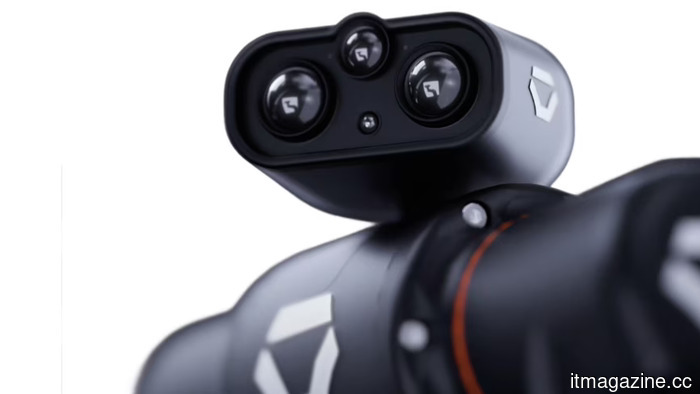 Standard Bots secures $200M at a valuation of $1 billion for its robotic arms in the U.S.
Standard Bots secured $200 million at a valuation of $1 billion to produce AI robotic arms in the United States, asserting that they will capture 10% of industrial deployments by the end of the year. Revenue and unit numbers have not been revealed.
Standard Bots secures $200M at a valuation of $1 billion for its robotic arms in the U.S.
Standard Bots secured $200 million at a valuation of $1 billion to produce AI robotic arms in the United States, asserting that they will capture 10% of industrial deployments by the end of the year. Revenue and unit numbers have not been revealed.
How B2B brands are gaining mentions in ChatGPT, Claude, and Google's AI Summaries
The visibility of AI is linked to search rankings rather than being a consequence of them. Brands that appear in AI answer engines are following the same content strategies that effective SEO has always demanded, but on a broader range of sources.