
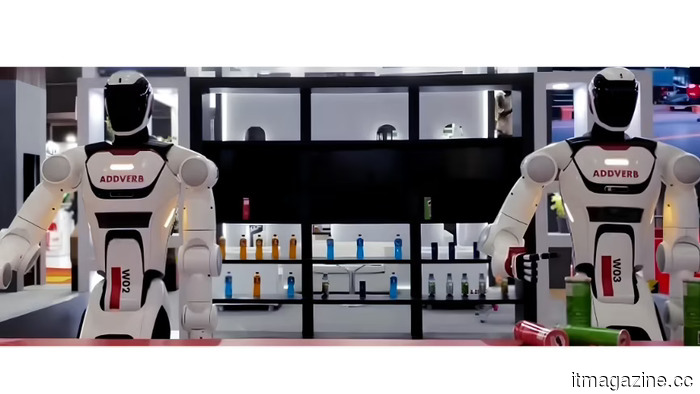
Addverb, supported by Ambani, is looking to raise $100 million to enhance its robotics initiatives in India.
TL;DR Addverb Technologies, backed by Ambani, is aiming to raise over $100 million for developing humanoid and quadruped robots and AI training systems. The Indian enterprise is currently not among the global top 30 and has not yet reported a net profit, with revenue expected to reach $136 million this year.
Addverb Technologies, the robotics startup owned by Mukesh Ambani’s Reliance Industries, is looking to secure more than $100 million to support the development of humanoid and quadruped robots, as well as the creation of AI systems for their training. CEO Sangeet Kumar informed Bloomberg that this fundraising effort marks the company’s first major initiative since Reliance’s $132 million investment in 2021.
The company produces robots for sorting, material handling, and factory automation for logistics companies, warehouses, and electronics manufacturers. It operates in over two dozen countries, with half of its revenue originating from international markets.
The goal
Kumar stated, “We aim to be in the top 10 in the next five years and in the top five in the next decade.” Addverb currently estimates its position just outside the global top 30 regarding robotics market share by revenue.
This gap is significant. Companies ahead of Addverb include Unitree Robotics, preparing for a $7 billion IPO, Tesla’s Optimus program, and well-established Japanese and European industrial robotics firms with decades of manufacturing expertise.
Fund utilization
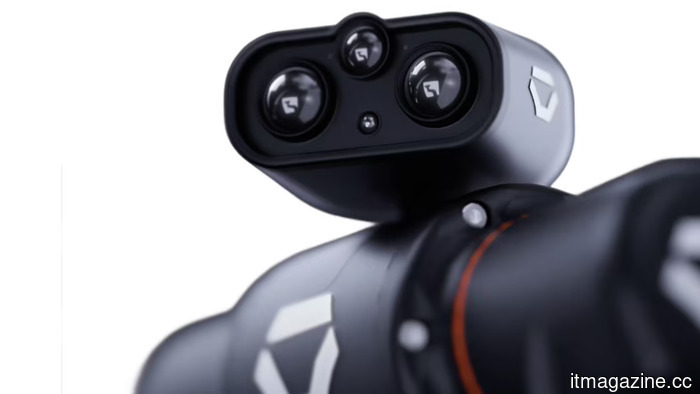
The $100 million will finance the development of humanoid and quadruped robots, data collection efforts, and AI training systems. Additionally, Addverb intends to introduce proprietary lidar sensors after over two years of development, aiming to lessen reliance on imported parts.
This push for proprietary technology is strategic. Chinese competitors benefit from governmental support and a robust manufacturing supply chain that Indian firms cannot yet equal. Addverb is banking on vertical integration and domestic intellectual property to balance the cost disadvantage.
Financial outlook
For the current fiscal year, revenue is projected to reach 13 billion rupees ($136 million), backed by an order book of about $200 million. The company has experienced losses during its international expansion but anticipates returning to adjusted profitability by the fiscal year ending March 2027 and net profitability the following year.
Kumar mentioned that an IPO is a potential avenue for growth, but Addverb has no immediate plans in that regard. “We are likely looking at an IPO when we surpass 40 billion or 50 billion rupees in revenue,” he stated, a target he believes could be achieved within two years at the current growth rate.
Background
Addverb was established in 2016 by four engineers with prior experience at Asian Paints, the largest paint company in India. Its asset-heavy model struggled to attract venture capital, though an early investment came from a backer of Asian Paints.
Among its customers are Lenskart, Hindustan Unilever, and Reliance, and the company has nearly 1,100 employees. Reliance maintains a controlling interest, while the founders and employees hold roughly 20%.
Cautions
Addverb has not revealed its current valuation or the specifics of the $100 million fundraising effort. The projected revenue of $136 million and the $200 million order book are figures provided by the company and have not been independently verified.
The humanoid robot sector that Addverb is entering is competitive and requires substantial capital. It remains uncertain whether an Indian startup can effectively compete against the cost structure of Chinese firms, the manufacturing precision of Japanese companies, and the brand power and capital of Tesla. Being outside the top 30 indicates that Addverb would need to grow approximately five times just to meet the lower end of its five-year goal, a challenging target for a company that has yet to report a net profit.
Other articles
 How B2B brands are gaining mentions in ChatGPT, Claude, and Google's AI Summaries
The visibility of AI is linked to search rankings rather than being a consequence of them. Brands that appear in AI answer engines are following the same content strategies that effective SEO has always demanded, but on a broader range of sources.
How B2B brands are gaining mentions in ChatGPT, Claude, and Google's AI Summaries
The visibility of AI is linked to search rankings rather than being a consequence of them. Brands that appear in AI answer engines are following the same content strategies that effective SEO has always demanded, but on a broader range of sources.
 The $2 trillion issue surrounding AI infrastructure that is being overlooked, along with the engineer addressing it.
GPU idle rates exceeding 30%, operational staff increasing proportionally with the size of the cluster, and a lack of insight into ongoing expenses. The construction of the AI infrastructure faces a margin issue, and a solution is beginning to be released as open source.
The $2 trillion issue surrounding AI infrastructure that is being overlooked, along with the engineer addressing it.
GPU idle rates exceeding 30%, operational staff increasing proportionally with the size of the cluster, and a lack of insight into ongoing expenses. The construction of the AI infrastructure faces a margin issue, and a solution is beginning to be released as open source.
 The $2 trillion AI infrastructure challenge that remains largely unaddressed, along with the engineer tackling it.
GPU idle rates exceeding 30%, operational personnel scaling proportionally with cluster size, and a lack of clarity regarding ongoing expenses. The development of AI infrastructure faces margin issues, and the solution is beginning to be released as open source.
The $2 trillion AI infrastructure challenge that remains largely unaddressed, along with the engineer tackling it.
GPU idle rates exceeding 30%, operational personnel scaling proportionally with cluster size, and a lack of clarity regarding ongoing expenses. The development of AI infrastructure faces margin issues, and the solution is beginning to be released as open source.
 Challenges of ethical proxy sourcing: ways to remain compliant
Residential proxies enhance AI data gathering, but unethical suppliers may transform devices into botnets. Proxyway's market report analyzes the risks and governance frameworks influencing this multi-billion-dollar infrastructure sector.
Challenges of ethical proxy sourcing: ways to remain compliant
Residential proxies enhance AI data gathering, but unethical suppliers may transform devices into botnets. Proxyway's market report analyzes the risks and governance frameworks influencing this multi-billion-dollar infrastructure sector.
 Standard Bots secures $200 million at a valuation of $1 billion for its robotic arms in the US.
Standard Bots secured $200M at a valuation of $1 billion to produce AI robotic arms in the United States, asserting that they will capture 10% of industrial deployments by the end of the year. Revenue and unit numbers have not been revealed.
Standard Bots secures $200 million at a valuation of $1 billion for its robotic arms in the US.
Standard Bots secured $200M at a valuation of $1 billion to produce AI robotic arms in the United States, asserting that they will capture 10% of industrial deployments by the end of the year. Revenue and unit numbers have not been revealed.
 75% of C-suite executives are optimistic about agentic AI, while 48% still intend to implement cuts.
A survey of executives from the Fortune 500/1000 revealed that 75% are optimistic about agentic AI, while 48% intend to reduce their workforce. The sample consisted of 29 participants, and broader surveys present a more complicated picture.
75% of C-suite executives are optimistic about agentic AI, while 48% still intend to implement cuts.
A survey of executives from the Fortune 500/1000 revealed that 75% are optimistic about agentic AI, while 48% intend to reduce their workforce. The sample consisted of 29 participants, and broader surveys present a more complicated picture.
Addverb, supported by Ambani, is looking to raise $100 million to enhance its robotics initiatives in India.
Addverb Technologies from India is looking to raise over $100 million to create humanoid robots and artificial intelligence systems. Backed by Reliance, the startup is not among the top 30 globally and has not yet reported a net profit.