
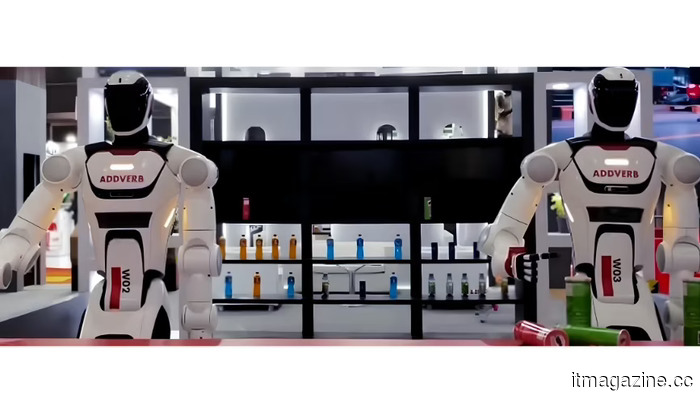
Addverb, backed by Ambani, is looking to raise $100 million to enhance its robotics efforts in India.
TL;DR
Addverb Technologies, backed by Ambani, aims to raise over $100 million to develop humanoid and quadruped robots, as well as AI training systems. The Indian company does not rank among the top 30 globally and has not yet reported a net profit, though it expects revenue of $136 million this year.
Addverb Technologies, the Indian robotics startup owned by Mukesh Ambani’s Reliance Industries, is looking to secure more than $100 million for the creation of humanoid and quadruped robots, along with AI training systems. CEO Sangeet Kumar informed Bloomberg that this funding round marks the company's first significant financial effort since Reliance invested $132 million in 2021.
The company currently produces robots for sorting, material handling, and factory automation for logistics, warehouses, and electronics sectors. It operates in over 25 countries, with about half of its revenue generated outside of India.
The ambition
Kumar expressed a desire to rank among the top 10 robotics firms in the next five years and top five in the next decade. Addverb believes it currently sits just outside the global top 30 in terms of market share by revenue.
The gap is substantial. Companies ahead of Addverb include Unitree Robotics, preparing for a $7 billion IPO, Tesla’s Optimus program, and well-established Japanese and European industrial robotics companies with extensive manufacturing capabilities.
What the funding is for
The funds will be allocated towards developing humanoid and quadruped robots, data collection, and AI training systems. Additionally, Addverb intends to introduce proprietary lidar sensors after more than two years of development to lessen reliance on imported components.
This focus on proprietary technology is strategic. Chinese competitors enjoy government subsidies and a robust manufacturing supply chain that Indian companies are not yet able to replicate. Addverb is betting that vertical integration and domestic intellectual property can mitigate the cost disadvantage.
The financials
Revenue for this fiscal year is projected to reach 13 billion rupees ($136 million), supported by an order book valued at approximately $200 million. Although the company experienced losses during its international expansion, it anticipates achieving adjusted profitability by the fiscal year ending March 2027 and net profit the following year.
Kumar indicated that an IPO is a crucial option for scaling but there are no immediate plans for one. “We would likely consider an IPO when we reach revenues of more than 40 billion or 50 billion rupees,” he noted, believing this milestone could be achieved within two years at current growth rates.
The backstory
Founded in 2016 by four engineers who had previously worked at Asian Paints, India’s largest paint company, Addverb struggled to attract venture capital due to its asset-heavy model, but it did receive early investment from an Asian Paints backer.
Its clients now include Lenskart, Hindustan Unilever, and Reliance. The company employs nearly 1,100 staff members. Reliance holds a controlling interest, while the founders and employees own about 20%.
The flags
Addverb has not revealed its current valuation or the specifics of the $100 million fundraising effort. The projected revenue of $136 million and the $200 million order book are based on figures provided by the company and have not been independently verified.
The humanoid robot market Addverb is entering is competitive and requires significant capital. It remains uncertain whether an Indian startup can effectively compete against Chinese firms’ cost structures, Japanese firms’ manufacturing accuracy, and Tesla’s branding and resources. The company’s current position outside the top 30 implies it must grow approximately fivefold just to reach the lower end of its five-year target, an ambitious goal for a company yet to report a net profit.
Other articles
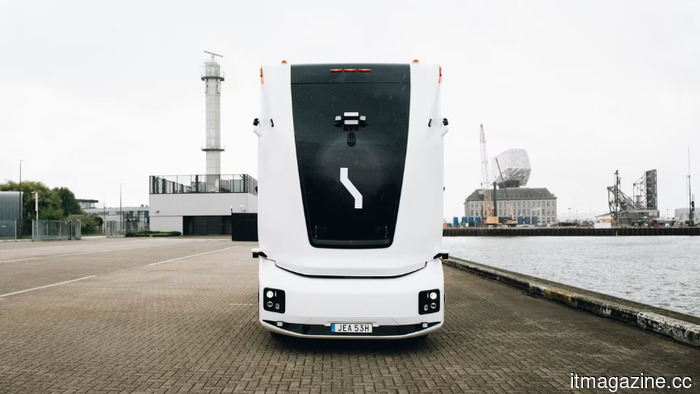 Einride notiert an der Nasdaq mit einer Bewertung von 1,35 Milliarden Dollar durch einen SPAC, zuvor waren es 5 Milliarden Dollar.
The Swedish autonomous trucking startup Einride went public on Nasdaq with a valuation of $1.35 billion through a SPAC, which is a 73% decrease from the $5 billion valuation discussed with banks. Competitors in the autonomous trucking sector have faced challenges following their listings.
Einride notiert an der Nasdaq mit einer Bewertung von 1,35 Milliarden Dollar durch einen SPAC, zuvor waren es 5 Milliarden Dollar.
The Swedish autonomous trucking startup Einride went public on Nasdaq with a valuation of $1.35 billion through a SPAC, which is a 73% decrease from the $5 billion valuation discussed with banks. Competitors in the autonomous trucking sector have faced challenges following their listings.
 75% of C-suite executives are optimistic about agentic AI, while 48% still intend to implement cuts.
A survey conducted among executives from Fortune 500/1000 companies revealed that 75% are optimistic about agentic AI; however, 48% intend to decrease their workforce. The sample consisted of 29 participants, and larger surveys present a more complicated picture.
75% of C-suite executives are optimistic about agentic AI, while 48% still intend to implement cuts.
A survey conducted among executives from Fortune 500/1000 companies revealed that 75% are optimistic about agentic AI; however, 48% intend to decrease their workforce. The sample consisted of 29 participants, and larger surveys present a more complicated picture.
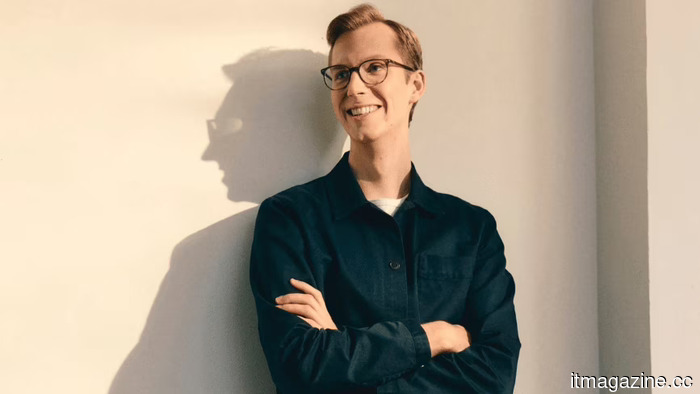 Legora launches offices in Madrid, Milan, and Paris, as well as an engineering hub in London.
The legal AI startup Legora, valued at $5.6 billion, has launched in Madrid, Milan, and Paris, while establishing an engineering center in London with the aim of hiring 700 employees across the EMEA region. The current number of employees is not disclosed.
Legora launches offices in Madrid, Milan, and Paris, as well as an engineering hub in London.
The legal AI startup Legora, valued at $5.6 billion, has launched in Madrid, Milan, and Paris, while establishing an engineering center in London with the aim of hiring 700 employees across the EMEA region. The current number of employees is not disclosed.
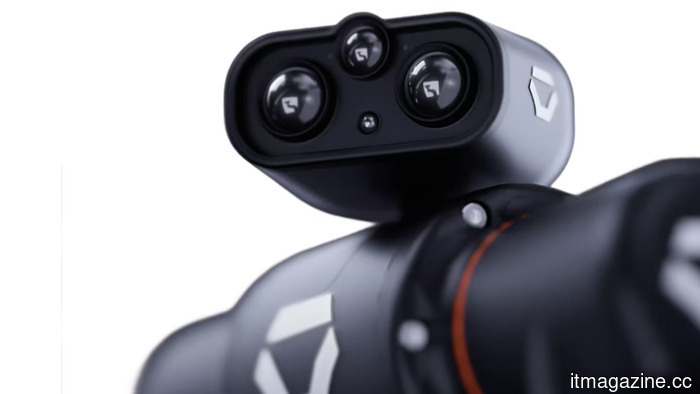 Standard Bots secures $200 million at a valuation of $1 billion for its US robotic arms.
Standard Bots secured $200 million at a valuation of $1 billion to produce AI robotic arms in the United States, asserting that they will capture 10% of industrial deployments by the end of the year. Revenue and unit volume figures have not been revealed.
Standard Bots secures $200 million at a valuation of $1 billion for its US robotic arms.
Standard Bots secured $200 million at a valuation of $1 billion to produce AI robotic arms in the United States, asserting that they will capture 10% of industrial deployments by the end of the year. Revenue and unit volume figures have not been revealed.
 Legora launches offices in Madrid, Milan, and Paris, along with an engineering hub in London.
The legal AI startup Legora, valued at $5.6 billion, has launched in Madrid, Milan, and Paris, while also establishing an engineering hub in London, aiming for a workforce of 700 employees across the EMEA region. The current number of employees remains undisclosed.
Legora launches offices in Madrid, Milan, and Paris, along with an engineering hub in London.
The legal AI startup Legora, valued at $5.6 billion, has launched in Madrid, Milan, and Paris, while also establishing an engineering hub in London, aiming for a workforce of 700 employees across the EMEA region. The current number of employees remains undisclosed.
 75% of C-suite executives are optimistic about agentic AI, while 48% still intend to implement cuts.
A survey of executives from the Fortune 500/1000 revealed that 75% are optimistic about agentic AI, while 48% intend to reduce their workforce. The sample consisted of 29 participants, and broader surveys present a more complicated picture.
75% of C-suite executives are optimistic about agentic AI, while 48% still intend to implement cuts.
A survey of executives from the Fortune 500/1000 revealed that 75% are optimistic about agentic AI, while 48% intend to reduce their workforce. The sample consisted of 29 participants, and broader surveys present a more complicated picture.
Addverb, backed by Ambani, is looking to raise $100 million to enhance its robotics efforts in India.
India's Addverb Technologies is aiming to raise over $100 million to create humanoid robots and AI solutions. Backed by Reliance, the startup is currently positioned outside of the global top 30 and has not yet reported a net profit.