

You can now remove Bing from your Windows 11 PC.
After years of embedding Bing into almost every aspect of Windows Search, Microsoft may finally be offering users a way to opt out. Reports indicate that the company is testing new features in Windows 11 that would enable individuals to completely disable Bing-enhanced web results from the operating system's integrated Search function.
For many PC users, this change is much anticipated. Windows Search has long combined local file searches with Bing suggestions, online results, news links, and Microsoft services—often frustrating users who simply wanted to locate an app, document, or system setting on their devices.
As per a report from PCMag, Microsoft is now rolling out options that distinguish local Windows search capabilities from Bing’s web integration. This means users may eventually enter queries in the Start menu or taskbar and receive local PC results only, rather than being directed to online Bing content.
This development seems linked to the European Union’s Digital Markets Act (DMA), which compels major tech firms to provide greater user control over bundled services and platform defaults. Microsoft has already started implementing several adjustments specific to Europe, including simplified browser switching and reduced prompts for Edge and Bing.
Windows Search might finally become more straightforward again
For years, Windows users have criticized Microsoft for its strong integration of Bing into Windows Search, even when it hindered usability. Searching for local files could often bring up unrelated web links, online recommendations, or Bing-driven suggestions that many users did not wish to see.
The annoyance intensified after Microsoft integrated AI-driven Bing and Copilot features directly into Windows 11. Although the company presented these features as productivity improvements, many users found that Windows Search became more cluttered and less focused on essential desktop functions.
The reported update could greatly enhance the experience for individuals who primarily use Search for launching apps, finding files, or navigating Windows settings. Eliminating Bing integration could also enhance responsiveness and reduce unnecessary online queries running in the background.
For Microsoft, however, this change signifies more than just a settings option. Bing has historically been a key component of the company’s ecosystem strategy, encouraging users to engage with Microsoft services, search advertising, Edge, and now AI-powered Copilot experiences.
Facilitating users in disabling Bing more freely implies that regulators are influencing how Microsoft structures Windows.
Microsoft still wants AI integrated throughout Windows
Despite the potential option to remove Bing, Microsoft is not retreating from AI or online integrations within Windows 11. The company continues to invest heavily in Copilot and AI-driven productivity tools, which are vital to its long-term vision for Windows.
Thus, the upcoming changes are less about completely eliminating Bing and more about granting users greater control over the integration of Microsoft services in their desktop experience.
The key question now is whether these Bing-removal features will be confined to Europe due to DMA compliance or eventually extend globally. If Microsoft launches the option worldwide, it could become one of the most user-friendly modifications to Windows Search in years.
For long-time Windows users, however, this update already carries a symbolic significance. After years of Microsoft asserting that Bing had a place in Windows Search, users may finally obtain the choice they have long desired: to search their PC without Microsoft’s search engine constantly interfering.


Other articles
 Baseus Inspire XH1 review: These Bose-tuned headphones exceeded my budget expectations.
If you're let down by budget headphones that compromise too much, the Baseus Inspire XH1 comes remarkably close to being ideal. Also, they often have great discounts available.
Baseus Inspire XH1 review: These Bose-tuned headphones exceeded my budget expectations.
If you're let down by budget headphones that compromise too much, the Baseus Inspire XH1 comes remarkably close to being ideal. Also, they often have great discounts available.
 I requested ChatGPT to restore an image, and it created an image of a man with a fish head and no clothes.
If you ever contemplate what ChatGPT imagines when you request it to recreate a fictional image, the outcomes might surprise you. I attempted it myself, and I now have regrets about that choice.
I requested ChatGPT to restore an image, and it created an image of a man with a fish head and no clothes.
If you ever contemplate what ChatGPT imagines when you request it to recreate a fictional image, the outcomes might surprise you. I attempted it myself, and I now have regrets about that choice.
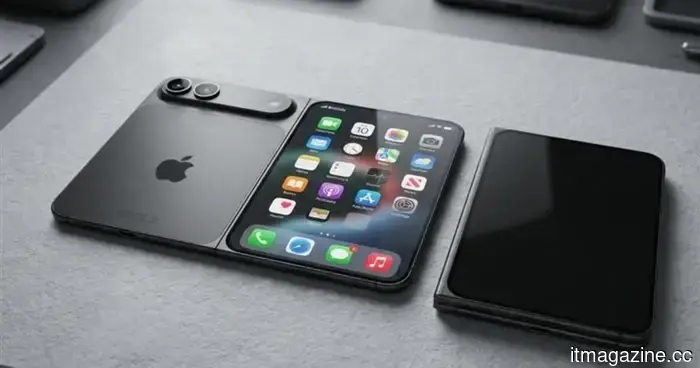 The iPhone Fold has been spotted in the wild as a dummy unit, and it has caught my interest.
Recently leaked dummy unit images by Sonny Dickson showcase the design of the iPhone Fold, anticipated to be released in the fall of 2026.
The iPhone Fold has been spotted in the wild as a dummy unit, and it has caught my interest.
Recently leaked dummy unit images by Sonny Dickson showcase the design of the iPhone Fold, anticipated to be released in the fall of 2026.
 Xbox is commemorating its 25th anniversary with a special edition Series X console featuring a translucent green design.
Microsoft has introduced a limited-edition Xbox Series X25 along with a coordinating controller, honoring Xbox’s 25th anniversary with a nostalgic design featuring a translucent green, retro-inspired look.
Xbox is commemorating its 25th anniversary with a special edition Series X console featuring a translucent green design.
Microsoft has introduced a limited-edition Xbox Series X25 along with a coordinating controller, honoring Xbox’s 25th anniversary with a nostalgic design featuring a translucent green, retro-inspired look.
 ChatGPT is considering a significant revamp to become a "super app" aimed at providing tangible assistance for your tasks.
OpenAI is said to be evolving ChatGPT into a more comprehensive AI super app that emphasizes agents, coding, productivity tools, and enhanced integration into both work and personal aspects of life.
ChatGPT is considering a significant revamp to become a "super app" aimed at providing tangible assistance for your tasks.
OpenAI is said to be evolving ChatGPT into a more comprehensive AI super app that emphasizes agents, coding, productivity tools, and enhanced integration into both work and personal aspects of life.
 ChatGPT is planning a significant redesign as a “super app” aimed at accomplishing real tasks for you.
OpenAI is said to be evolving ChatGPT into a more comprehensive AI super app that emphasizes agents, coding, productivity tools, and enhanced integrations in both work and personal life.
ChatGPT is planning a significant redesign as a “super app” aimed at accomplishing real tasks for you.
OpenAI is said to be evolving ChatGPT into a more comprehensive AI super app that emphasizes agents, coding, productivity tools, and enhanced integrations in both work and personal life.
You can now remove Bing from your Windows 11 PC.
According to reports, Microsoft is testing updates for Windows 11 that would allow users to disable web results powered by Bing in the operating system's integrated Search feature.