

GALVANY secures €10 million to improve Germany's heat pump sector.
Germany has an abundance of heat pumps on paper, yet it struggles with the processes needed for selling, installing, subsidizing, and financing them without complications arising at some stage. GALVANY, a startup based in Berlin, manages the entire heat pump journey from sales to installation and ongoing energy management. The company has successfully raised €10 million in a seed funding round aimed at promoting its services in Germany's apartment buildings. This funding round was led by Dutch energy technology investor SET Ventures and co-led by Berlin-based climate fund AENU.
What distinguishes this deal is GALVANY's financial performance. The company reported €20.1 million in revenue in 2025, marking a sevenfold increase from the previous year, and concluded the year with a positive operating profit. Securing funding from a position of profitability, rather than operating at a loss, is a rarity in the climate hardware sector and has become a noteworthy aspect of their story.
"In Germany, the failure of heat pumps is not due to the technology itself but rather the disconnect between subsidy bureaucracy, installation capacity, and the economic feasibility for the end user," explained founder and CEO Raik Belka. "This is precisely the gap we are addressing."
Established in 2022, GALVANY integrates what is typically a disjointed process—covering sales, procurement, installation, and operation—into a unified platform. Instead of maintaining a costly direct sales team, it connects acquisition, supply, and management through a collaborative network of partners.
At the core of its offering are two key products: the GALVANY Cube, a heat pump developed in collaboration with Panasonic, and GALVANY Fusion, an energy management system that connects the pump to battery storage and the power grid. By utilizing dynamic electricity tariffs, load shifting, and spot-market arbitrage, the company claims it can significantly reduce a household's heating and electricity expenses. An accompanying consumer app is expected to launch this summer.
This development aligns with a broader European initiative. Under the REPowerEU plan, the European Union aims to install 43 million new heat pumps by 2030, and Germany has invested heavily in subsidies to facilitate this transition. However, progress has been hampered, partly due to the economics often not being favorable for those who are paying the costs, particularly in the multi-family buildings that GALVANY is currently focusing on.
The new funding will target the existing-building market and housing companies that manage substantial portfolios. Additionally, GALVANY aims to advance its Fusion platform, rebranding it as what they term an “Agentic Energy Operating System,” software designed to coordinate a building’s energy load in real-time and convert fluctuating tariffs into savings. This aligns with the strategy many European energy-software startups are adopting: that the next phase of the energy transition will be driven by software advancements rather than hardware improvements.
For an industry traditionally characterized by grants, pilot initiatives, and inconsistent profits, GALVANY's approach is somewhat unconventional. Rather than suggesting that the transition to heat pumps will eventually be self-financing, the company asserts, backed by a year of profitability, that it is already achieving this.
Other articles
 GALVANY secures €10M to address issues in Germany's heat-pump sector.
Berlin's GALVANY secured €10 million from SET Ventures and AENU to expand its heat-pump platform in Germany, following a sevenfold increase in revenue to €20.1 million.
GALVANY secures €10M to address issues in Germany's heat-pump sector.
Berlin's GALVANY secured €10 million from SET Ventures and AENU to expand its heat-pump platform in Germany, following a sevenfold increase in revenue to €20.1 million.
 The US encourages NATO partners to allocate defense budgets to substitute Huawei.
A US official advised allies to allocate NATO defense budgets to remove Huawei equipment from their networks, but the suggestion failed to gain traction as Europe remains divided on implementing a ban.
The US encourages NATO partners to allocate defense budgets to substitute Huawei.
A US official advised allies to allocate NATO defense budgets to remove Huawei equipment from their networks, but the suggestion failed to gain traction as Europe remains divided on implementing a ban.
 The US is encouraging NATO allies to allocate defense funds for replacing Huawei.
A US official advised allies to allocate NATO defense budgets to remove Huawei equipment from their networks, but the proposal did not gain traction as Europe remains divided on the issue of a ban.
The US is encouraging NATO allies to allocate defense funds for replacing Huawei.
A US official advised allies to allocate NATO defense budgets to remove Huawei equipment from their networks, but the proposal did not gain traction as Europe remains divided on the issue of a ban.
 Uber launches waitlist for Wayve robotaxis in London.
Uber has launched a waitlist in London for autonomous rides facilitated by British startup Wayve, in anticipation of a trial set for 2026, while Waymo prepares for a competing rollout.
Uber launches waitlist for Wayve robotaxis in London.
Uber has launched a waitlist in London for autonomous rides facilitated by British startup Wayve, in anticipation of a trial set for 2026, while Waymo prepares for a competing rollout.
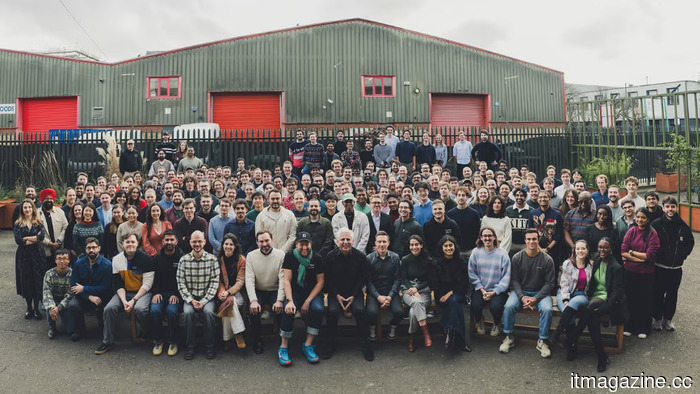 PhysicsX secures $300 million at a valuation of $2.4 billion for its AI-driven physics simulation.
London's PhysicsX secured $300 million from Temasek, achieving a valuation of $2.4 billion, which is double its value from last year. The startup, founded by F1, reduces engineering simulation time from days to seconds.
PhysicsX secures $300 million at a valuation of $2.4 billion for its AI-driven physics simulation.
London's PhysicsX secured $300 million from Temasek, achieving a valuation of $2.4 billion, which is double its value from last year. The startup, founded by F1, reduces engineering simulation time from days to seconds.
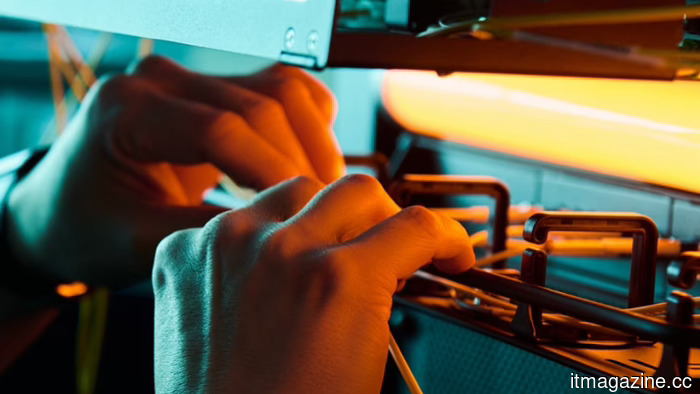 Oriole launches its first entirely photonic AI network, asserting an 81% reduction.
UK-based startup Oriole Networks is implementing the initial large-scale pure photonic AI network in collaboration with AMD, asserting an 81% reduction in power usage and less than 1% idle time for GPUs in the ARIA lab in the UK.
Oriole launches its first entirely photonic AI network, asserting an 81% reduction.
UK-based startup Oriole Networks is implementing the initial large-scale pure photonic AI network in collaboration with AMD, asserting an 81% reduction in power usage and less than 1% idle time for GPUs in the ARIA lab in the UK.
GALVANY secures €10 million to improve Germany's heat pump sector.
Berlin's GALVANY secured €10 million from SET Ventures and AENU to expand its heat pump platform in Germany, following a sevenfold increase in revenue to €20.1 million.