
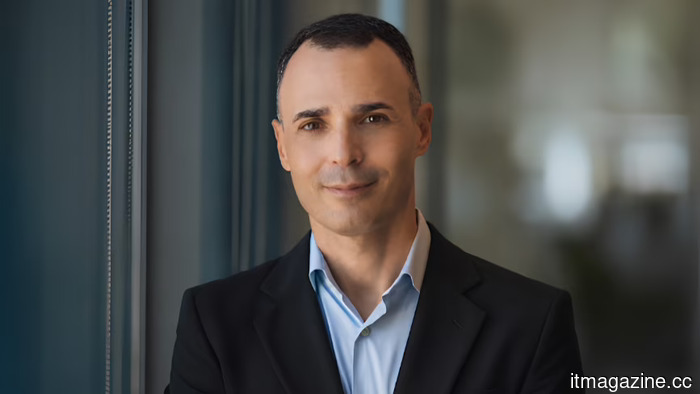
QTREX is placing its bets on the foundational layer that supports quantum computing.
The quantum computing sector has focused heavily on qubit counts over the past three years. Willow boasts 105 qubits, Nighthawk has 120, and there’s the 540-qubit superconducting platform that integrated almost 700 control lines into a single cryostat last year. The number of qubits is indeed a significant metric, and rightfully so.
However, within the laboratories striving to advance superconducting systems beyond current limitations, engineers often find themselves discussing a less glamorous topic: cables. Each superconducting qubit requires multiple control and readout lines that extend from room-temperature instruments to the millikelvin plate housing the processor. Every additional line adds heat, occupies space, and contributes to electromagnetic interference. With a few hundred qubits, the wiring is already a handcrafted endeavor, and as the count climbs to several thousand, it becomes unwieldy. At the million-qubit level needed for fault-tolerant computing, traditional methods simply fail to suffice.
This challenge is precisely what QTREX aims to address. The "I/O wall," a term referring to the interconnect issue, has been a concern in the engineering community for years, and the urgency is escalating. IBM's roadmap envisions achieving near-term quantum advantage by the end of 2026 and a fault-tolerant machine by 2029, but these plans hinge on the interconnect layer keeping pace.
QTREX posits that this issue is more about architecture than just cables. The company seeks to replace the traditional assembled bundle of cables, connectors, shielding, thermal anchors, and mechanical routing with one unified structure produced as a single entity. This innovation stems from Additively Manufactured Electronics (AME), a multi-material 3D printing technology that prints conductive and dielectric inks concurrently to create precise 3D electronic shapes. Previously, AME was utilized for high-performance RF circuits and antennas in defense and aerospace sectors. Now, the Israeli firm is applying it to address one of quantum's most significant hardware constraints.
In simpler terms, while conventional quantum wiring is assembled, QTREX's solution is developed as an integrated system. The company touts around 20 fully shielded conductors per square centimeter, a crucial density because what limits a cryostat is not its volume but the thermal capacity that volume entails.
Why This Might Emerge as a Distinct Category
In late April, QTREX entered a joint development agreement with Qarakal Quantum, an Israeli full-stack superconducting quantum firm associated with Israel Aerospace Industries and the Hebrew University of Jerusalem, which created Israel's first domestically operated quantum computer. Under this partnership, QTREX is providing 3D-printed structures for experiments at milli-Kelvin temperatures within Qarakal’s cryogenic development setting.
Three weeks later, the company revealed it had initiated a joint technical evaluation with one of the top five global quantum computing firms. Engineering and integration teams from both sides are currently testing QTREX’s interconnect components within the partner's cryogenic refrigerator. If a conclusive agreement follows, QTREX could become essential interconnect technology for the partner's upcoming quantum hardware initiatives.
The momentum is not limited to quantum-specific companies. A Tier-1 US defense client has received an AME system, and an implementation project is in progress at one of the Magnificent Seven US tech firms, those that increasingly dominate global quantum research investments.
"The engagement with one of the top five global players in quantum systems highlights the acknowledgment that QTREX’s interconnect strategy addresses a critical bottleneck in quantum hardware," said CEO Dagi Ben-Noon when announcing the evaluation.
The Shift the Industry Is Already Embracing
The initial phase of quantum computing primarily revolved around physics: could a functional qubit be constructed and managed? Most of those questions have been resolved. The next phase focuses on engineering, specifically whether the surrounding hardware can scale alongside the processors. In the realm of AI infrastructure, the most valuable companies emerged not as those creating models, but rather as those manufacturing the chips and interconnects that support them. A similar pattern is beginning to unfold in the quantum domain.
QTREX believes the interconnect layer represents a critical opportunity. The company must still achieve commercial success, but the challenge it is addressing is already acknowledged throughout the industry.
Other articles
 Acer's Aspire Badge is a wearable display that also serves a dual purpose for emergencies.
This device allows you to express your individuality while subtly incorporating a surprising feature.
Acer's Aspire Badge is a wearable display that also serves a dual purpose for emergencies.
This device allows you to express your individuality while subtly incorporating a surprising feature.
 Acer's Aspire Badge is a wearable display that also serves as an emergency device.
This wearable allows you to express your personality while discreetly incorporating a feature you might not anticipate.
Acer's Aspire Badge is a wearable display that also serves as an emergency device.
This wearable allows you to express your personality while discreetly incorporating a feature you might not anticipate.
 Anthropic grants the EU cybersecurity agency ENISA access to Mythos AI.
ENISA is the inaugural EU agency to participate in Anthropic's Project Glasswing, obtaining access to the Mythos AI model, which identified over 10,000 zero-day vulnerabilities in essential software.
Anthropic grants the EU cybersecurity agency ENISA access to Mythos AI.
ENISA is the inaugural EU agency to participate in Anthropic's Project Glasswing, obtaining access to the Mythos AI model, which identified over 10,000 zero-day vulnerabilities in essential software.
 OneDrive is introducing an AI feature that automatically names your files for you.
In June 2026, OneDrive on the web will introduce the Copilot Suggested Rename feature, which utilizes AI to evaluate the content of your file and recommend three relevant names within the rename dialog.
OneDrive is introducing an AI feature that automatically names your files for you.
In June 2026, OneDrive on the web will introduce the Copilot Suggested Rename feature, which utilizes AI to evaluate the content of your file and recommend three relevant names within the rename dialog.
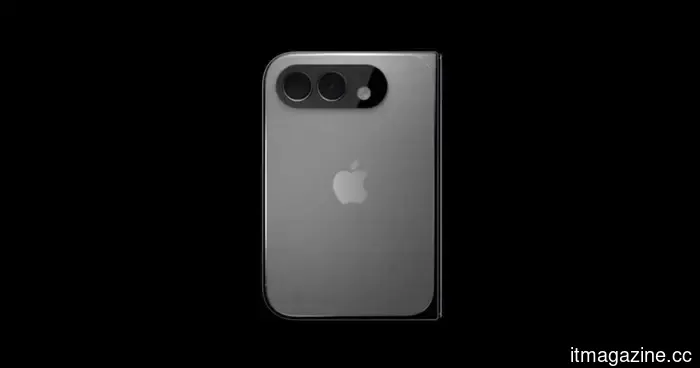 The replica model of the iPhone Ultra suggests a sense of déjà vu in the design of Apple's inaugural foldable phone.
A leaked replica of the iPhone Ultra indicates that Apple's inaugural foldable phone could incorporate a recognizable book-style design, complete with rounded edges and dual cameras.
The replica model of the iPhone Ultra suggests a sense of déjà vu in the design of Apple's inaugural foldable phone.
A leaked replica of the iPhone Ultra indicates that Apple's inaugural foldable phone could incorporate a recognizable book-style design, complete with rounded edges and dual cameras.
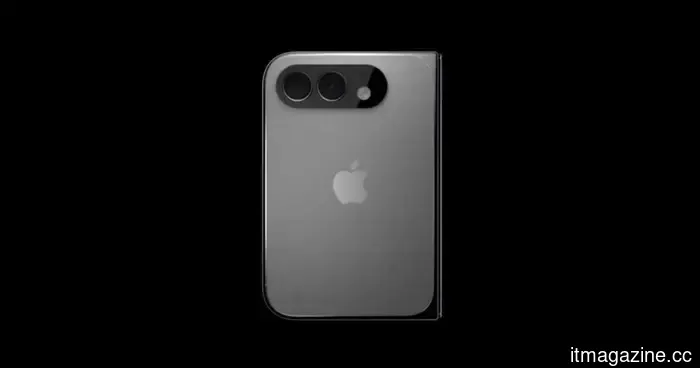 The iPhone Ultra replica model anticipates a design reminiscent of previous Apple products for the company's inaugural foldable phone.
A leaked replica of the iPhone Ultra indicates that Apple's inaugural foldable phone might adopt a familiar book-style design, complete with rounded edges and dual cameras.
The iPhone Ultra replica model anticipates a design reminiscent of previous Apple products for the company's inaugural foldable phone.
A leaked replica of the iPhone Ultra indicates that Apple's inaugural foldable phone might adopt a familiar book-style design, complete with rounded edges and dual cameras.
QTREX is placing its bets on the foundational layer that supports quantum computing.
The main limitation in quantum computing isn't the qubits; it's the wiring. QTREX is utilizing 3D-printed electronics to swap out manually constructed cryogenic interconnects for specially designed single-object structures.