
MiniMax aims for a Shanghai listing following a 400% surge in Hong Kong.
MiniMax went public in Hong Kong less than five months ago, and since then, its shares have roughly quadrupled in value. Now, the Chinese AI startup aims to replicate this success closer to its home base.
In a filing to the Hong Kong stock exchange on Sunday, MiniMax announced that it is considering a listing on Shanghai’s STAR Market, which is focused on technology companies in mainland China. The startup has also signed a tutoring agreement, marking the initial formal step required by Chinese regulators before proceeding with an IPO.
This initiative would transform MiniMax’s Hong Kong listing into an A+H structure, allowing for yuan-denominated shares to be traded on the mainland alongside its existing shares in Hong Kong.
The company has engaged advisers to help navigate the requirements of the STAR Market. However, it warned that any share sale would be contingent on market conditions and regulatory approvals, a typical precaution that ensures early-stage considerations are not misconstrued as finalized plans.
The rationale behind this move is supported by the company’s recent financial achievements. MiniMax raised approximately $619 million from its IPO in January at a price of HK$165 per share, which valued the company around $6.5 billion. The stock more than doubled on its first trading day and continued to rise, reaching about HK$840 by late May—an increase of roughly 400% from the initial offering price. Such momentum is precisely what companies aim to leverage for a second round of fundraising.
Founded in 2021 by former executives from SenseTime, MiniMax develops large language and multimodal models capable of generating text, audio, video, and music, providing access to enterprises via APIs alongside its consumer applications. It ranks among the leading AI companies in China, competing with firms like DeepSeek, Moonshot, and Zhipu, all of which are working to turn technical prowess into market capital ahead of their U.S. counterparts.
The company’s list of investors includes major players betting on this sector, such as Alibaba, Tencent, the gaming studio miHoYo, and IDG Capital, with key supporters for the Hong Kong listing reportedly including Singapore’s GIC, Baillie Gifford, and the Abu Dhabi Investment Authority.
Pursuing a domestic listing would allow MiniMax to tap into a broader local capital base and attract investors who may find it challenging to purchase shares in Hong Kong.
This domestic focus is central to the decision. Chinese AI companies are navigating a landscape where access to U.S. funding is becoming increasingly restricted, and the Chinese government has indicated its preference for supporting local champions, making a yuan listing both a financial and political strategy.
Additionally, securing onshore capital is crucial for a company reliant on computing resources—especially in a country striving to establish an AI infrastructure independent of American technology.
At this stage, it is merely an exploration, not a formal prospectus, and the approval process for the STAR Market presents its own challenges. Nonetheless, MiniMax appears to be poised to pursue additional funding on its home ground while the market remains eager for investment in its growth story.
Other articles
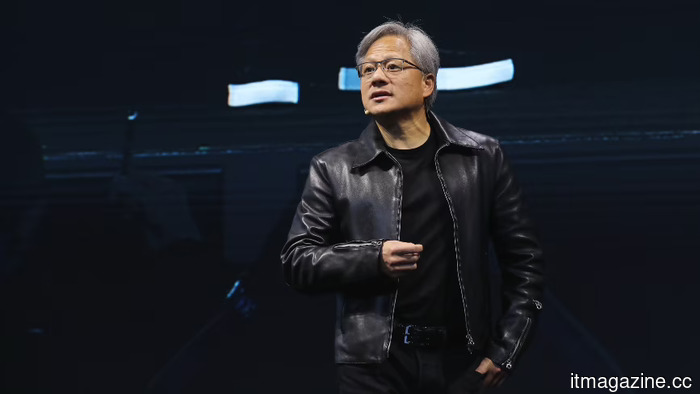 NVIDIA has identified Anthropic and OpenAI as some of the initial users of its Vera chip.
Nvidia announces that among the first recipients of Vera, its proprietary CPU designed for AI agents now in full production, are Anthropic, OpenAI, SpaceX, and Oracle.
NVIDIA has identified Anthropic and OpenAI as some of the initial users of its Vera chip.
Nvidia announces that among the first recipients of Vera, its proprietary CPU designed for AI agents now in full production, are Anthropic, OpenAI, SpaceX, and Oracle.
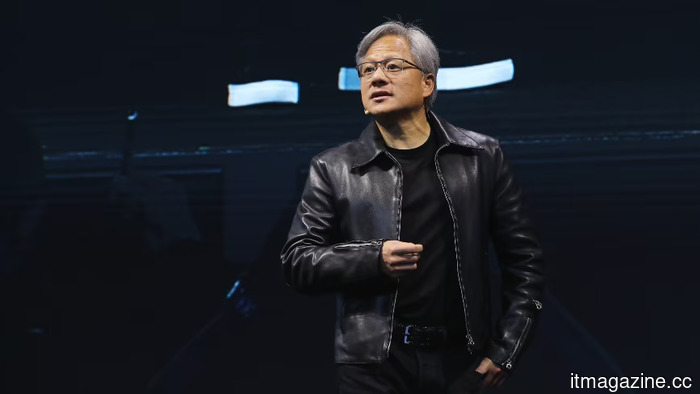 NVIDIA has listed Anthropic and OpenAI as some of the initial users of its Vera chip.
Nvidia has announced that among the first to receive Vera, its proprietary CPU for AI agents now in full production, are Anthropic, OpenAI, SpaceX, and Oracle.
NVIDIA has listed Anthropic and OpenAI as some of the initial users of its Vera chip.
Nvidia has announced that among the first to receive Vera, its proprietary CPU for AI agents now in full production, are Anthropic, OpenAI, SpaceX, and Oracle.
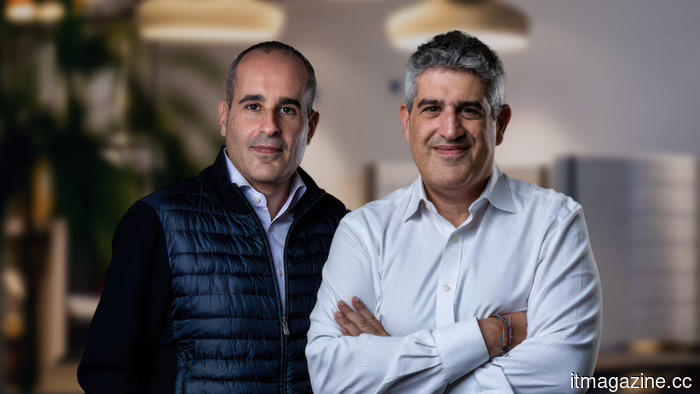 Vertice acquires Vendr to create what it describes as the largest procurement dataset.
UK procurement company Vertice has purchased the US software-pricing expert Vendr, combining data on $75 billion in spending across 32,000 suppliers. Financial details have not been revealed.
Vertice acquires Vendr to create what it describes as the largest procurement dataset.
UK procurement company Vertice has purchased the US software-pricing expert Vendr, combining data on $75 billion in spending across 32,000 suppliers. Financial details have not been revealed.
 Meta's employee mouse-click tracking system is gathering EU data that it claimed it would not gather.
Meta’s Model Capability Initiative is collecting significantly more employee data from Europe than the company has publicly recognized, placing the AI-agent training program at risk of violating GDPR regulations.
Meta's employee mouse-click tracking system is gathering EU data that it claimed it would not gather.
Meta’s Model Capability Initiative is collecting significantly more employee data from Europe than the company has publicly recognized, placing the AI-agent training program at risk of violating GDPR regulations.
 Only two days remaining until TNW’s meeting in Amsterdam focused on achieving success in AI-native SaaS.
The free Amsterdam evening on AI-native SaaS is almost full. Doors will open at 4:30 pm on Wednesday, June 3rd. Registration will close once the room reaches capacity.
Only two days remaining until TNW’s meeting in Amsterdam focused on achieving success in AI-native SaaS.
The free Amsterdam evening on AI-native SaaS is almost full. Doors will open at 4:30 pm on Wednesday, June 3rd. Registration will close once the room reaches capacity.
 Just two days left: TNW's Amsterdam event focused on achieving success in AI-native SaaS.
The complimentary evening event in Amsterdam focused on AI-native SaaS is approaching full capacity. Doors will open at 4:30 pm on Wednesday, June 3. Registration will close once the space is filled.
Just two days left: TNW's Amsterdam event focused on achieving success in AI-native SaaS.
The complimentary evening event in Amsterdam focused on AI-native SaaS is approaching full capacity. Doors will open at 4:30 pm on Wednesday, June 3. Registration will close once the space is filled.
MiniMax aims for a Shanghai listing following a 400% surge in Hong Kong.
Chinese AI startup MiniMax is considering a listing on the Shanghai STAR Market, just a few months after its debut in Hong Kong, where its shares have increased fourfold.