
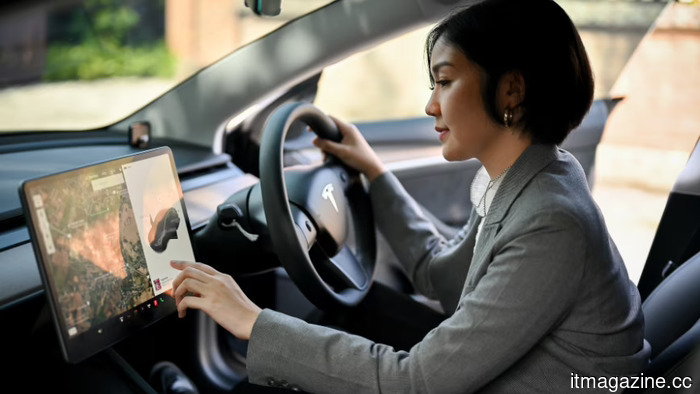
The individuals who developed Tesla's self-driving AI choose not to use it.
A Reuters investigation found that seven out of nine Tesla data labelers would not ride in the company's Full Self-Driving (FSD) mode. They regularly observed the system speeding and failing on camera.
In interviews with nine former Tesla data labelers and a former self-driving engineer, seven data specialists expressed they would not feel safe in a Tesla operating under FSD conditions, with one stating they wouldn’t ride in a Tesla robotaxi “if you f**king paid me.” “We have all seen it fail,” stated one insider, while the former engineer agreed, saying, “Definitely don’t trust Elon on this,” referring to Musk’s claim that Tesla's vehicles are prepared for “safe unsupervised” rides.
The data labelers’ role involved reviewing extensive FSD footage to enhance the vehicle’s software by correcting past errors. They had access to substantial proprietary driving data and at least five individuals reported frequently witnessing instances of Teslas exceeding speed limits while using FSD. Engineers and managers viewed the speeding issue as a low priority, focusing instead on edge cases like unusual road situations or rare lighting conditions, leaving routine speeding—which impacts every drive—deprioritized.
This investigation surfaced as Tesla expanded FSD access to new areas. Tesla recently confirmed FSD availability in China, although it is not yet clear if the general public can activate the system. The FSD (Supervised) system is classified as Level 2, needing continuous driver oversight, while a fully autonomous unsupervised version is currently being tested exclusively on a fleet of robotaxis in Austin, Texas.
In recent months, several incidents involving Teslas operating on FSD have occurred, including vehicles driving into lakes, off bridges, and in front of oncoming trains. These incidents have attracted media attention, and the data labelers' accounts indicate that there is a much larger number of failures captured in internal footage.
The disparity between Musk's assertions and the system’s actual performance has been a long-standing concern. Musk has continually claimed that fully autonomous driving is just around the corner since 2016, yet each promised deadline has passed without realization. The company's robotaxi service in Austin operates within a geofenced zone and has remote safety drivers available.
Recent shutdowns of Waymo's services due to flooding this month exemplified that even the most sophisticated autonomous driving systems can experience failures under ordinary conditions. Tesla’s methodology stands in contrast to Waymo’s, emphasizing camera-only perception rather than multi-sensor integration, and utilizing consumer vehicles modified for autonomy instead of dedicated robotaxis.
The testimony of the data labelers is crucial, as these individuals are closest to the actual performance data, lacking access to marketing materials or earnings projections. They review hours of footage that reveal the software's behavior on public roads, and seven out of nine of them would choose not to ride in the product they helped develop.
Tesla did not respond to Reuters’ request for comments. Previously, the company stated that FSD (Supervised) requires active driver supervision and argued that its safety statistics indicate the system outperforms human drivers on a per-mile basis, a claim contested by the former engineer interviewed by Reuters.
This investigation raises an important question not addressed by Tesla’s regulatory disclosures or marketing: if those who train the AI do not trust it, why should passengers feel safe riding in it?
Other articles
 Is Rust a cross-platform language?
Rust is essentially designed as a multiplayer-exclusive experience. Although you can play on various platforms, there is a limitation.
Is Rust a cross-platform language?
Rust is essentially designed as a multiplayer-exclusive experience. Although you can play on various platforms, there is a limitation.
 Twenty former Snap employees have established an angel fund aimed at supporting the next generation of social media. Their belief is that
Ghost Angels is supporting pre-seed to seed AI startups that are developing solutions beyond the ad-algorithm framework. The fund has already invested in five companies and intends to back 15 more.
Twenty former Snap employees have established an angel fund aimed at supporting the next generation of social media. Their belief is that
Ghost Angels is supporting pre-seed to seed AI startups that are developing solutions beyond the ad-algorithm framework. The fund has already invested in five companies and intends to back 15 more.
 DuckDuckGo installations surged by 18% following Google's removal of blue links, with a notable increase of 70% on Apple devices.
The revamp of Google’s AI search during the I/O event led to a six-day increase in DuckDuckGo downloads. There was a 23% rise in traffic to its search page without AI. The CEO refers to it as an exodus.
DuckDuckGo installations surged by 18% following Google's removal of blue links, with a notable increase of 70% on Apple devices.
The revamp of Google’s AI search during the I/O event led to a six-day increase in DuckDuckGo downloads. There was a 23% rise in traffic to its search page without AI. The CEO refers to it as an exodus.
 Following Google's removal of blue links, DuckDuckGo installations surged by 18%. On Apple devices, the increase reached 70%.
The revamp of Google's AI search at I/O led to a six-day increase in DuckDuckGo installations. Additionally, visits to its AI-free search page climbed by 23%. The CEO described it as an exodus.
Following Google's removal of blue links, DuckDuckGo installations surged by 18%. On Apple devices, the increase reached 70%.
The revamp of Google's AI search at I/O led to a six-day increase in DuckDuckGo installations. Additionally, visits to its AI-free search page climbed by 23%. The CEO described it as an exodus.
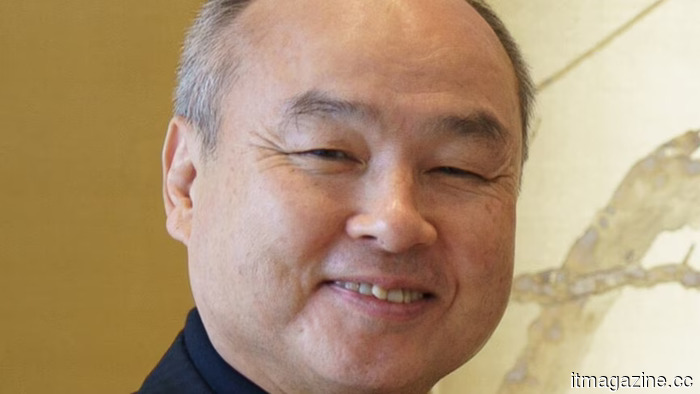 SoftBank is committing €75 billion to develop 5 gigawatts of AI data centers in France. This marks Son's largest investment in Europe.
The initial phase aims to provide 3.1 GW in northern France by 2031 at a cost of €45 billion. Macron personally engaged with Son, who found the president's dedication to be "impressive."
SoftBank is committing €75 billion to develop 5 gigawatts of AI data centers in France. This marks Son's largest investment in Europe.
The initial phase aims to provide 3.1 GW in northern France by 2031 at a cost of €45 billion. Macron personally engaged with Son, who found the president's dedication to be "impressive."
 A 9-gigawatt data center has caused anger in a Utah community. The governor has just implemented new regulations.
Governor Cox signed an executive order establishing a "higher standard" for the development of data centers following protests triggered by Kevin O'Leary's 40,000-acre Stratos Project.
A 9-gigawatt data center has caused anger in a Utah community. The governor has just implemented new regulations.
Governor Cox signed an executive order establishing a "higher standard" for the development of data centers following protests triggered by Kevin O'Leary's 40,000-acre Stratos Project.
The individuals who developed Tesla's self-driving AI choose not to use it.
A Reuters investigation revealed that individuals involved in training Tesla's self-driving AI often observed it exceeding speed limits. Engineers considered this concern to be of low importance.