
Orbital Industries secures $50 million in Series B funding for AI-created data center equipment.
The startup based in London and San Francisco, previously known as Orbital Materials, has secured $50 million in funding led by Plural for its PFAS-free cooling fluid and modular high-density computing infrastructure. Now named Orbital Industries, the AI-materials firm has raised this amount in a Series B round with additional contributions from Nvidia's NVentures, Radical Ventures, Compound, and Fly Ventures.
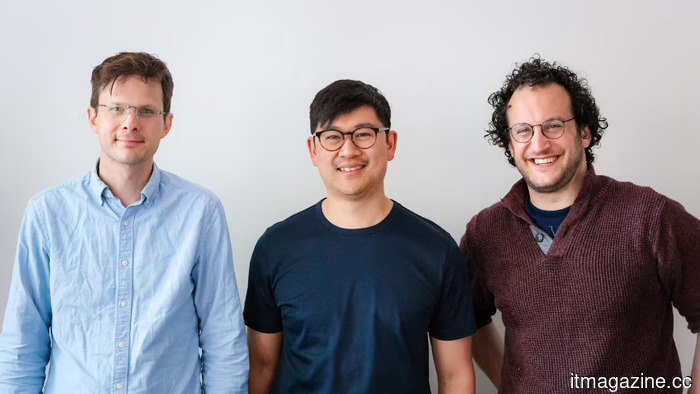
This funding will enhance the commercial rollout of the company's cooling fluid for data centers and modular computing infrastructure, while also expanding its workforce in London and San Francisco. Along with the funding round, the company has undergone rebranding. Orbital Industries was established in 2022 by CEO Jonathan Godwin (formerly of DeepMind), CTO James Gin-Pollock, and COO Daniel Miodovnik. Initially focused on AI-driven carbon capture and sustainable aviation fuel chemistry, the company has since shifted its focus toward data center infrastructure due to strong commercial interest.
The new name, Orbital Industries, reflects this broader focus, with aspirations to apply its model to semiconductors, essential minerals, aerospace, and energy in the long term. The two primary products currently under development merit detailed attention. The first is a PFAS-free dielectric cooling fluid designed for the advanced high-density GPUs. PFAS, known as "forever chemicals," have been a staple in two-phase immersion cooling systems in data centers for years but are facing increasing regulatory restrictions from the EPA and EU. 3M completely exited the production of its Novec PFAS-based coolants in 2024, prompting data center operators to seek alternatives as Nvidia’s new GPU generations push power densities beyond the limits of traditional water cooling. The fluid from Orbital, developed using its AI materials platform, addresses this need.
The second product is a modular data center system, manufactured off-site and delivered as pre-assembled units ready for deployment. Orbital claims that this approach can reduce deployment times to as short as six months, compared to the typical three-year timeline for constructing custom high-density facilities. There is a significant capacity constraint in the industry, as companies like Anthropic, OpenAI, and Meta have struggled to secure sufficient cooling and power resources for their ambitious computing plans, leading to a rise in modular prefabrication as an industry standard.
Orbital distinguishes itself with its AI-driven engineering process that designs the modules rather than simply assembling them off-site. The core technological asset behind Orbital is Orb, the company's open-source AI model for simulating quantum-mechanical behaviors of atoms. This model is available on GitHub under the Apache 2.0 license, with its latest v3 release capable of handling large-scale simulations of fully solvated 20,000-atom enzymes, and the company boasts stable simulations of up to 100,000 atoms on a single GPU.
Published benchmarks indicate that Orb performs three to six times faster than current universal interatomic potentials and achieves a 31% reduction in error compared to the Matbench Discovery benchmark. The partnership with AWS, which the company has been highlighting since December 2024, was established under the previous Orbital Materials name. This strategic agreement encompasses data center decarbonization, cooling, and water-utilization technologies, with Orb being available to AWS clients via SageMaker JumpStart and the AWS Marketplace. This commercial relationship serves as the main near-term revenue source for the cooling fluid product line.
The funding round led by Plural represents a significant validation within the European deeptech sector. Plural partner Ian Hogarth, who spearheaded the investment, is a prominent figure in UK AI policy and previously chaired the predecessor organization to the UK AI Safety Institute. Notably, Nvidia NVentures' involvement is also significant, as the chip maker's strategic investment arm seldom supports hardware infrastructure startups directly, indicating that Orbital’s cooling fluid may have relevant applications for GPU deployments beyond the Blackwell generation.
Godwin, reflecting on his background, joined DeepMind during the development of AlphaFold and worked in AI for science and materials prior to founding Orbital. The company has not yet revealed any figures regarding revenue, customer counts, or the valuation following the Series B round.
Other articles
 Musk changes the Anthropic Colossus agreement to a six-month lease.
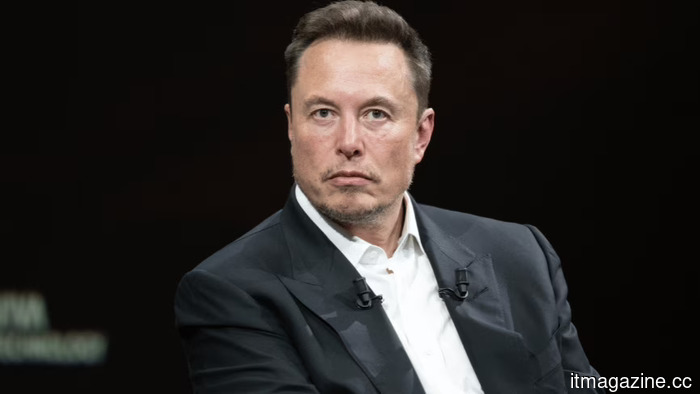
On Wednesday, Elon Musk stated that SpaceX did not enter into a multi-year lease for Colossus 1 with Anthropic, clarifying that the agreement is for 180 days and includes a mutual cancellation option after 90 days.
Musk changes the Anthropic Colossus agreement to a six-month lease.
On Wednesday, Elon Musk stated that SpaceX did not enter into a multi-year lease for Colossus 1 with Anthropic, clarifying that the agreement is for 180 days and includes a mutual cancellation option after 90 days.
 Musk reduces the Anthropic Colossus agreement to a six-month lease.
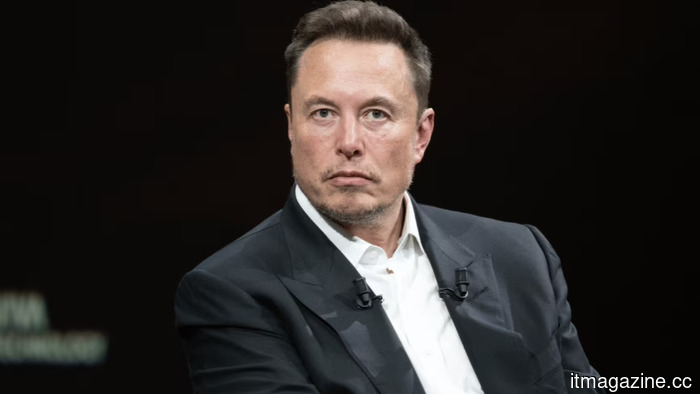
Elon Musk stated on Wednesday that SpaceX did not agree to a multi-year lease for Colossus 1 with Anthropic, clarifying that the deal is for 180 days with a 90-day mutual cancellation option.
Musk reduces the Anthropic Colossus agreement to a six-month lease.
Elon Musk stated on Wednesday that SpaceX did not agree to a multi-year lease for Colossus 1 with Anthropic, clarifying that the deal is for 180 days with a 90-day mutual cancellation option.
 Father's Day Gift Guide - Digital Trends
This gift guide includes sponsored content in certain sections. Why should you trust us? This Father's Day, avoid the usual gifts and enhance Dad's daily routine with technology he'll truly appreciate. Whether he needs to charge his devices while traveling, enjoys riding an e-bike, unwinding with high-quality audio, or transforming the backyard into a movie theater, these gadgets seamlessly combine […]
Father's Day Gift Guide - Digital Trends
This gift guide includes sponsored content in certain sections. Why should you trust us? This Father's Day, avoid the usual gifts and enhance Dad's daily routine with technology he'll truly appreciate. Whether he needs to charge his devices while traveling, enjoys riding an e-bike, unwinding with high-quality audio, or transforming the backyard into a movie theater, these gadgets seamlessly combine […]
 A Google engineer utilized internal search data to place a $2.7 million bet on Polymarket. He has been charged by the DOJ.
The Department of Justice has accused Google information-security engineer Michele Spagnuolo of utilizing internal search-trend data to earn $1.2 million on Polymarket’s Year-in-Search market.
A Google engineer utilized internal search data to place a $2.7 million bet on Polymarket. He has been charged by the DOJ.
The Department of Justice has accused Google information-security engineer Michele Spagnuolo of utilizing internal search-trend data to earn $1.2 million on Polymarket’s Year-in-Search market.
 The founder of JD.com pledges to safeguard 900,000 jobs from AI. However, his approach to warehousing suggests a different direction.
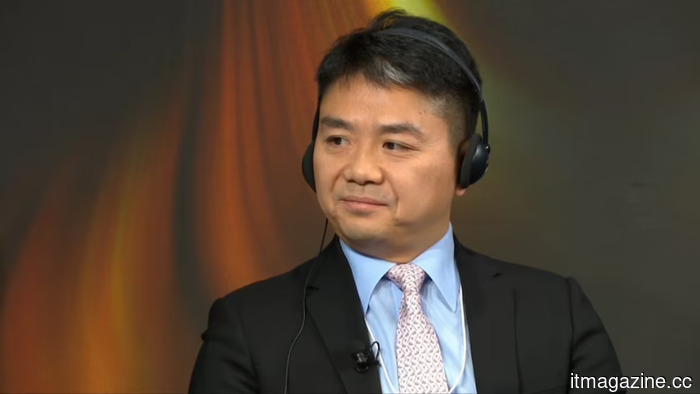
Liu Qiangdong, the founder of JD.com, promised in an internal address to safeguard the company's 900,000 employees from being replaced by AI. This commitment is in contrast to JD's significant reliance on automation and Liu's own vision of an "unmanned era."
The founder of JD.com pledges to safeguard 900,000 jobs from AI. However, his approach to warehousing suggests a different direction.
Liu Qiangdong, the founder of JD.com, promised in an internal address to safeguard the company's 900,000 employees from being replaced by AI. This commitment is in contrast to JD's significant reliance on automation and Liu's own vision of an "unmanned era."
 Gold-Backed Stablecoins Aim to Make Cryptocurrency Seem More Familiar
New digital assets are bringing up familiar concerns regarding trust, oversight, and transparency of reserves. Gold has historically been seen as a stable option in times of market uncertainty. Stablecoins were developed to mitigate some of the volatility associated with crypto assets. An increasing number of initiatives are now merging these concepts by producing digital tokens that are tied to physical gold reserves. […]
Gold-Backed Stablecoins Aim to Make Cryptocurrency Seem More Familiar
New digital assets are bringing up familiar concerns regarding trust, oversight, and transparency of reserves. Gold has historically been seen as a stable option in times of market uncertainty. Stablecoins were developed to mitigate some of the volatility associated with crypto assets. An increasing number of initiatives are now merging these concepts by producing digital tokens that are tied to physical gold reserves. […]
Orbital Industries secures $50 million in Series B funding for AI-created data center equipment.
Orbital Industries, previously known as Orbital Materials, has secured $50 million in a Series B funding round led by Plural, with participation from Nvidia's NVentures, to develop AI-designed PFAS-free GPU cooling fluid and modular infrastructure for data centers.