
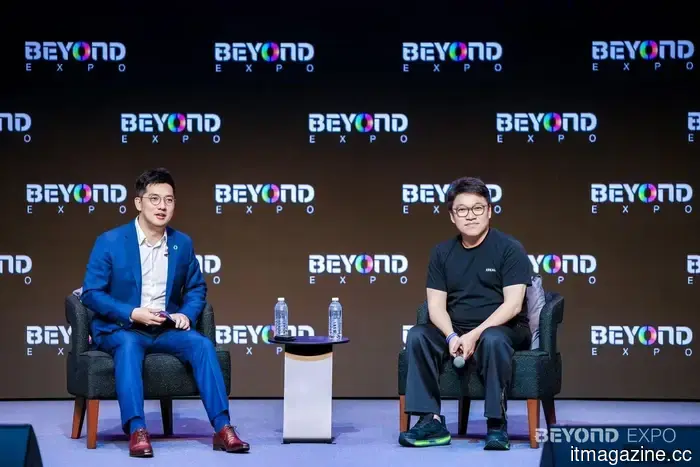
At BEYOND Expo 2026, the CEO of XREAL anticipates a pivotal moment for AI glasses akin to that of the iPhone.
As AI's large models swiftly integrate with wearable technology, smart glasses are once again becoming a focal point in the tech sector. Major global companies like Meta, with its AI glasses created in collaboration with Ray-Ban, Apple’s Vision Pro, and Google’s renewed efforts in the AR space are competing for the next significant computing platform. Additionally, Chinese firms are starting to claim a more prominent role in this competition.
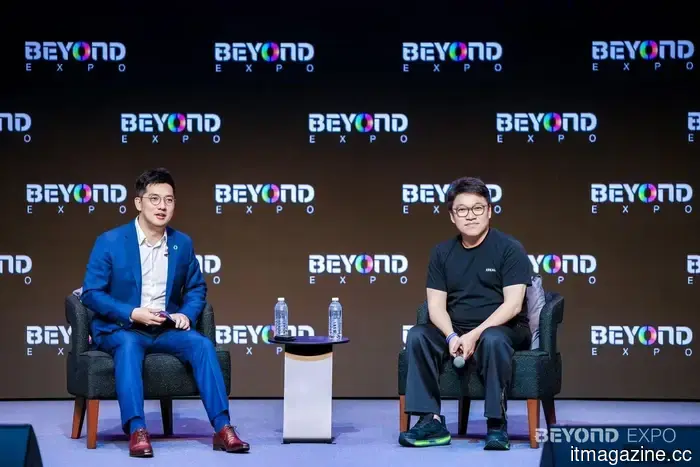
During the opening ceremony of BEYOND Expo 2026 in Macau, XREAL CEO Xu Chi shared his insights on AI glasses, globalization, and the upcoming generation of computing devices. As the founder of the Chinese AR glasses brand XREAL, he announced a long-term partnership between XREAL and Google, with collaborative products expected to be released later this year.
Xu Chi noted that after the debut of Apple Vision Pro, the industry quickly recognized that high prices and bulky designs remain the primary barriers to the widespread adoption of XR devices. In contrast, lighter and more wearable smart glasses are emerging as a new trend. He emphasized that truly advanced AI glasses will eventually feel as natural as regular prescription glasses, seamlessly merging AI with the real world once worn.
Indeed, lightweight design is becoming increasingly prominent in the current smart glasses market. Over the past decade, the AR field has consistently aimed for immersion, but issues like weight, battery life, and cost hindered products like Google Glass in its early days and Microsoft HoloLens later on from achieving mass market penetration.
While Vision Pro has rekindled enthusiasm for XR, it has also highlighted how far high-end XR hardware is from being accepted by mainstream consumers. Consequently, companies such as XREAL, Meta, and Rokid are now opting for a different approach: prioritizing lightweight devices and progressively enhancing AI functionalities and display performance. This year, AI has emerged as the most significant variable in the industry.
According to Xu, the true game-changing application for AI glasses will not be navigation or translation but rather serving as an all-day personal AI assistant. Unlike smartphones, which require active engagement, glasses provide continuous companionship and can interpret the world through the user’s first-person perspective. With eye-tracking technology, AI could understand user focus and offer proactive assistance.
This viewpoint is gaining traction as an industry consensus. Mark Zuckerberg, CEO of Meta, has stated that AI glasses might become the next dominant computing platform, with glasses being the ideal form factor for AI. Concurrently, Google has ramped up its AR and multimodal AI initiatives, striving to merge its Gemini capabilities with wearable devices. As large AI models develop real-time visual understanding, “AI that can see the world” is moving from concept to reality.
However, the significant challenge lies beyond hardware; it is in building ecosystems and globalization. Xu remarked that previously, Chinese companies relied on cost-performance advantages for overseas expansion. Today, competition globally increasingly centers on branding, culture, and localization skills rather than just price.
To illustrate his perspective, he metaphorically stated, “If you win every game 6–0, no one will want to play with you.” He believes that Chinese tech firms must evolve from merely exporting products to collaboratively creating value with global markets. This shift also mirrors the evolving role of China’s technology sector; whereas it once primarily served as manufacturers in global supply chains, companies are now starting to significantly shape next-generation technologies in domains like AI, robotics, new energy, and AR.
For the smart glasses industry overall, the ultimate “iPhone moment” may not have occurred yet, but many Chinese companies are already positioning themselves at the forefront of this emerging wave.
Jessie Wu is a tech reporter based in Shanghai, covering consumer electronics, semiconductors, and the gaming sector for TechNode. You can reach her at jessie.wu@technode.com.


Other articles
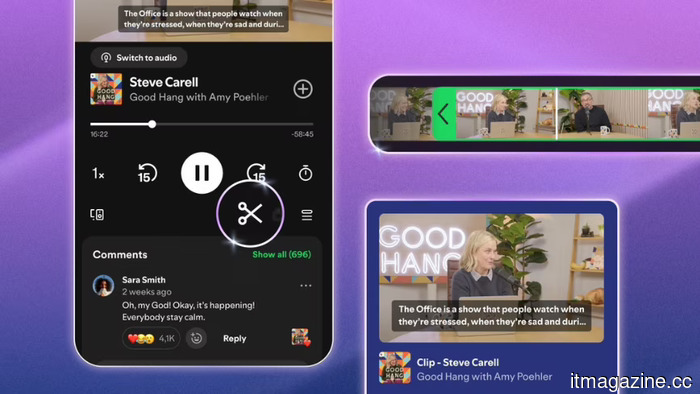 Spotify now enables users to clip and share segments from any podcast.
Spotify introduces Podcast Clips, allowing listeners to cut and share audio snippets from episodes using a new scissors icon, accessible globally on mobile for both free and Premium users.
Spotify now enables users to clip and share segments from any podcast.
Spotify introduces Podcast Clips, allowing listeners to cut and share audio snippets from episodes using a new scissors icon, accessible globally on mobile for both free and Premium users.
 At the BEYOND Expo 2026, the CEO of XREAL forecasts a groundbreaking moment for AI glasses, comparable to the launch of the iPhone.
As large AI models quickly integrate with wearable technology, smart glasses are once again capturing the attention of the tech sector. This includes AI glasses from Meta.
At the BEYOND Expo 2026, the CEO of XREAL forecasts a groundbreaking moment for AI glasses, comparable to the launch of the iPhone.
As large AI models quickly integrate with wearable technology, smart glasses are once again capturing the attention of the tech sector. This includes AI glasses from Meta.
 From video comprehension to edge deployment, Om AI focuses on practical applications of artificial intelligence.
In the present stage, as the competition among large models transitions from focusing on parameter scale to practical deployment ability, a coalition of Chinese firms...
From video comprehension to edge deployment, Om AI focuses on practical applications of artificial intelligence.
In the present stage, as the competition among large models transitions from focusing on parameter scale to practical deployment ability, a coalition of Chinese firms...
 From video comprehension to edge implementation, Om AI aims for practical AI solutions.
In the ongoing phase where competition among large models is transitioning from the scale of parameters to actual deployment effectiveness, a number of Chinese companies
From video comprehension to edge implementation, Om AI aims for practical AI solutions.
In the ongoing phase where competition among large models is transitioning from the scale of parameters to actual deployment effectiveness, a number of Chinese companies
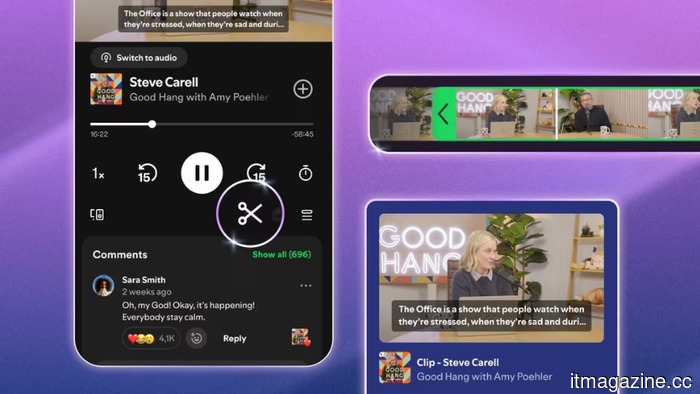 Spotify now enables listeners to clip and share snippets from any podcast.
Spotify introduces Podcast Clips, allowing listeners to cut and share audio snippets from episodes using a new scissors icon, accessible globally on mobile for both free and Premium users.
Spotify now enables listeners to clip and share snippets from any podcast.
Spotify introduces Podcast Clips, allowing listeners to cut and share audio snippets from episodes using a new scissors icon, accessible globally on mobile for both free and Premium users.
At BEYOND Expo 2026, the CEO of XREAL anticipates a pivotal moment for AI glasses akin to that of the iPhone.
As large AI models quickly integrate with wearable technology, smart glasses are once again at the center of attention for the tech industry. This includes Meta’s AI glasses.