
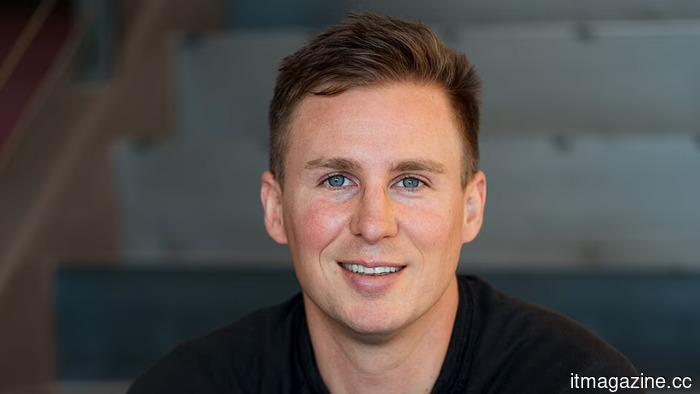
Brett Adcock's AI hardware company Hark has secured $700 million at a valuation of $6 billion.
Two months after emerging from stealth mode, the founder of Figure and Archer has secured both a chip-and-model stack and a corresponding hefty cheque. Hark, the AI hardware firm that Brett Adcock started funding personally late last year, has raised over $700 million in a Series A round, which values the company at $6 billion, according to Bloomberg.
This funding round concluded about two months after Hark came out of stealth and places the company in the top tier of AI hardware investments, even before launching a product. Parkway Venture Capital spearheaded this round. The roster of investors reads like a list of major players in the chip and cloud sectors: Nvidia, AMD Ventures, Intel Capital, and Qualcomm Ventures all contributed, along with Salesforce Ventures, Brookfield, ARK Invest, Greycroft, Prime Movers Lab, Align Ventures, and Tamarack Global. Several of these investors have interests in various aspects of AI hardware, which underscores the significance of their involvement.
Adcock established Hark in late 2025, investing $100 million of his own funds after previously founding companies that are now either public, acquired, or among the leaders in their respective fields. He co-founded the recruiting marketplace Vettery, which was sold to Adecco for $100 million; launched electric aircraft manufacturer Archer Aviation, which went public through a SPAC in 2021; started humanoid robotics company Figure, where he remains CEO; and founded school security firm Cover. He is also the principal at Hark.
What Hark aims to build is not as clear as the funds raised. The company has characterized itself as developing a “personal AI platform” that combines in-house foundation models, software, and native hardware with new interfaces, rather than focusing on a single layer of the stack. According to a BusinessWire announcement in March, Hark plans to release its first multi-modal models this summer.
The market Hark is entering is small, costly, and filled with failures. Humane’s AI Pin became the most notable cautionary example of 2024, with the Rabbit R1 following closely. Even Apple, which possesses unmatched hardware distribution capabilities, has been trying for the past year to define its on-device AI offering.
Adcock's argument is that he has previously delivered hardware, notably at Archer and Figure, and that integrating models with silicon from the outset offers the best chance of creating a defensible product. However, Hark has yet to reveal details regarding its workforce, hardware specifications, target pricing, launch market, or customer pipeline. The Series A funding allows the company to maintain this ambiguity a bit longer.
With both Nvidia and AMD among the investors, supply allocation—often a limiting factor for AI hardware companies in 2026—is a concern Hark can likely address more effectively than many of its competitors. Nevertheless, this funding round does not guarantee product-market alignment. Hark enters a market where several well-capitalized, well-qualified teams have launched, faltered, and quietly scaled back. According to the company’s own timeline, the first models are just weeks away, but the device that will monetize those models is still a ways off.
Other articles
 IBM secures $1 billion as the US supports nine quantum firms with $2 billion.
The US Department of Commerce has entered into nine letters of intent under the CHIPS Act, totaling $2 billion, which includes equity investments in IBM, D-Wave, Rigetti, among others.
IBM secures $1 billion as the US supports nine quantum firms with $2 billion.
The US Department of Commerce has entered into nine letters of intent under the CHIPS Act, totaling $2 billion, which includes equity investments in IBM, D-Wave, Rigetti, among others.
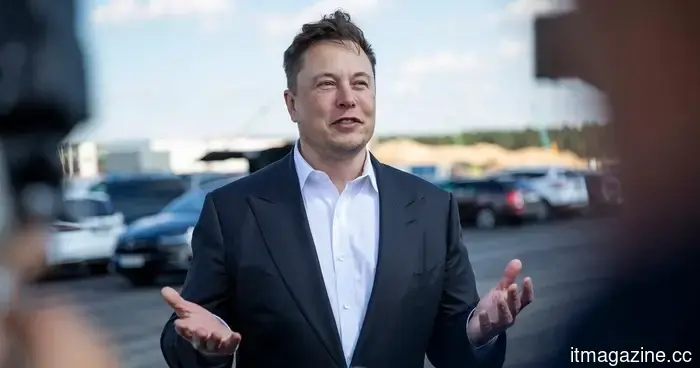 Elon Musk will receive a significant payday if he establishes a colony of one million people on Mars.
Elon Musk's SpaceX compensation scheme could result in a significant stock grant if the company achieves a substantial valuation and establishes a colony of one million people on Mars.
Elon Musk will receive a significant payday if he establishes a colony of one million people on Mars.
Elon Musk's SpaceX compensation scheme could result in a significant stock grant if the company achieves a substantial valuation and establishes a colony of one million people on Mars.
 Europe introduces its go-to-market accelerator for AI startups.
AcceleratorX, initiated by the largest agency network in the EU, is designed for the AI founders of 2026. The premise is that early-stage AI startups require customers, rather than mentors, right from the first week.
Spotify and Universal have reached an agreement for licensing AI-generated covers and remixes.
Spotify Premium subscribers will have the ability to create AI-generated covers and remixes of UMG songs as part of a new licensing agreement. The financial details of the deal have not been revealed.
Europe introduces its go-to-market accelerator for AI startups.
AcceleratorX, initiated by the largest agency network in the EU, is designed for the AI founders of 2026. The premise is that early-stage AI startups require customers, rather than mentors, right from the first week.
Spotify and Universal have reached an agreement for licensing AI-generated covers and remixes.
Spotify Premium subscribers will have the ability to create AI-generated covers and remixes of UMG songs as part of a new licensing agreement. The financial details of the deal have not been revealed.
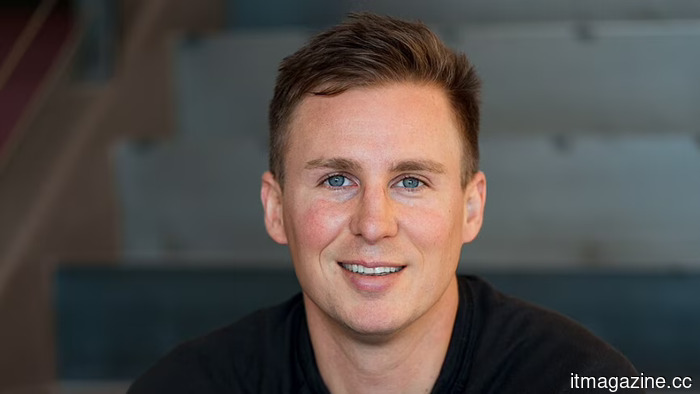 Hark, the AI hardware startup founded by Brett Adcock, has secured $700 million in funding, achieving a valuation of $6 billion.
Hark, established by serial entrepreneur Brett Adcock, has secured $700 million at a valuation of $6 billion. Notable investors include Nvidia, AMD, and Intel.
Hark, the AI hardware startup founded by Brett Adcock, has secured $700 million in funding, achieving a valuation of $6 billion.
Hark, established by serial entrepreneur Brett Adcock, has secured $700 million at a valuation of $6 billion. Notable investors include Nvidia, AMD, and Intel.
 Anthropic is set to establish an office in Milan, aligning its expansion in Italy with a rebranding effort spearheaded by the Vatican.
According to Reuters, Anthropic plans to establish a Milan office to strengthen its commercial presence in Italy, furthering its expansion in Europe, which already includes locations in London, Dublin, Zurich, Paris, and Munich.
Anthropic is set to establish an office in Milan, aligning its expansion in Italy with a rebranding effort spearheaded by the Vatican.
According to Reuters, Anthropic plans to establish a Milan office to strengthen its commercial presence in Italy, furthering its expansion in Europe, which already includes locations in London, Dublin, Zurich, Paris, and Munich.
Brett Adcock's AI hardware company Hark has secured $700 million at a valuation of $6 billion.
Hark, established by serial entrepreneur Brett Adcock, has secured $700 million at a valuation of $6 billion. Among the listed investors are Nvidia, AMD, and Intel.