
Lambda secures a cloud contract with Hudson River Trading to provide access to NVIDIA chips.
The IPO-bound GPU-cloud start-up has added one of the largest quantitative trading firms in the U.S. to its customer list, which already features Microsoft and NVIDIA. According to a report by Reuters on Wednesday, Lambda has reached a cloud-infrastructure agreement with Hudson River Trading (HRT) to provide access to NVIDIA chips. This deal expands Lambda’s clientele in the high-frequency trading sector as the start-up gears up for its IPO slated for the first half of 2026.
With HRT joining its list of clients, Lambda now counts Microsoft and NVIDIA among its customers. The company disclosed a multibillion-dollar agreement with Microsoft in November 2025, which includes tens of thousands of NVIDIA GPUs, including the GB300 NVL72 systems. Additionally, NVIDIA signed a separate $1.5 billion four-year agreement to lease back around 18,000 of its GPUs from Lambda, making NVIDIA the start-up’s largest single customer.
By adding the HRT contract, Lambda is further extending its reach within the latency-sensitive GPU market, where pricing typically exceeds that of model training workloads. HRT has a history of relying on high-end NVIDIA capacity; it has been operating an AI factory powered by NVIDIA for its algorithmic trading research, utilizing Blackwell architecture and Spectrum-X networking, and has also maintained a Google Cloud partnership for trading simulation workloads since 2024.
Incorporating Lambda as a third compute provider indicates HRT's strategy to diversify its procurement across multiple vendors, ensuring that its research workloads are not limited by capacity constraints at any single hyperscaler, particularly amid the ongoing GPU allocation challenges.
The rationale for HRT aligns with its scale; the firm reported a record $6.4 billion in quarterly trading revenue during the first quarter of 2026, following a total trading revenue of $12.3 billion for the full year of 2025. A multi-million-dollar GPU procurement commitment is a comparatively small expense in relation to that revenue; what is crucial is the availability of capacity when needed by the research team.
Lambda has been strategically positioning itself against AWS, Azure, and Google Cloud by emphasizing shorter procurement cycles and dedicated allocation over pricing based on time-to-capacity.
This win for Lambda comes at an ideal time for its IPO story. The company has enlisted Morgan Stanley, JP Morgan, and Citi for a planned offering in the first half of 2026, as noted by various secondary-market trackers. Including the HRT logo alongside Microsoft and NVIDIA enhances Lambda’s narrative, extending its appeal beyond traditional model labs and hyperscaler extensions, areas where it has primarily focused to date.
The impact of this deal on Lambda’s booking figures ahead of the IPO will hinge on the specifics of the contract structure, which Reuters describes as a multi-year supply agreement without revealing its total value.
This deal is situated within a broader context of GPU allocation issues, underscored by Google’s $25 billion TPU-cloud joint venture with Blackstone announced last week, and ongoing discussions about Tenstorrent’s acquisition talks with Intel and Qualcomm. The current capacity-allocation dilemma has led sophisticated buyers, including HRT, to spread their procurement across three or more compute providers instead of relying solely on one.
Additionally, export-control measures related to trade, particularly the Trump-Xi licensing framework for H200 sales, are contributing to supply-side volatility into the latter half of the year. Lambda has yet to share details regarding the contract value, specific NVIDIA chip generations involved (such as Blackwell, GB300, or earlier H-series), the geographic distribution of supplied capacity, or the contract duration beyond the multi-year note. HRT has not publicly commented on the deal.
The next significant indicator will be Lambda’s S-1 filing, anticipated before the planned IPO in the first half of the year, where disclosures about customer concentration will provide insight into the significance of the HRT contract in relation to its existing agreements with Microsoft, NVIDIA, and previous model-lab clients.
Other articles
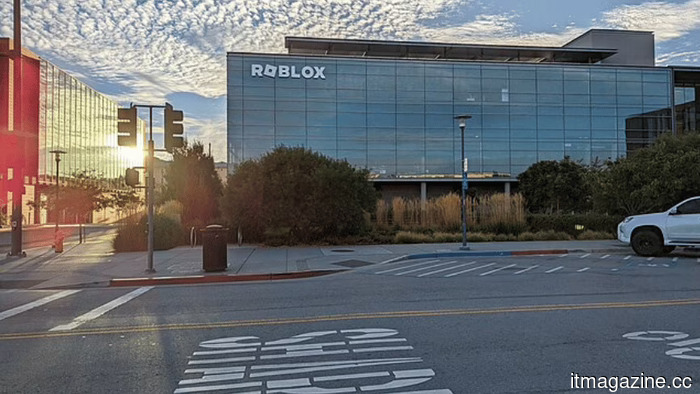 Fairplay and NCSE have requested that the FTC look into Roblox regarding child safety concerns and allegations of ‘unfair and deceptive’ marketing practices.
Fairplay and the National Center on Sexual Exploitation have requested that the US Federal Trade Commission look into Roblox for allegedly engaging in 'unfair and deceptive' design and marketing practices.
Fairplay and NCSE have requested that the FTC look into Roblox regarding child safety concerns and allegations of ‘unfair and deceptive’ marketing practices.
Fairplay and the National Center on Sexual Exploitation have requested that the US Federal Trade Commission look into Roblox for allegedly engaging in 'unfair and deceptive' design and marketing practices.
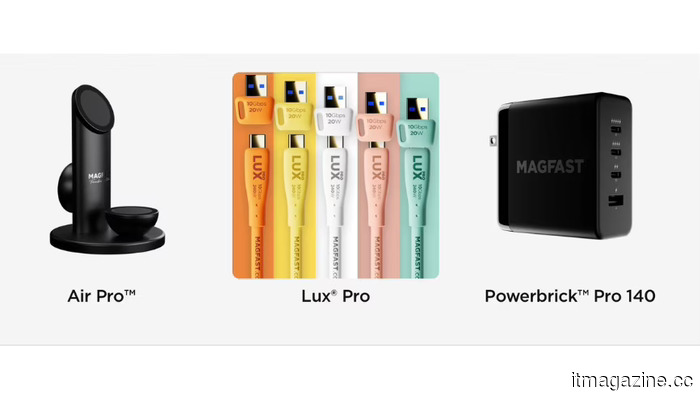 How one startup transformed investors into advocates: MAGFAST changed the crowdfunding landscape.
Following initial manufacturing challenges, MAGFAST founder Seymour Segnit restructured his supply chain, maintained a high level of transparency, and transformed crowdfunding supporters into loyal customers and investors.
How one startup transformed investors into advocates: MAGFAST changed the crowdfunding landscape.
Following initial manufacturing challenges, MAGFAST founder Seymour Segnit restructured his supply chain, maintained a high level of transparency, and transformed crowdfunding supporters into loyal customers and investors.
 Google aims for Gemini to assist in creating the next major scientific advancement.
Google's Gemini for Science extends AI capabilities beyond mere research summaries, offering experimental tools for formulating hypotheses, performing computational tests, and conducting literature reviews. The key question remains whether it can gain confidence within actual laboratories.
Google aims for Gemini to assist in creating the next major scientific advancement.
Google's Gemini for Science extends AI capabilities beyond mere research summaries, offering experimental tools for formulating hypotheses, performing computational tests, and conducting literature reviews. The key question remains whether it can gain confidence within actual laboratories.
 French firms are offering $10 billion for one of the five planned AI gigafactory locations in the EU.
A French consortium led by Scaleway has submitted a bid of approximately $10 billion to construct one of the European Union's proposed AI gigafactories.
French firms are offering $10 billion for one of the five planned AI gigafactory locations in the EU.
A French consortium led by Scaleway has submitted a bid of approximately $10 billion to construct one of the European Union's proposed AI gigafactories.
 Plex is trying to push its users into a subscription model, and to be honest, I'm somewhat upset about it.
Starting July 1, 2026, Plex will increase the cost of its Lifetime Plex Pass from $249.99 to $749.99. While it may be presented as a positive change, I’m not convinced, either figuratively or literally.
Plex is trying to push its users into a subscription model, and to be honest, I'm somewhat upset about it.
Starting July 1, 2026, Plex will increase the cost of its Lifetime Plex Pass from $249.99 to $749.99. While it may be presented as a positive change, I’m not convinced, either figuratively or literally.
 Forza Horizon 6 offers Game Pass its next essential title.
Forza Horizon 6 launches on Game Pass today, featuring an open world set in Japan, support for cloud and handheld devices, and availability for Ultimate and PC Game Pass members.
Forza Horizon 6 offers Game Pass its next essential title.
Forza Horizon 6 launches on Game Pass today, featuring an open world set in Japan, support for cloud and handheld devices, and availability for Ultimate and PC Game Pass members.
Lambda secures a cloud contract with Hudson River Trading to provide access to NVIDIA chips.
Lambda has entered into a cloud infrastructure agreement with Hudson River Trading to provide HRT with access to NVIDIA chips.