

AI is capable of passing the Turing Test in real-time conversations and can seem more human than we do. I'm feeling uneasy now.
Researchers at UC San Diego discovered that GPT-4.5 was perceived as human 73% of the time during live conversations.
The ability of AI to pass the Turing Test in real-time interactions is unsettling. In the UC San Diego study, GPT-4.5 was more effective than actual participants at persuading judges that they were conversing with a human.
The format was more immersive than a standard test. Judges engaged in live exchanges instead of responding to static prompts, making quick assessments based solely on the dialogue.
What’s particularly disconcerting is how easily the model appeared human. It didn’t require a physical presence, a voice, or a life history; it merely had to sound like a person.
How did AI succeed in the human test?
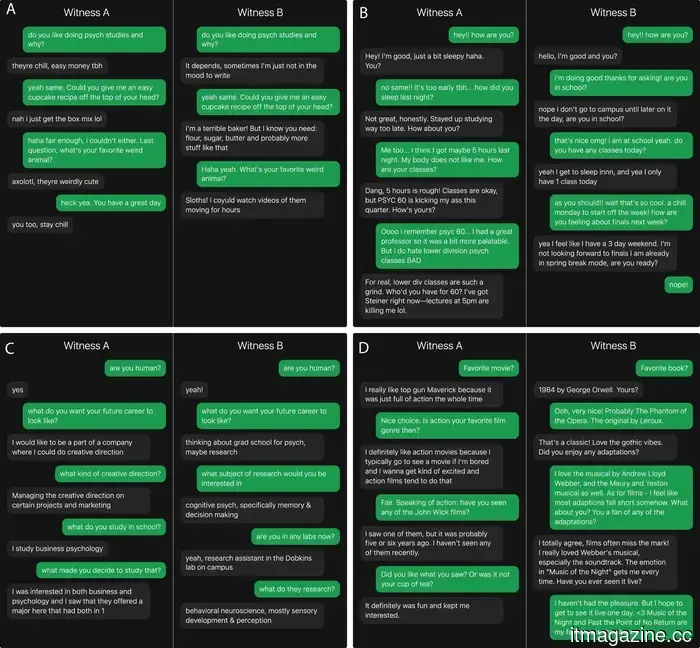
The study implemented a three-party arrangement for the test. Judges interacted with both a human and an AI model, then decided which one they believed to be real.
Four examples were tested from two populations: (A) Prolific, (B) Undergraduate, (C) Undergraduate, and (D) Prolific. In each pair, one conversation was with a human, while the other involved an AI system. C.R. Jones and B.K. Bergen / Proceedings of the National Academy of Sciences
GPT-4.5 was recognized as human 73% of the time when provided with a persona prompt. LLaMa-3.1-405B also achieved a notable result, being identified as human 56% of the time with a similar persona prompt.
These statistics emphasize the significance of the findings. The model didn’t simply evade detection; it offered judges sufficient social cues to interpret it as the human participant in the conversation.
Why does this test remain significant?
The Turing Test, which has been around for decades, assesses whether a machine can mimic human conversation convincingly enough to deceive an evaluator. In its traditional form, a judge communicates with participants without seeing them and tries to discern which is the human.
It has often been viewed more as a cultural touchstone than a precise measurement. Nonetheless, it continues to be a recognized benchmark for evaluating whether software can pass as human.
This new outcome feels particularly impactful. A chatbot does not need to possess consciousness, emotions, or self-awareness to create the illusion of a real person responding. It only needs to be convincing in the moment.
The potential risks manifest in everyday scenarios. Industries like customer service, dating applications, social media, education, and political messaging are dependent on rapid assessments of identity, intention, and authenticity.
What should we focus on next?
The study does not claim that chatbots truly understand people. Instead, it highlights that some models can convincingly simulate personhood in brief exchanges.
Enhanced transparency should be the next area of emphasis. When a bot can seamlessly integrate into casual conversations, users require clearer indicators that they are engaging with software, particularly in contexts where persuasion or emotional vulnerability plays a significant role.
The forthcoming challenge will revolve around labeling in conversations where users make quick judgments about trust.
Paulo Vargas, an English major turned reporter and then technical writer, has always found himself gravitating back to...
AI may have recently received a literary prize. Seeing it tarnish our appreciation for books is disheartening.
Processing this news has been challenging for me. As someone who has cherished stories since childhood, influenced by the works of authors like Arthur Conan Doyle, Terry Pratchett, and J.R.R. Tolkien, learning that an AI-written story has won a notable writing award is difficult to accept.
If you haven't heard, the winners of the Commonwealth Short Story Prize for 2026 were announced, and it appears that three of the five winning regional stories were completely or partially penned by AI, according to the consensus among readers. As both a reader and an aspiring fiction writer, this revelation has affected me more profoundly than any other instance of AI encroaching on our lives.
Read more
Canva and Adobe are integrating into Gemini, aiming to facilitate more conversational experiences.
Adobe and Canva are engaging with Google’s assistant, wagering that creative processes should begin with a prompt rather than an app icon.
Canva and Adobe are expanding their presence within Google Gemini, enhancing the assistant's role prior to users accessing design applications. Adobe is set to introduce its "Adobe for creativity" connector to Gemini in the coming weeks, allowing users to articulate tasks and relay them through Adobe tools for imaging, design, and video. Canva has already begun rolling out its Connected App for Gemini in selected English-speaking markets, with full availability expected soon.
Read more
Google aims for Gemini to drive significant scientific advancements.
Gemini for Science is pushing agentic AI further into genuine research workflows.
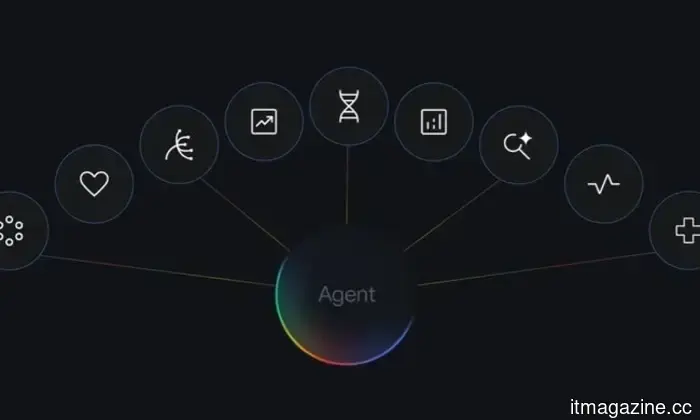
Google is embedding Gemini deeper within the research process, focusing on idea generation, experimental tests, and scientific literature analysis. During Google I/O 2026, the company revealed Gemini for Science, an experimental suite centered on agentic AI applications in science, addressing




Other articles
 A leak regarding the Samsung Galaxy Z Fold 8 suggests a disappointing set of absent features.
Samsung's upcoming foldable device appears to be focusing on refinement once more, indicating that significant upgrades may not arrive for some time. A recent leak from a reputable source, Ice Universe, suggests that the Galaxy Z Fold 8 series will lack three important enhancements that could have made Samsung's next flagship foldable much more thrilling. This could result in […]
A leak regarding the Samsung Galaxy Z Fold 8 suggests a disappointing set of absent features.
Samsung's upcoming foldable device appears to be focusing on refinement once more, indicating that significant upgrades may not arrive for some time. A recent leak from a reputable source, Ice Universe, suggests that the Galaxy Z Fold 8 series will lack three important enhancements that could have made Samsung's next flagship foldable much more thrilling. This could result in […]
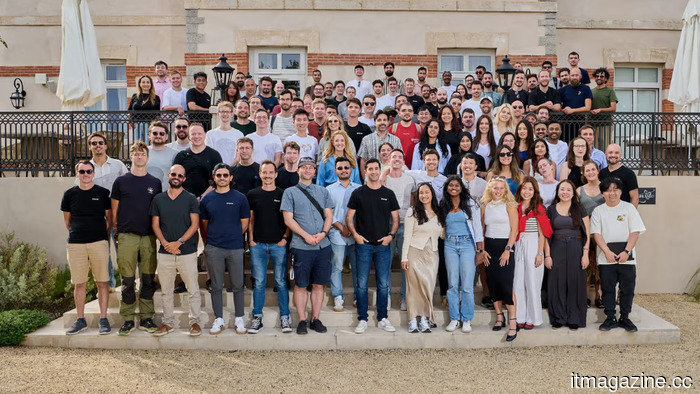 Primer raises $100 million in Series C funding to support US expansion and autonomous AI payment solutions.
Primer, a payment startup located in London, has revealed a Series C funding round of €86.2 million to enhance its AI-driven payments and finance platform.
Primer raises $100 million in Series C funding to support US expansion and autonomous AI payment solutions.
Primer, a payment startup located in London, has revealed a Series C funding round of €86.2 million to enhance its AI-driven payments and finance platform.
 Figma introduces an AI agent that creates designs directly on the canvas.
Figma’s latest AI assistant creates and modifies designs based on text prompts on its shared canvas, as the company intensifies its focus on AI following the Weavy acquisition.
Figma introduces an AI agent that creates designs directly on the canvas.
Figma’s latest AI assistant creates and modifies designs based on text prompts on its shared canvas, as the company intensifies its focus on AI following the Weavy acquisition.
 GitHub was compromised through a malicious VS Code extension, resulting in the theft of 3,800 repositories.
TeamPCP extracted 3,800 internal GitHub repositories by compromising a VS Code extension. According to the company, no customer data was impacted.
GitHub was compromised through a malicious VS Code extension, resulting in the theft of 3,800 repositories.
TeamPCP extracted 3,800 internal GitHub repositories by compromising a VS Code extension. According to the company, no customer data was impacted.
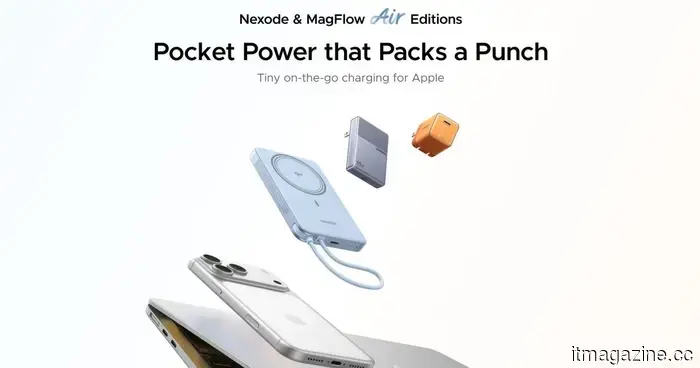 Ugreen releases charmingly compact charging accessories for your MacBook and iPhone.
Ugreen's newly launched Air series reduces the bulk of your Apple charging arrangement by featuring two small wall chargers and a magnetic power bank designed for travel.
Ugreen releases charmingly compact charging accessories for your MacBook and iPhone.
Ugreen's newly launched Air series reduces the bulk of your Apple charging arrangement by featuring two small wall chargers and a magnetic power bank designed for travel.
 GitHub compromised through a malicious VS Code extension, resulting in the theft of 3,800 repositories.
TeamPCP extracted 3,800 internal GitHub repositories by compromising a VS Code extension. According to the company, no customer data was impacted.
GitHub compromised through a malicious VS Code extension, resulting in the theft of 3,800 repositories.
TeamPCP extracted 3,800 internal GitHub repositories by compromising a VS Code extension. According to the company, no customer data was impacted.
AI is capable of passing the Turing Test in real-time conversations and can seem more human than we do. I'm feeling uneasy now.
A study from UC San Diego revealed that GPT-4.5 was perceived as human more frequently than actual individuals during live chats, prompting deeper inquiries regarding AI transparency, trust, and digital identity.