
Figma introduces an AI agent that creates designs directly on the canvas.
Summary: Figma is introducing its own AI agent that functions directly on the collaborative design canvas, allowing users to create, modify, and iterate on designs using natural language commands. This development follows collaborations with Anthropic and OpenAI, as well as the $200 million acquisition of Weavy.
For several months, Figma has been integrating external AIs into its canvas. Its partnerships with Anthropic and OpenAI provided coding agents like Claude Code and Codex with direct access to the design tool via MCP. Now, the company is releasing its own AI agent that resides within the collaborative canvas, capable of generating, editing, and iterating on designs based on simple text input.
Launching first in Figma Design, the assistant enables users to express their requirements in straightforward language and see the agent generate outcomes on the canvas in real-time. Figma states that users can operate multiple agents at once, each performing different tasks, effectively introducing AI collaborators into the same multiplayer environment where human team members already work.
The company claims its foundational models have been specifically optimized for design tasks, equipping the agent with knowledge of layout, components, and visual hierarchy—elements that general large language models may not understand as well.
“Teams can now collaborate with agents on the multiplayer canvas to explore ideas, visualize edge cases, and refine concepts together without focusing excessively on the more tedious aspects,” said Loredana Crisan, Figma’s chief design officer, who joined from Meta last year after almost ten years of leading product and design teams at Messenger, Instagram, and in Meta’s generative AI initiatives.
This launch is the latest in Figma's swift expansion into AI. Earlier this year, the company established partnerships that incorporated Anthropic’s Claude Code and OpenAI’s Codex into its design-to-development workflow using MCP.
Both integrations enable developers to convert existing interfaces into editable Figma frames or delegate Figma designs to a coding agent for production-ready execution. The newly integrated assistant adds another layer—rather than simply connecting code and design, it makes AI an integral participant in the design process itself.
This initiative has been supported by acquisitions. Last October, Figma acquired Weavy, a startup in Tel Aviv that developed a node-based AI canvas combining various generative models with professional editing tools.
The acquisition, reportedly valued at around $200 million, evolved into Figma Weave, and the AI credit monetization from this product contributed to the company's strong performance in the first quarter. Figma reported Q1 2026 revenue of $333.4 million, a 46 percent rise year-on-year, with its net dollar retention rate increasing to 139 percent, the highest in over two years.
Given the competitive landscape, Figma's investment in AI feels more crucial than optional. Canva, now with 220 million users globally, launched its AI 2.0 platform in March, featuring a proprietary foundation model designed for creation. Adobe’s Firefly has achieved a 41 percent business adoption rate, and several AI-focused startups, like Flora, Krea, and Dessn, are targeting the same audience of designers looking to enhance speed without compromising quality. Google, too, introduced Pics at I/O 2026, an AI design tool embedded in Workspace that generates visuals from text inputs.
If Figma has an edge, it lies in the canvas itself. Over 690,000 paying teams currently use it as their collaborative workspace, and the multiplayer framework that initially propelled Figma's success now serves as a suitable environment for AI agents to function. While competitors are developing AI tools that apply to design, Figma is aiming to create AI tools that integrate into the design process, working alongside human teammates on the same boundless canvas.
Whether this distinction is significant will be determined by execution. The company intends to roll out the AI assistant to its other offerings in the future and has indicated a desire to merge design and coding even more closely within its applications. For now, the clear message is that the canvas that transformed designer collaboration is also betting on changing how they collaborate with machines.
Altri articoli
 Google vuole che Gemini aiuti a costruire la prossima grande scoperta scientifica.
Il Gemini di Google per la Scienza spinge l'IA oltre i riassunti di ricerca, con strumenti sperimentali per ipotesi, test computazionali e revisione della letteratura. La domanda più grande è se possa guadagnare fiducia all'interno dei veri laboratori.
Figma lancia un agente AI che progetta sulla tela
L'assistente AI di Figma genera e modifica design a partire da prompt testuali sulla sua tela collaborativa, mentre l'azienda approfondisce il suo impegno nell'AI dopo l'acquisizione di Weavy.
Google vuole che Gemini aiuti a costruire la prossima grande scoperta scientifica.
Il Gemini di Google per la Scienza spinge l'IA oltre i riassunti di ricerca, con strumenti sperimentali per ipotesi, test computazionali e revisione della letteratura. La domanda più grande è se possa guadagnare fiducia all'interno dei veri laboratori.
Figma lancia un agente AI che progetta sulla tela
L'assistente AI di Figma genera e modifica design a partire da prompt testuali sulla sua tela collaborativa, mentre l'azienda approfondisce il suo impegno nell'AI dopo l'acquisizione di Weavy.
 Le chiamate di Discord finalmente ottengono la crittografia end-to-end, ma i tuoi DM non sono stati inclusi.
Il progetto di crittografia pluriennale di Discord è completato. Ogni chiamata è ora E2EE per impostazione predefinita su console, dispositivi mobili e browser. Tuttavia, c'è un aspetto che potresti voler sapere.
Le chiamate di Discord finalmente ottengono la crittografia end-to-end, ma i tuoi DM non sono stati inclusi.
Il progetto di crittografia pluriennale di Discord è completato. Ogni chiamata è ora E2EE per impostazione predefinita su console, dispositivi mobili e browser. Tuttavia, c'è un aspetto che potresti voler sapere.
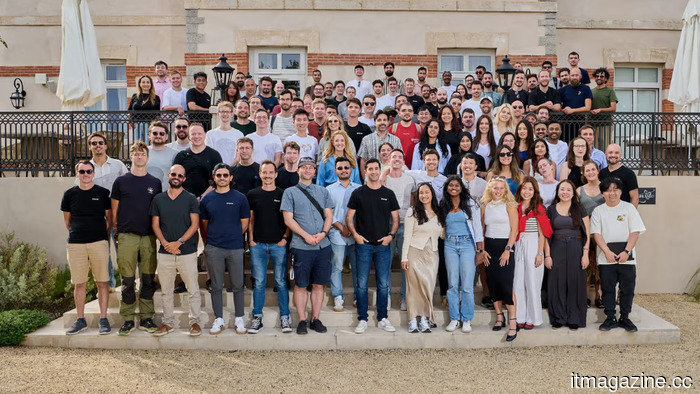 Primer ottiene 100 milioni di dollari in un round di finanziamento di Serie C per alimentare l'espansione negli Stati Uniti e i pagamenti autonomi con intelligenza artificiale.
Primer, una startup di pagamento con sede a Londra, ha annunciato un round di finanziamento di Serie C da 86,2 milioni di euro per espandere la sua piattaforma di pagamenti e finanza basata sull'IA.
Primer ottiene 100 milioni di dollari in un round di finanziamento di Serie C per alimentare l'espansione negli Stati Uniti e i pagamenti autonomi con intelligenza artificiale.
Primer, una startup di pagamento con sede a Londra, ha annunciato un round di finanziamento di Serie C da 86,2 milioni di euro per espandere la sua piattaforma di pagamenti e finanza basata sull'IA.
 Google vuole che Gemini aiuti a costruire la prossima grande scoperta scientifica.
Il Gemini di Google per la Scienza spinge l'IA oltre i riassunti di ricerca, con strumenti sperimentali per ipotesi, test computazionali e revisione della letteratura. La domanda più grande è se possa guadagnare fiducia all'interno dei veri laboratori.
Google vuole che Gemini aiuti a costruire la prossima grande scoperta scientifica.
Il Gemini di Google per la Scienza spinge l'IA oltre i riassunti di ricerca, con strumenti sperimentali per ipotesi, test computazionali e revisione della letteratura. La domanda più grande è se possa guadagnare fiducia all'interno dei veri laboratori.
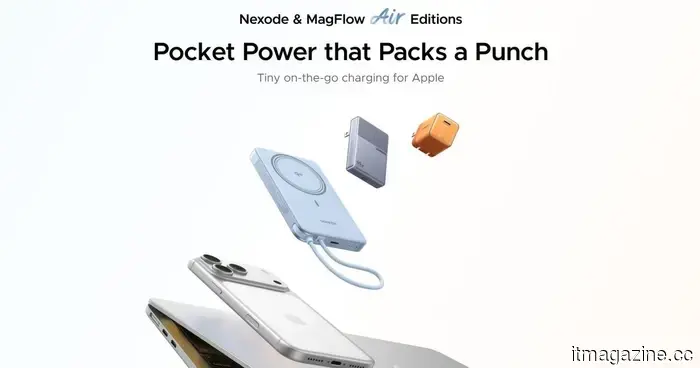 Ugreen lancia adorabili accessori di ricarica dalle dimensioni tascabili per il tuo MacBook e iPhone
La nuova serie Air di Ugreen riduce il volume del tuo setup di ricarica Apple con due caricabatterie da parete compatti e una power bank magnetica progettata per i viaggi.
Ugreen lancia adorabili accessori di ricarica dalle dimensioni tascabili per il tuo MacBook e iPhone
La nuova serie Air di Ugreen riduce il volume del tuo setup di ricarica Apple con due caricabatterie da parete compatti e una power bank magnetica progettata per i viaggi.
Figma introduces an AI agent that creates designs directly on the canvas.
Figma’s latest AI assistant creates and modifies designs based on text prompts on its shared canvas, as the company intensifies its focus on AI following the Weavy acquisition.