

Italy’s Lexroom achieves a total of $73 million raised, securing $50 million in its Series B funding for civil-law legal AI.
Left Lane Capital has led Milan-based Lexroom's Series B funding round, which comes eight months after the startup secured $19 million in Series A funding. Lexroom is offering a verified-source legal AI solution to over 8,000 law firms, meticulously constructed around a database of six million documents.
The legal AI startup, which focuses on civil-law jurisdictions, raised $50 million in Series B financing, with contributions from Base10 Partners, Eurazeo, Acurio Ventures, Entourage, and View Different. This funding round, which closed eight months after Lexroom's $19 million Series A, brings the total funding to over $73 million. The proceeds from this round are intended to facilitate the company’s expansion into Spain and Germany.
Lexroom's product is more specialized than what is often presented in the legal AI sector. It relies on a proprietary database that encompasses over six million verified legal resources, such as legislation, case law, and regulatory documents, which are regularly updated and structured for easy access.
Rather than using a generalized language model, the system utilizes a ‘data-first’ architecture, addressing the trust issues that have affected LLM-based legal tools, such as false citations and unreliable references. Chief executive and co-founder Paolo Fois noted, "When we launched Lexroom, it was evident that lawyers required a more efficient way to operate, and LLMs could fulfill that need. The crucial element was access to continuously updated laws, pertinent case law, and legal processes. Civil-law nations require an AI legal engine that prioritizes data."
This positioning sets Lexroom apart from the prevalent US-centric legal AI solutions, like those offered by Harvey, Hebbia, and EvenUp, which predominantly serve an English-speaking, US-UK market.
Civil-law systems, found primarily in continental Europe and large parts of Latin America and Asia, depend on codified laws as the main source of authority, distinguishing them from the US common-law system, which relies heavily on judicial precedents. Lexroom believes that its verified-source methodology is more appropriate for civil-law applications.
According to the company, over 8,000 law firms and corporate legal teams currently utilize its platform, with a significant number of users interacting with it on a daily basis. However, Lexroom did not disclose specific details on run-rate revenue, customer retention rates, or the composition of its Italian client base, which includes independent firms, mid-sized practices, and large corporate legal departments.
The rapid progression from a $19 million Series A to a $50 million Series B suggests that Lexroom is demonstrating strong metrics to its investors, surpassing the company’s own expectations.
The competitive landscape for European legal AI is intensifying. Berlin-based Noxtua, formerly Xayn, raised $92 million last year with a focus on German-trained legal models and infrastructure. Additionally, LawX in Berlin secured €7.5 million from Motive Partners for its AI ‘operating system’ designed for law firms and notaries, emphasizing back-office tasks rather than research and drafting.
In a broader context, US companies are also vying for attention in this sector; for example, Anthropic has introduced ten financial-services agent templates inside Claude, addressing workflows that include those associated with legal services.
The target markets that Lexroom aims to penetrate are natural extensions of its civil-law foundation. Spain is more aligned with Lexroom's Italian civil-law roots compared to other major European markets, while Germany represents the largest civil-law legal services market in Europe by expenditure.
The firm plans to establish local teams and develop jurisdiction-specific expertise in collaboration with firms already operating in those regions, indicating a strategy focused on partnerships with established legal practices in Spain and Germany rather than direct competition with Noxtua and LawX.
While Lexroom did not reveal its post-money valuation, run-rate revenue figures, or headcount expansion plans, the growth in customer numbers and the cadence of funding rounds indicate that the civil-law legal AI sector is starting to establish a clear competitive framework, with Lexroom emerging as a leading Italian player in a market that has already seen significant entrants from Germany and France.
Altri articoli
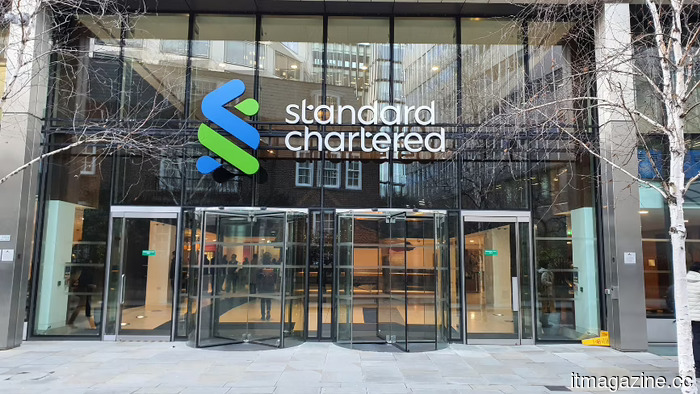 Standard Chartered plans to reduce 7,800 back-office positions due to automation by 2030.
Standard Chartered's CEO Bill Winters informed investors in Hong Kong that the bank intends to reduce more than 15% of its back-office positions in HR, risk, and compliance by 2030, aiming to increase income per employee by 20% by 2028.
Standard Chartered plans to reduce 7,800 back-office positions due to automation by 2030.
Standard Chartered's CEO Bill Winters informed investors in Hong Kong that the bank intends to reduce more than 15% of its back-office positions in HR, risk, and compliance by 2030, aiming to increase income per employee by 20% by 2028.
 iOS 27 might resolve a major annoyance with the Shortcuts app, and I’m eager to see it.
Apple is getting ready to implement a significant update for the Shortcuts app in iOS 27. With the help of AI, users will at last be able to create multi-step shortcuts just by describing them in natural language.
iOS 27 might resolve a major annoyance with the Shortcuts app, and I’m eager to see it.
Apple is getting ready to implement a significant update for the Shortcuts app in iOS 27. With the help of AI, users will at last be able to create multi-step shortcuts just by describing them in natural language.
 iOS 27 might resolve a major issue with the Shortcuts app, and I'm eagerly looking forward to it.
Apple is preparing a significant update for the Shortcuts app in iOS 27. With the help of AI, users will have the ability to create multi-step shortcuts just by describing them in natural language.
iOS 27 might resolve a major issue with the Shortcuts app, and I'm eagerly looking forward to it.
Apple is preparing a significant update for the Shortcuts app in iOS 27. With the help of AI, users will have the ability to create multi-step shortcuts just by describing them in natural language.
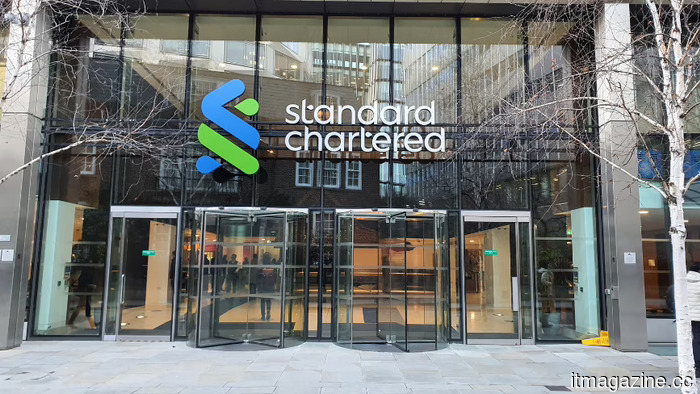 Standard Chartered plans to eliminate 7,800 back-office positions in favor of automation by 2030.
Standard Chartered's CEO Bill Winters informed investors in Hong Kong that the bank plans to reduce more than 15% of its back-office positions in human resources, risk, and compliance by 2030, aiming to increase income per employee by 20% by 2028.
Standard Chartered plans to eliminate 7,800 back-office positions in favor of automation by 2030.
Standard Chartered's CEO Bill Winters informed investors in Hong Kong that the bank plans to reduce more than 15% of its back-office positions in human resources, risk, and compliance by 2030, aiming to increase income per employee by 20% by 2028.
 Italy's Lexroom has achieved a total of $73 million in funding, including a $50 million Series B round for its civil-law legal AI.
Lexroom, the legal-AI startup focused on civil law and based in Milan, has secured $50 million in a Series B funding round led by Left Lane Capital.
Italy's Lexroom has achieved a total of $73 million in funding, including a $50 million Series B round for its civil-law legal AI.
Lexroom, the legal-AI startup focused on civil law and based in Milan, has secured $50 million in a Series B funding round led by Left Lane Capital.
 iOS 27 may resolve a significant issue with the Shortcuts app, and I'm looking forward to it.
Apple is preparing a significant update for the Shortcuts app in iOS 27. With the help of AI, users will now be able to create multi-step shortcuts by simply explaining their needs to the AI in natural language.
iOS 27 may resolve a significant issue with the Shortcuts app, and I'm looking forward to it.
Apple is preparing a significant update for the Shortcuts app in iOS 27. With the help of AI, users will now be able to create multi-step shortcuts by simply explaining their needs to the AI in natural language.
Italy’s Lexroom achieves a total of $73 million raised, securing $50 million in its Series B funding for civil-law legal AI.
Lexroom, a Milan-based legal AI startup focused on civil law, has secured $50 million in a Series B funding round led by Left Lane Capital.