
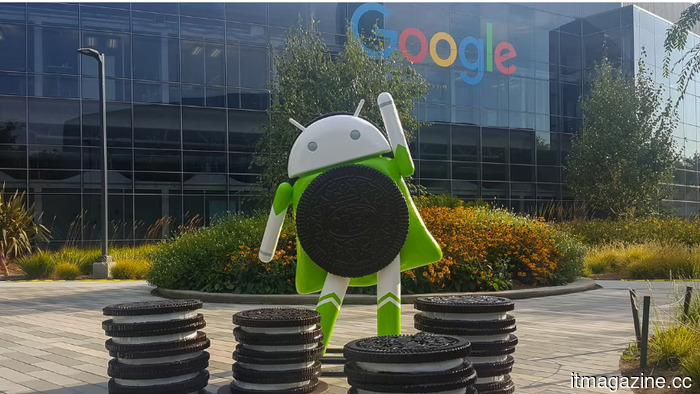
Google I/O 2026: Gemini Intelligence, Google Books, Android XR glasses, and what to anticipate from the keynote address.
**TL;DR** Google I/O 2026 is set to start on May 19, featuring a keynote at the Shoreline Amphitheatre. Key announcements include Gemini Intelligence, a new AI layer for Android; Googlebooks, premium Android laptops replacing Chromebooks; Android XR smart glasses with Gemini 2.5 Pro; and updates on Android 17.
Google I/O 2026 kicks off on Monday at the Shoreline Amphitheatre in Mountain View, California, with much of the agenda already revealed. The two-day developer conference, happening from May 19 to 20 with a keynote at 10 a.m. PT, aims to formalize announcements that Google began sharing earlier with a pre-recorded Android Show on May 12. The prominent highlights—Gemini Intelligence, Googlebooks, Android XR glasses, and Android 17—reflect Google's most ambitious effort to integrate AI into its consumer products since adopting an AI-first approach in 2023.
**Gemini Intelligence: The AI layer for Android**
The key element of Google’s pre-I/O announcements is Gemini Intelligence, a suite of proactive AI features that shifts Gemini from a chatbot interface into the operating system. Instead of requiring users to open a separate application, Gemini Intelligence is designed to function seamlessly across apps, comprehend screen context, and autonomously complete multi-step tasks. Demonstrations showcased the system's ability to locate a class syllabus in Gmail, identify necessary textbooks, and add them to a shopping cart without any app-switching by the user.
Other features include Smart Autofill, which leverages Gemini's contextual understanding to fill out form fields across apps and the Chrome browser; Rambler, a speech-to-text tool that eliminates filler words and systematically organizes dictated text; and Create My Widget, which allows users to describe a custom widget in natural language, prompting Gemini to generate it instantly using data from Gmail, Calendar, web searches, and other Google services. These features are expected to launch this summer on the latest Samsung Galaxy and Google Pixel devices, with plans to expand to watches, cars, glasses, and laptops later in the year.
Google is framing Gemini Intelligence not merely as a feature added onto existing software but as a foundational intelligence layer operating beneath Android. This strategy directly responds to Apple’s upcoming AI-enhanced Siri redesign, anticipated at WWDC in June, and to competitive pressures from OpenAI, Anthropic, and other companies developing agentic AI systems. The success of Gemini Intelligence in fulfilling its promise of autonomous task completion will depend on its execution, but Google's clear intent is to make its AI the primary interface for users with their phones. Meanwhile, the EU is preparing to mandate that Google allow rival AI assistants on Android, which may complicate this goal in Europe.
**Googlebooks replacing Chromebooks**
The second significant announcement is Googlebooks, a new category of premium Android-based laptops designed to take the place of Chromebooks. These devices will operate on Aluminium OS, a version of Android 17 modified to serve as a desktop operating system, featuring a custom window manager, native multitasking, and incorporated Gemini capabilities. Google has effectively retired the Chromebook, rebranding it into something more ambitious.
Googlebooks are set to launch this autumn, with manufacturers like Acer, ASUS, Dell, HP, and Lenovo on board. Notable features include Magic Pointer, which transforms the cursor into an AI agent that can execute actions on-screen, and the same Create My Widget system available on mobile devices. The laptops will support Android applications directly and can stream mobile apps from a connected smartphone.
This move addresses a long-standing strategic question regarding whether Google would merge Android and ChromeOS into a single platform. Tales of unification efforts date back to 2015, with Google testing various solutions, including running Android apps on ChromeOS, before deciding on the current strategy of redesigning Android for desktop operations. It remains to be seen whether Aluminium OS can compete with Windows and macOS in enterprise environments, but Google's proposition of AI-driven computing from the base up is at least distinct.
Google has announced it will showcase Android XR smart glasses at I/O 2026, providing a first glimpse of consumer-ready Gemini-powered eyewear. These glasses come equipped with cameras, microphones, and speakers, and collaborate with a paired Android phone. An optional in-lens display can provide contextual information privately, while Gemini 2.5 Pro enables real-time translation, navigation, messaging, and visual comprehension.
Hardware partners include Samsung, Warby Parker, Gentle Monster, and XREAL, illustrating a strategy to offer glasses across various price points and styles. Samsung is anticipated to release its Galaxy Glasses this year, building on its Galaxy XR headset that already runs Android XR. The extensive partnership network indicates that Google is positioning Android XR as a platform rather than a standalone product, aiming to achieve for smart glasses what Android accomplished for smartphones.
The competitive landscape is notable, as Meta has sold over seven million Ray-Ban smart glasses and commands approximately 82
Other articles
 US and Philippines advance
Under Secretary Helberg toured the New Clark City location with American businesses. The BCDA proposed a two-year lease grace period but turned down Washington's appeal for diplomatic immunity at the site.
US and Philippines advance
Under Secretary Helberg toured the New Clark City location with American businesses. The BCDA proposed a two-year lease grace period but turned down Washington's appeal for diplomatic immunity at the site.
 Two cryptocurrency billionaires are behind both the Trump family token and Iran's mechanism for evading sanctions.
A Reuters investigation associates $2.3 billion in transactions from Iran's largest cryptocurrency exchange, Nobitex, with Tron and BNB Chain.
Two cryptocurrency billionaires are behind both the Trump family token and Iran's mechanism for evading sanctions.
A Reuters investigation associates $2.3 billion in transactions from Iran's largest cryptocurrency exchange, Nobitex, with Tron and BNB Chain.
 Google has sold such a significant amount of TPU capacity that its own researchers are now waiting in line for the remaining resources.
Google's TPU stack is supporting partnerships with Anthropic and Meta. According to Bloomberg, this success has turned access to internal computing resources at Google and DeepMind into a highly sought-after asset.
Google has sold such a significant amount of TPU capacity that its own researchers are now waiting in line for the remaining resources.
Google's TPU stack is supporting partnerships with Anthropic and Meta. According to Bloomberg, this success has turned access to internal computing resources at Google and DeepMind into a highly sought-after asset.
 CBA appoints AI researcher Professor Mary-Anne Williams as its Chief AI Scientist.
The Commonwealth Bank of Australia has designated Professor Mary-Anne Williams, a researcher in AI from UNSW and an AAAI Fellow, as its inaugural Chief AI Scientist.
CBA appoints AI researcher Professor Mary-Anne Williams as its Chief AI Scientist.
The Commonwealth Bank of Australia has designated Professor Mary-Anne Williams, a researcher in AI from UNSW and an AAAI Fellow, as its inaugural Chief AI Scientist.
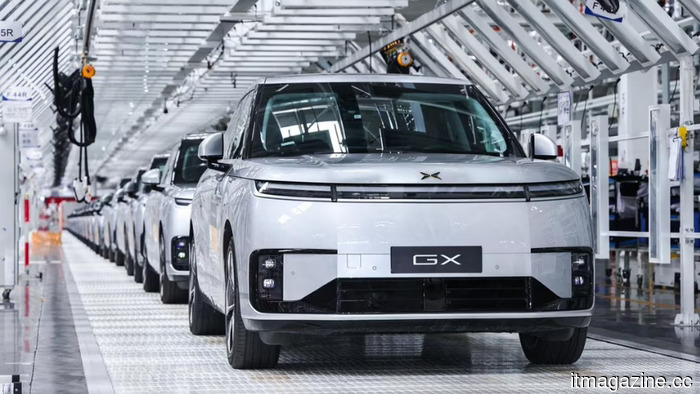 XPeng launches its robotaxi service in Guangzhou, three years later than the frontrunners and ahead of any other Chinese car manufacturer.
XPeng started the production of its robotaxi in Guangzhou on Monday, utilizing VLA 2.0, four Turing chips, and aiming for a fully driverless operation by 2027.
XPeng launches its robotaxi service in Guangzhou, three years later than the frontrunners and ahead of any other Chinese car manufacturer.
XPeng started the production of its robotaxi in Guangzhou on Monday, utilizing VLA 2.0, four Turing chips, and aiming for a fully driverless operation by 2027.
 Two cryptocurrency billionaires are involved in both the Trump family token and the sanctions-evasion mechanism for Iran.
A Reuters investigation connects $2.3 billion in transactions from Iran's largest cryptocurrency exchange, Nobitex, to Tron and BNB Chain.
Two cryptocurrency billionaires are involved in both the Trump family token and the sanctions-evasion mechanism for Iran.
A Reuters investigation connects $2.3 billion in transactions from Iran's largest cryptocurrency exchange, Nobitex, to Tron and BNB Chain.
Google I/O 2026: Gemini Intelligence, Google Books, Android XR glasses, and what to anticipate from the keynote address.
The two-day developer conference is set to start on May 19. Google has already announced agentic AI for Android, a new category of laptops, and Gemini-powered smart glasses from Samsung, Warby Parker, and Gentle Monster.