
HSBC establishes a $4 billion credit facility for Chinese clean technology to expand internationally.
Europe's largest bank is establishing a dedicated facility to support Chinese exporters of solar, battery, electric vehicles, and data centers as they expand internationally, pointing to a surge in demand linked to the Iran war.
On Monday, HSBC unveiled a $4 billion credit facility aimed at assisting Chinese clean-technology companies in their overseas ventures. The ‘Sustainability and Transition Credit Facility’ encompasses solar energy, batteries, electric vehicles, data centers, and AI infrastructure, featuring extended credit terms, streamlined approval processes, and customized structuring for qualifying companies.
The context here is both geopolitical and commercial. The largest bank in Europe has created this financing line at a time when Chinese clean technology dominates globally in key areas critical to energy transition, as its connection to Western capital is still being reshaped amid ongoing US-China tariff and export-control conflicts.
Natalie Blyth, HSBC’s global head of sustainable finance and transition, stated that China is “home to some of the world’s most dynamic low-carbon companies,” which are setting “new benchmarks in high-end manufacturing.”
The statistics supporting this framing are telling. HSBC’s research indicates that China constitutes over 80% of the global solar manufacturing capacity, and since 2023, Chinese firms have pledged more than $180 billion in overseas clean-tech investments, according to a December report by the Australian research organization Climate Energy Finance.
Forecasts predict that global electric vehicle sales will exceed 26 million by 2026, while electricity consumption from data centers could almost double by 2030 to 945 terawatt-hours, as projected by the International Energy Agency.
HSBC is marketing this facility as a product for transition banking rather than a development financing tool. The bank's broader net-zero initiative has been focusing on direct support for difficult-to-decarbonize sectors and their suppliers, and the new facility aligns with that goal: lending to manufacturers with established products, market presence, and secure technology, rather than investing in early-stage projects.
The reference to the Iran war in the announcement is particularly noteworthy. HSBC’s statement mentions that the facility is being launched “as the Iran war drives further demand for renewable energy such as wind and solar power, which in many cases is cheaper than fossil fuels.”
This perspective is uncommon for a bank-promoted green-financing initiative and represents a transparent acknowledgment of demand. Concerns over energy security have sped up the procurement schedules of European utilities and industrial purchasers, with Chinese suppliers of solar, wind, and battery solutions positioned to meet that demand.
For Chinese clean-tech firms aiming to expand internationally, the challenge has been less about technology or pricing and more concerning the financing structure. An HSBC-branded facility aimed at the same growth objective provides these companies with a familiar Western banking product that complements their domestic capital sources.
In this context, the bank is offering both structuring and capital. The inclusion of data centers and AI in the facility represents a new aspect, linking HSBC’s transition financing offerings to the global AI capital expenditure cycle, where Chinese suppliers of power electronics, cooling systems, and grid infrastructure have a significant position, even as their semiconductor suppliers face export control challenges.
However, HSBC did not disclose which specific mainland Chinese clean-tech companies are lined up to utilize the new facility, nor how the bank plans to manage its exposure to U.S. tariffs on Chinese green-tech imports.
Both aspects will be important when it comes to the first transaction pricing. The bank also did not reveal the duration of the facility or what percentage will be syndicated to other banks rather than kept on HSBC’s balance sheet.
The political implications of the announcement are clear. A UK-listed bank with a balance sheet heavily focused on Asia is publicly supporting the clean-tech expansion of an economy from which several of its Western counterparts are withdrawing due to sanctions and reputational issues.
HSBC has been gradually moving in this direction over the past 18 months; the $4 billion facility formalizes this stance. The initial deals structured against the facility will indicate whether the structuring process can keep pace with the rapidity suggested by the announcement.
Other articles
 HSBC launches a $4 billion credit facility for Chinese clean technology to expand internationally.
HSBC has introduced a $4 billion Sustainability and Transition Credit Facility aimed at Chinese clean-tech firms venturing into international markets, focusing on solar energy, batteries, electric vehicles, data centers, and AI infrastructure.
HSBC launches a $4 billion credit facility for Chinese clean technology to expand internationally.
HSBC has introduced a $4 billion Sustainability and Transition Credit Facility aimed at Chinese clean-tech firms venturing into international markets, focusing on solar energy, batteries, electric vehicles, data centers, and AI infrastructure.
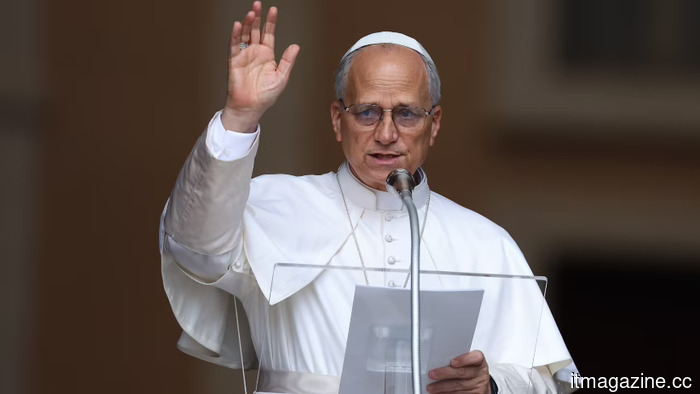 Pope Leo XIV condemns AI warfare and the rearmament of Europe during his first papal visit to La Sapienza since 2008.
The pope cautioned that the conflicts in Ukraine, Gaza, Lebanon, and Iran demonstrate the "inhuman evolution" of warfare and technology. His inaugural encyclical regarding AI and human dignity is anticipated to be released in the coming weeks.
Shein acquires Everlane for $100 million, transforming the brand known for its radical transparency into a fast-fashion asset.
Meta description: Shein is purchasing the San Francisco-based direct-to-consumer clothing brand Everlane from L Catterton for approximately $100 million. The final terms of the deal have not been disclosed yet.
Pope Leo XIV condemns AI warfare and the rearmament of Europe during his first papal visit to La Sapienza since 2008.
The pope cautioned that the conflicts in Ukraine, Gaza, Lebanon, and Iran demonstrate the "inhuman evolution" of warfare and technology. His inaugural encyclical regarding AI and human dignity is anticipated to be released in the coming weeks.
Shein acquires Everlane for $100 million, transforming the brand known for its radical transparency into a fast-fashion asset.
Meta description: Shein is purchasing the San Francisco-based direct-to-consumer clothing brand Everlane from L Catterton for approximately $100 million. The final terms of the deal have not been disclosed yet.
 Exadel acquires the London consultancy Tangent to enhance its AI engineering offerings with experience design.
Exadel has acquired Tangent, a digital experience consultancy based in London, integrating its expertise in UX, product, and MarTech design into Exadel's AI-driven engineering services.
Exadel acquires the London consultancy Tangent to enhance its AI engineering offerings with experience design.
Exadel has acquired Tangent, a digital experience consultancy based in London, integrating its expertise in UX, product, and MarTech design into Exadel's AI-driven engineering services.
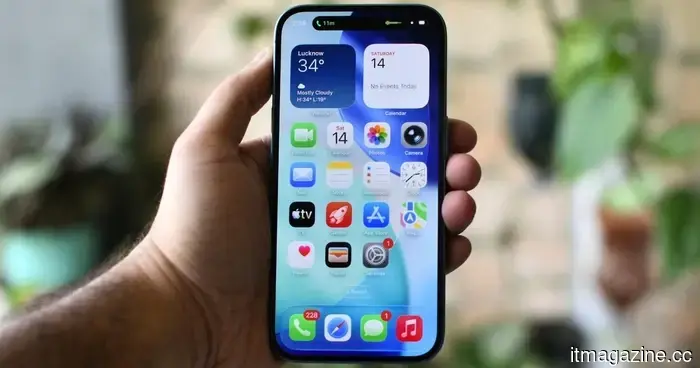 Siri may be late to the AI scene, but the overhaul in iOS 27 could still feel like a beta experience.
Apple could introduce its revamped AI-driven Siri as a beta feature in iOS 27, despite delays that are said to have postponed the project by almost two years.
Siri may be late to the AI scene, but the overhaul in iOS 27 could still feel like a beta experience.
Apple could introduce its revamped AI-driven Siri as a beta feature in iOS 27, despite delays that are said to have postponed the project by almost two years.
 The Delhi bench has reached a procedural compromise in Apple's India App Store case.
The Delhi High Court has instructed Apple to fully collaborate with India's competition authority regarding the App Store antitrust case and has mandated the CCI to refrain from making a final decision until 15 July.
The Delhi bench has reached a procedural compromise in Apple's India App Store case.
The Delhi High Court has instructed Apple to fully collaborate with India's competition authority regarding the App Store antitrust case and has mandated the CCI to refrain from making a final decision until 15 July.
HSBC establishes a $4 billion credit facility for Chinese clean technology to expand internationally.
HSBC has introduced a $4 billion Sustainability and Transition Credit Facility aimed at Chinese clean technology firms looking to expand internationally, including sectors such as solar, batteries, electric vehicles, data centers, and AI infrastructure.