
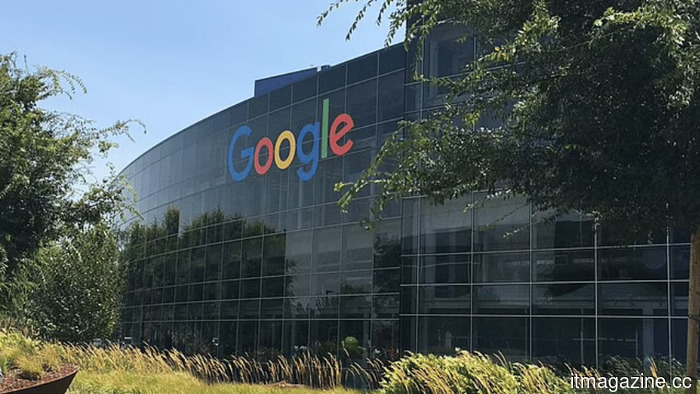
Google has sold such a significant amount of TPU capacity that its own researchers are now waiting in line for the remaining resources.
Alphabet boasts the most sought-after AI infrastructure stack in the industry. The success of its partnerships with Anthropic and Meta has transformed internal access into a competitive advantage. Over the past decade, Google has discreetly established a prime position in AI infrastructure, featuring a robust cloud business, custom chips, and agreements that position its TPUs as the default alternative to Nvidia for significant external clients.
However, this successful strategy has led to an unforeseen internal issue. Bloomberg’s Julia Love reported on Monday that Google’s AI researchers, including teams within Google DeepMind, are now vying for access to the computing resources that their company is selling to Anthropic and Meta.
The underlying structural issue is straightforward. Google has committed to investing up to $40 billion in Anthropic, a deal that includes five gigawatts of TPU capacity over five years and access to up to one million seventh-generation Ironwood chips. Additionally, a separate supply arrangement mediated by Broadcom provides another 3.5GW of TPU capacity for Anthropic starting in 2027, building on the 1GW the company is currently receiving in 2026. Anthropic has publicly acknowledged that the Google TPU stack is essential for its training and serving plans.
Meta, the other significant TPU customer cited by Bloomberg, secured its own agreement earlier this year. The capacity locked in by these commitments is not available for Google's internal model teams without waiting.
DeepMind’s CEO, Demis Hassabis, stated earlier this year that the limitation affects both sides. Part of the bottleneck is hardware-related, involving "a few suppliers of a few key components," with high-bandwidth memory from Samsung, Micron, and SK Hynix often highlighted as the main issue. Some of the challenge also stems from research throughput; as Hassabis noted, researchers require many chips to experiment with new ideas at a sufficient scale. While hardware constraints may partly be beyond Google's control, the internal allocation restrictions are not.
The figures underlying this scenario are substantial. Alphabet is projecting a capital expenditure range of $175 billion to $185 billion for 2026, amidst a combined Big Tech AI infrastructure investment that has surpassed $650 billion this year. Google has, according to its own reports, been adding significantly over a gigawatt of new AI compute capacity in 2026.
After a decade of focusing on TPUs, the company is finally reaping the unit-economics benefits that enable it to sell its chips, host competitors' models, and conduct its own cutting-edge research simultaneously. However, the available resources are no longer sufficient for all three purposes at the same time.
Bloomberg's report highlights two specific indicators of this tension. Several researchers, including Ioannis Antonoglou, a long-time contributor to DeepMind, have left for startup positions in the past 18 months, a trend that has accelerated as securing compute access within Google has become more challenging. Oren Etzioni, the former CEO of the Allen Institute for AI referenced in the article, has characterized the situation publicly as a predictable outcome of an internal market where compute is allocated based on managerial seniority, rather than by the unit-cost economics that apply to external customer contracts.
For the past 18 months, Google has found itself in a delicate situation: it needs its TPU program to prove volume traction with named external customers to validate the technology against Nvidia while ensuring sufficient internal capacity for Gemini training runs and DeepMind research. The four-partner inference-chip supply chain involving Broadcom, MediaTek, and Marvell is a strategy aimed at alleviating the constraint by increasing capacity beyond TPU training, though it has yet to reach the scale that demand necessitates.
Google did not challenge Bloomberg’s perspective on internal allocation publicly; instead, it emphasized its overall investment stance and noted that compute constraints are a broad industry issue rather than unique to Google. This observation aligns with the evidence: every major model provider appears to be compute-constrained relative to their own research goals, based on a straightforward analysis of Q1 2026 earnings.
What makes Google's situation particularly newsworthy is the juxtaposition: the company has simultaneously become the largest infrastructure supplier for its main competitors. The question of whether it can continue to sell the asset while also utilizing it will be determined in the coming quarters.
Other articles
 Walmart's new ONN tablets are budget-friendly and provide substantial value.
Walmart is offering two new Onn choices for budget tablet shoppers, featuring a compact 8.1-inch version and a larger 13-inch Pro model that includes a big display, a stylus, and Android 16.
Walmart's new ONN tablets are budget-friendly and provide substantial value.
Walmart is offering two new Onn choices for budget tablet shoppers, featuring a compact 8.1-inch version and a larger 13-inch Pro model that includes a big display, a stylus, and Android 16.
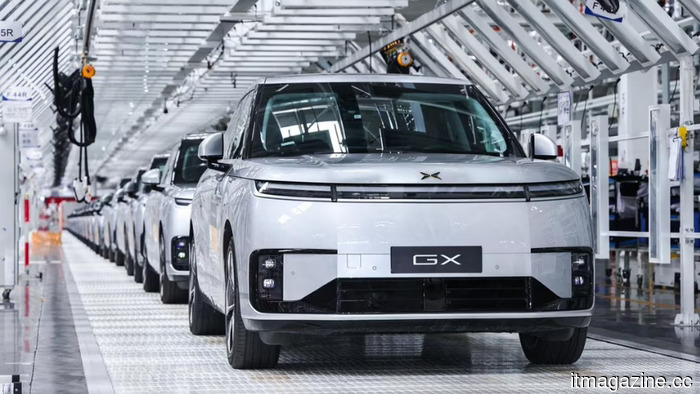 XPeng launches its robotaxi service in Guangzhou, three years later than the frontrunners and ahead of any other Chinese car manufacturer.
XPeng started the production of its robotaxi in Guangzhou on Monday, utilizing VLA 2.0, four Turing chips, and aiming for a fully driverless operation by 2027.
XPeng launches its robotaxi service in Guangzhou, three years later than the frontrunners and ahead of any other Chinese car manufacturer.
XPeng started the production of its robotaxi in Guangzhou on Monday, utilizing VLA 2.0, four Turing chips, and aiming for a fully driverless operation by 2027.
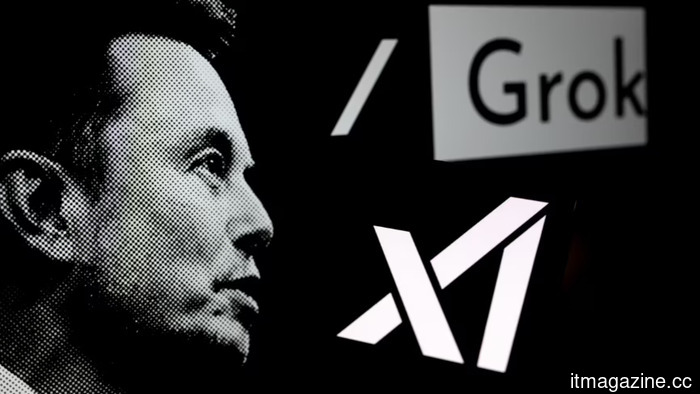 Musk's xAI had assured employees of $420 for their tax information. However, two months later, there has been no payment.
La xAI de Elon Musk ofreció a los empleados $420 para entregar sus declaraciones de impuestos como datos de entrenamiento para Grok antes de la fecha límite del 15 de abril. Dos meses después, Bloomberg informa que los pagos aún no se han realizado.
Musk's xAI had assured employees of $420 for their tax information. However, two months later, there has been no payment.
La xAI de Elon Musk ofreció a los empleados $420 para entregar sus declaraciones de impuestos como datos de entrenamiento para Grok antes de la fecha límite del 15 de abril. Dos meses después, Bloomberg informa que los pagos aún no se han realizado.
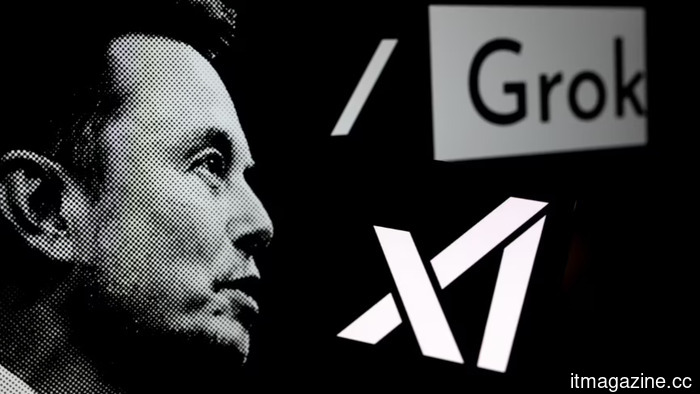 Musk's xAI had assured employees $420 for their tax information. However, two months later, there has been no payment.
xAI, founded by Elon Musk, offered staff $420 in exchange for their tax returns to use as training data for Grok before the April 15 deadline. However, two months later, Bloomberg reports that the payments have yet to be processed.
Musk's xAI had assured employees $420 for their tax information. However, two months later, there has been no payment.
xAI, founded by Elon Musk, offered staff $420 in exchange for their tax returns to use as training data for Grok before the April 15 deadline. However, two months later, Bloomberg reports that the payments have yet to be processed.
 A method for economy class travel suggested by scientists may reduce the costs of lunar journeys slightly.
Researchers have discovered a more economical approach to sending spacecraft to the Moon by utilizing a gravitational sweet spot as a stopover, reducing fuel expenses by at least 58.80 m/s compared to current techniques.
A method for economy class travel suggested by scientists may reduce the costs of lunar journeys slightly.
Researchers have discovered a more economical approach to sending spacecraft to the Moon by utilizing a gravitational sweet spot as a stopover, reducing fuel expenses by at least 58.80 m/s compared to current techniques.
 NextEra has reached a $67 billion all-stock agreement to acquire Dominion, marking the largest power acquisition in history.
NextEra Energy has reached an agreement to purchase Dominion Energy for approximately $67 billion in an all-stock transaction, marking the largest acquisition in the power sector to date.
NextEra has reached a $67 billion all-stock agreement to acquire Dominion, marking the largest power acquisition in history.
NextEra Energy has reached an agreement to purchase Dominion Energy for approximately $67 billion in an all-stock transaction, marking the largest acquisition in the power sector to date.
Google has sold such a significant amount of TPU capacity that its own researchers are now waiting in line for the remaining resources.
Google's TPU stack is supporting partnerships with Anthropic and Meta. According to Bloomberg, this success has turned access to internal computing resources at Google and DeepMind into a highly sought-after asset.