
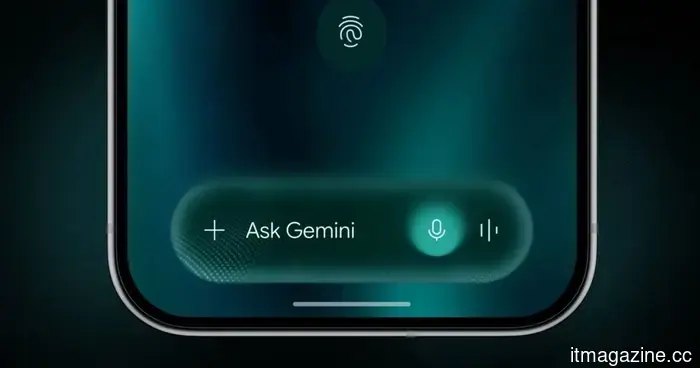
Google's Rambler might make voice typing an experience I actually enjoy.
Though the concept is enticing, I have never fully appreciated the speech-to-text feature for voice typing. I see its purpose and have used it when necessary, but it often feels like one of those phone features that only works just enough to be helpful, and not frequently enough to be reliably convenient.
It’s not solely about clear speech; the issue is somewhat more nuanced. One must avoid going back mid-sentence, or pretend that one’s thoughts naturally form clean text messages in a single flow. Since my thoughts do not work that way, I am eager for Google’s new Rambler feature in Gboard. Although it's integrated into Gemini Intelligence on Android, what intrigues me is its functionality.
Rambler converts natural spoken language into concise text. Google claims it can handle the nuances of actual speech, including self-corrections, repeated phrases, and filler words like “ums,” “ahs,” and “likes.” This might seem unexciting until you consider how often typing can be the slowest aspect of using a phone.
Google
Larger phones might finally suit me
Current smartphones feature nearly 7-inch displays that are excellent for viewing, reading, and gaming. However, typing on them or using them one-handed remains frustrating. And with the display becoming taller, it creates an awkward reaching challenge to hit the letters on the far side of a larger keyboard. Attempting to reply while walking, carrying something, sitting in a taxi, or holding a cup of coffee typically results in typos, abbreviated responses, or waiting until I have both hands free.
Voice typing seems like the obvious solution. The drawback, however, is that traditional speech-to-text often provides a verbatim account of what was spoken, while people do not communicate in strict sentence formats. Natural speech is filled with pauses, restarts, incomplete thoughts, and random corrections. A voice note can convey that complexity thanks to tone. Text messages, however, cannot.
Google
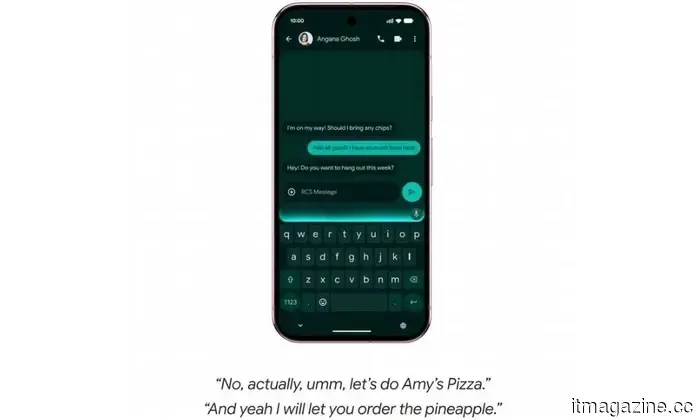
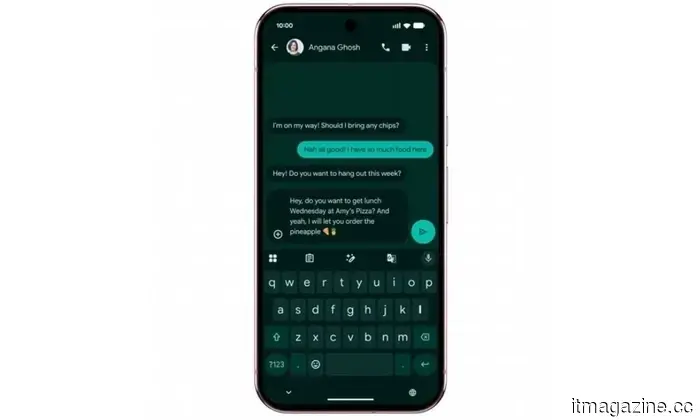
Rambler’s approach is straightforward. Google allows users to speak as they would in a conversation or voice note. However, instead of providing the exact words and prioritizing precision, Rambler identifies the key elements and compiles them into a message that still resembles the original speaker’s style.
The bilingual aspect is a significant benefit
One of the advantages of being bilingual is how two different languages intermingle in casual conversation. Therefore, it was reassuring to learn that multilingual support is available from the start. Google indicates that Rambler can switch between languages within a single message using Gemini’s multilingual model, incorporating combinations like English and Hindi. Many individuals, myself included, do not communicate exclusively in one language.
We fluctuate between languages based on the person we’re conversing with, our mood, or the situation. Standard voice typing can falter when a sentence naturally shifts between languages. While it may capture the words correctly, it often misses the rhythm. If Rambler can maintain that mixed-language flow while tidying up the extraneous details, it could prove to be much more practical than a generic “make this sound professional” AI feature.
Google
It must demonstrate it's quicker than typing
I’m not yet convinced that this will become a daily practice for everyone. Many individuals already type quickly enough. Some may prefer voice notes, while others might not feel comfortable speaking to their phone in public, regardless of how advanced the transcription technology becomes. There’s also an issue of privacy comfort. The company states that it will indicate when Rambler is activated, and that audio is used solely for real-time transcription without being stored or saved. Nevertheless, it must prove to be both speedy and effortless to truly catch on. At the very least, Google is assuring users that they won’t need to overthink their speech or construct perfect sentences.
Other articles
 Soderbergh utilized Meta's AI in his documentary about Lennon, which received criticism from reviewers. He claims that this was intentional.
The director collaborated with Meta to create 10% of the visuals for his Cannes documentary. He describes transparency as the guiding principle and necessity as the measure of success.
Soderbergh utilized Meta's AI in his documentary about Lennon, which received criticism from reviewers. He claims that this was intentional.
The director collaborated with Meta to create 10% of the visuals for his Cannes documentary. He describes transparency as the guiding principle and necessity as the measure of success.
 Edifier’s latest budget headphones feature song lyrics displayed on the earcups, and I'm perplexed.
Edifier has introduced the Auro Ace budget headphones, featuring a customizable dot-matrix display capable of displaying synchronized lyrics and animations in real time.
Edifier’s latest budget headphones feature song lyrics displayed on the earcups, and I'm perplexed.
Edifier has introduced the Auro Ace budget headphones, featuring a customizable dot-matrix display capable of displaying synchronized lyrics and animations in real time.
 California aims to prevent publishers from shutting down online games, and it has recently made some advancements in this effort.
California’s Protect Our Games Act has passed another significant obstacle, bringing publishers nearer to safeguarding online games following server closures.
California aims to prevent publishers from shutting down online games, and it has recently made some advancements in this effort.
California’s Protect Our Games Act has passed another significant obstacle, bringing publishers nearer to safeguarding online games following server closures.
 OpenAI combines ChatGPT and Codex under the leadership of Greg Brockman. The side missions have concluded.
Brockman assumes full control of product strategy, integrating ChatGPT, Codex, and the API into a single agentic platform in anticipation of a possible IPO in the fourth quarter.
OpenAI combines ChatGPT and Codex under the leadership of Greg Brockman. The side missions have concluded.
Brockman assumes full control of product strategy, integrating ChatGPT, Codex, and the API into a single agentic platform in anticipation of a possible IPO in the fourth quarter.
 Soderbergh incorporated Meta's AI in his documentary about Lennon. Critics were not fond of it. He claims that was the intended effect.
The director collaborated with Meta to create 10% of the visuals for his Cannes documentary. He refers to transparency as the guiding principle and necessity as the benchmark.
Soderbergh incorporated Meta's AI in his documentary about Lennon. Critics were not fond of it. He claims that was the intended effect.
The director collaborated with Meta to create 10% of the visuals for his Cannes documentary. He refers to transparency as the guiding principle and necessity as the benchmark.
 Microsoft is finally addressing the most frustrating aspect of Windows 11.
Microsoft is currently testing one of the most significant interface updates for Windows 11, which subtly reintroduces a feature that many users have longed for over the years. Additionally, the Start menu is undergoing changes, and some of the enhancements appear to be quite considerate.
Microsoft is finally addressing the most frustrating aspect of Windows 11.
Microsoft is currently testing one of the most significant interface updates for Windows 11, which subtly reintroduces a feature that many users have longed for over the years. Additionally, the Start menu is undergoing changes, and some of the enhancements appear to be quite considerate.
Google's Rambler might make voice typing an experience I actually enjoy.
Google's Rambler appears to be a minor enhancement to Gboard, yet it could discreetly address a genuine issue by transforming chaotic spoken ideas into messages that you would likely send.