
Why early attrition in technology is more related to career progression than to company culture.
TL;DRA A study on People Analytics involving 205 tech professionals indicated that early employee turnover is primarily influenced by halted career growth rather than workplace culture. The most significant factors for retention were promotions, internal movement, and evident opportunities for advancement, while team socialization had minimal measurable effect.
I approached this research thinking I already had the answer.
After over a decade in People Analytics, including several years at Meta, I developed a theory regarding why tech employees tend to leave their jobs within their first year. I believed that two main factors were causing the most harm: the likelihood of getting promoted and the frequency of socializing with their immediate team outside of work. The first seemed obvious, while the second felt like an often overlooked human aspect in our field.
I was partly correct.
Upon surveying 205 tech professionals worldwide and training a machine learning model to anticipate early attrition, it turned out promotions were the single most significant indicator in the dataset. However, socialization hardly made an impact. Moreover, the factors alongside promotions pointed to something I hadn’t expected. Early attrition in tech is less about workplace culture and more about career momentum.
This revelation changed my perspective on retention, and I suspect it might influence yours as well.
Tech has consistently struggled with attrition.
The tech sector possesses one of the highest turnover rates among industries. The median tenure at numerous tech firms hovers around one year, independent of company size. This isn’t merely a post-pandemic issue or a fleeting job market phenomenon. Such rates have been the foundational norm since the industry's inception, and it has yet to be resolved.
The associated costs are well known. Replacing an employee can amount to 2.5 times their salary when considering recruitment, onboarding, decreased productivity, and the loss of institutional knowledge. Studies show that a single standard deviation rise in attrition rates corresponds with an 8.9% decline in profits. In a time when tech firms are investing heavily in AI infrastructure and scrutinizing every expenditure, wasting resources on avoidable attrition is increasingly difficult to justify.
What remains less understood is why this issue continues despite significant investments aimed at its resolution. Tech companies heavily invest in perks, engagement initiatives, cultural programs, and manager training. Some yield marginal results, but none have meaningfully shifted the trend.
I argue part of the problem is that most retention strategies are reactive. When someone expresses dissatisfaction or, worse, resigns, action is taken. By that time, it’s typically too late. My ongoing interest professionally is in predicting attrition before it happens rather than responding to it after the fact.
To do this, I needed data.
The first hurdle I faced was obtaining data. While there are many public datasets concerning employee attrition, very few specify industry. The most commonly used is a fictional HR dataset created by IBM data scientists, which has been recycled in numerous academic studies. This dataset is clean and accessible but lacks specific relevance to the technology sector.
So, I created my own. I designed a 24-question survey and disseminated it globally to professionals in the tech industry, mandating that both their current and past employers be technology companies. After removing duplicates and incomplete responses, I acquired 205 valid records. While not extensive by industry standards, it was tailored and clean to address the question at hand.
I defined “early attrition” as leaving a job within the first year. Every respondent was categorized as either an early attrition or not, with this classification serving as the target for the model training.
Thereafter, I employed five machine learning algorithms on the data, testing each across various configurations. I opted for an F1 score instead of mere accuracy to gauge performance, as this was significant. A model predicting whether someone left within a year could technically achieve high accuracy by labeling everyone as “stayed longer,” the more common scenario. The F1 score accounts for this imbalance, presenting a more genuine evaluation of the model's effectiveness. The most effective configuration involved using an Extra Trees Classifier combined with a technique called SMOTE, which addressed the dataset's imbalance by generating synthetic examples of the minority group. This combination achieved an F1 score of 0.97 out of a possible 1.
The model was successful. The more intriguing question was what insights it gained.
Promotions were the clearest indicator.
Of all the factors in the dataset, the frequency of promotions in a respondent's previous position was the strongest predictor of early attrition within the first year. The correlation was -0.54, meaning that fewer promotions led to a higher likelihood of early attrition—significantly so.
This validated half of my original theory, which should come as no surprise to anyone in the tech field. Promotion is not merely a change of title or salary increase; for many, especially those earlier in their careers, it signals that the company recognizes them and is invested in their future. When this signal is absent, individuals
Other articles
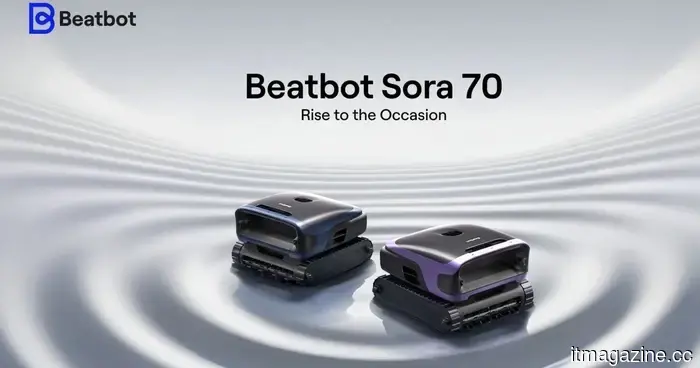 Beatbot Sora 70 Takes the Lead in This Summer’s Smart Pool Enhancements, Alongside Sora 30 and AquaSense to Broaden the Selection.
Beatbot's newest pool robots, spearheaded by the Sora 70, aim to address the shortcomings that many systems overlook. Featuring comprehensive coverage, AI-powered navigation, and special Anniversary pricing for a limited time, this lineup provides a straightforward upgrade solution for pool owners who want to minimize effort and maximize enjoyment of their pool.
Beatbot Sora 70 Takes the Lead in This Summer’s Smart Pool Enhancements, Alongside Sora 30 and AquaSense to Broaden the Selection.
Beatbot's newest pool robots, spearheaded by the Sora 70, aim to address the shortcomings that many systems overlook. Featuring comprehensive coverage, AI-powered navigation, and special Anniversary pricing for a limited time, this lineup provides a straightforward upgrade solution for pool owners who want to minimize effort and maximize enjoyment of their pool.
 Anthropic claims it has addressed the malicious behavior of Claude AI, attributing the issues to the internet.
Anthropic claims that Claude's blackmail actions in a 2025 experiment were influenced by internet training data that depicts AI as malevolent and self-interested.
Anthropic claims it has addressed the malicious behavior of Claude AI, attributing the issues to the internet.
Anthropic claims that Claude's blackmail actions in a 2025 experiment were influenced by internet training data that depicts AI as malevolent and self-interested.
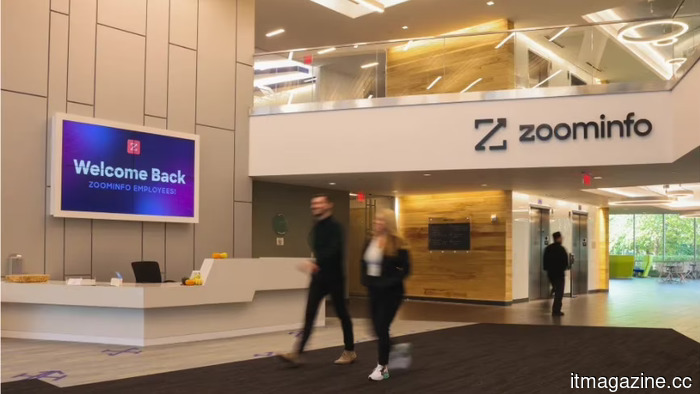 ZoomInfo's stock fell 29% following a reduction in guidance and a restructuring plan that involves cutting 600 jobs, as AI alters the valuation of B2B sales intelligence.
ZoomInfo surpassed expectations for Q1 earnings but reduced its full-year revenue forecast by $62 million and revealed a restructuring plan that will eliminate 600 jobs. As AI competitors threaten the B2B database model, the stock dropped 29% to $4.32.
ZoomInfo's stock fell 29% following a reduction in guidance and a restructuring plan that involves cutting 600 jobs, as AI alters the valuation of B2B sales intelligence.
ZoomInfo surpassed expectations for Q1 earnings but reduced its full-year revenue forecast by $62 million and revealed a restructuring plan that will eliminate 600 jobs. As AI competitors threaten the B2B database model, the stock dropped 29% to $4.32.
 How Lodestellar is Utilizing AI to Enhance EPD Quality in Construction
Lodestellar is assisting manufacturers in enhancing the quality of Environmental Product Declarations through AI-driven evaluations, facilitating quicker compliance and increasing the transparency of construction data.
How Lodestellar is Utilizing AI to Enhance EPD Quality in Construction
Lodestellar is assisting manufacturers in enhancing the quality of Environmental Product Declarations through AI-driven evaluations, facilitating quicker compliance and increasing the transparency of construction data.
 Windows 11 is experimenting with a low-latency mode that noticeably accelerates application launches.
Even on high-performance hardware, you've likely observed that Windows 11 can seem less reactive than expected. Small lags in fundamental tasks such as accessing the Start menu or moving through File Explorer can make the system feel more sluggish and less refined compared to competitors like macOS. Microsoft seems to be aware of this problem and may […]
Windows 11 is experimenting with a low-latency mode that noticeably accelerates application launches.
Even on high-performance hardware, you've likely observed that Windows 11 can seem less reactive than expected. Small lags in fundamental tasks such as accessing the Start menu or moving through File Explorer can make the system feel more sluggish and less refined compared to competitors like macOS. Microsoft seems to be aware of this problem and may […]
 There's never been a more ideal moment to purchase an e-ink reading device.
The e-ink device market has seen remarkable growth. With options ranging from basic readers to color note-taking devices, there has never been a more opportune moment to set aside your phone screen and choose a specialized reading device.
There's never been a more ideal moment to purchase an e-ink reading device.
The e-ink device market has seen remarkable growth. With options ranging from basic readers to color note-taking devices, there has never been a more opportune moment to set aside your phone screen and choose a specialized reading device.
Why early attrition in technology is more related to career progression than to company culture.
A People Analytics study involving 205 technology professionals revealed that promotions, internal mobility, and career advancement are more significant indicators of early employee turnover than workplace culture.