
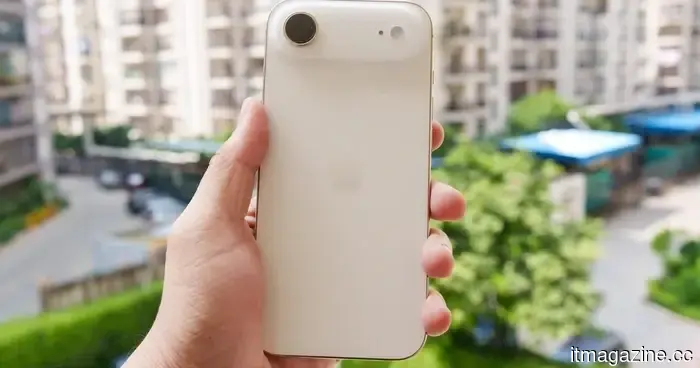
The iPhone Air demonstrates why smaller phones remain the superior choice.
I understand the attraction of ultra-slim phones like the iPhone Air and Galaxy S25 Edge. The moment you hold them, they feel distinctly different from standard smartphones. The iPhone Air is remarkably thin at 5.64mm and weighs just 165 grams, yet it still features a relatively large 6.5-inch OLED display with ProMotion.
In terms of comfort, Apple excels for its size. Many smartphones are becoming tiresome in specific ways; they are often too tall, heavy with cameras, or too cumbersome to use comfortably for extended periods with one hand. The iPhone Air alleviates this fatigue by not only being streamlined but also by reducing its weight.
Although it isn't as tall as the Galaxy S25 Edge, it feels less cumbersome in hand. However, the novelty fades when I realize that the answer to the issue is already available. After using a compact phone daily for over a year, the iPhone Air reminds me that being thin doesn't equate to true usability. I prefer a smaller phone because it fits comfortably in my hand in a way that most contemporary flagships do not. It’s easier to grip securely, more comfortable for one-handed typing, and generally simpler to use.
Today's "compact" phones aren’t as small as they used to be, but they still feel reasonable next to devices nearing the 7-inch display size.
Thinness enhances the feel in hand, but it doesn't resolve the reach challenge.
The iPhone Air is easier to hold than many larger flagships due to its lightweight and slim design, making it more comfortable for reading, scrolling, or simply carrying. A heavy phone can become bothersome over time, particularly if you're not frequently switching hands. Yet for those with smaller hands, the Air can still feel like a tall phone, with the top of the screen remaining distant. Tasks such as pulling down notifications, accessing Control Center, tapping controls in the top bar, or interacting with apps that have important buttons near the top of the display still require stretching, adjusting your grip, or using two hands.
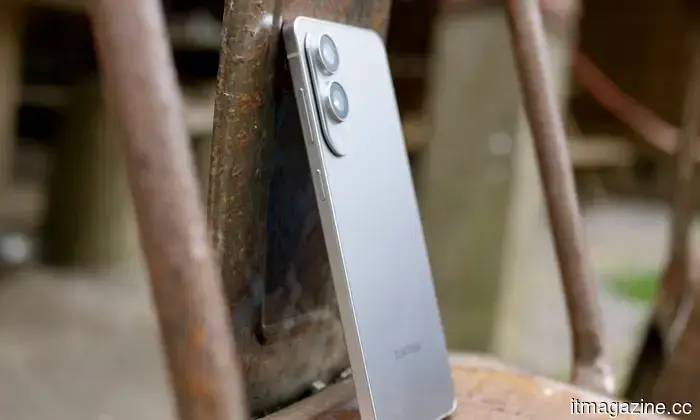
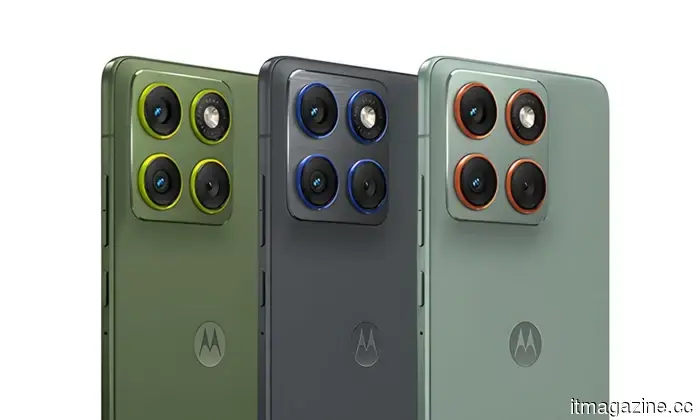
This is the challenge with other ultra-slim phones like the Motorola Edge 70 and Samsung Galaxy S25 Edge. While a thinner design can make a phone feel sleeker and a lighter weight may lessen wrist strain, neither alters the fundamental dimensions of a large screen. Your thumb still needs to traverse the same distance. You still have to adjust your grip. If you're using the phone with one hand, the experience can be less than ideal. This is where compact phones truly provide a solution.
They not only lighten the burden but also effectively minimize the problem itself.
Compact phones offer less compromise.
Another downside of ultra-slim phones is that their design typically involves trade-offs. The iPhone Air has a robust 48MP Fusion camera system, but it relies solely on that single main camera. Similarly, Samsung's Galaxy S25 Edge emphasizes its sleek design but offers only a 200MP main camera alongside a mediocre 12MP ultra-wide lens. The compromises aren't always detrimental; the iPhone Air still features a Pro-grade chip, a smooth ProMotion display, and a body that genuinely feels distinguished. The Samsung S25 Edge is also a premium device, not just a fragile design concept.
However, compact phones manage these challenges more effectively. My daily phone, the Xiaomi 15, provides a solid triple camera setup with main, ultrawide, and telephoto lenses in a device that doesn't feel oversized. The OnePlus 15T demonstrates how modern manufacturers are optimizing space to include larger batteries and efficient cooling systems in smaller forms, with OnePlus boasting a substantial 7,500mAh battery, 100W wired fast charging, and 50W wireless charging. This allows for a well-rounded flagship experience without the added size.
The iPhone Air is not a bad concept. In fact, I consider it one of Apple’s more intriguing hardware experiments in recent years. It shows that a large phone doesn’t have to feel like a heavy slab in your pocket, making iPhones more appealing to those who dislike bulky flagships. However, for me, the original issue wasn’t just about thickness; it was the daily fatigue caused by tall flagships. While compact phones may not appear as futuristic or evoke the same immediate showroom appeal, I will always return to the one that actually simplifies my life.
Other articles
 5 excellent free films to enjoy on New Year’s Day
From light, entertaining films to those that allow you to really immerse yourself, these free movies cater to various moods on New Year’s Day. Each one can be streamed without a subscription, so you can begin watching without any hassle.
5 excellent free films to enjoy on New Year’s Day
From light, entertaining films to those that allow you to really immerse yourself, these free movies cater to various moods on New Year’s Day. Each one can be streamed without a subscription, so you can begin watching without any hassle.
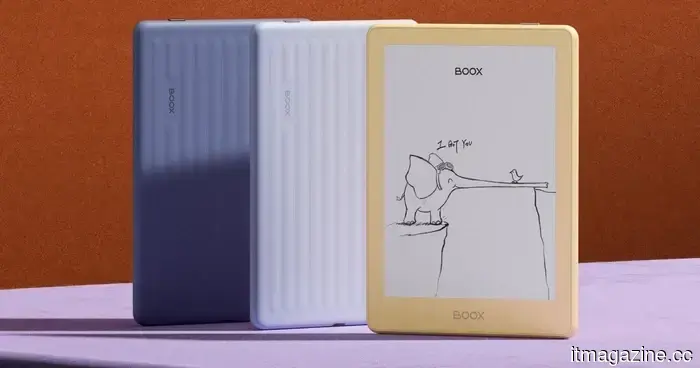 A leading competitor to Kindle is enhancing its design, and you might find yourself wanting this e-reader.
The new Onyx Boox Poke 7 series introduces a sleek, modern design to the e-reader industry while maintaining its competition with Kindle through Android adaptability.
A leading competitor to Kindle is enhancing its design, and you might find yourself wanting this e-reader.
The new Onyx Boox Poke 7 series introduces a sleek, modern design to the e-reader industry while maintaining its competition with Kindle through Android adaptability.
 Mercedes-Benz builds excitement for the forthcoming AMG.EA, positioning it as an electric vehicle worth the wait.
George Russell stated the power was "very easy" to handle. The engineering team referred to it as the most challenging project in AMG's history. Both statements are accurate.
Mercedes-Benz builds excitement for the forthcoming AMG.EA, positioning it as an electric vehicle worth the wait.
George Russell stated the power was "very easy" to handle. The engineering team referred to it as the most challenging project in AMG's history. Both statements are accurate.
 AnimeKai, a major site for pirated anime streaming, has ceased operations.
AnimeKai, the well-known anime piracy website, is closing down following recent problems and a fire at its data center, prompting users to search for backups and other options.
AnimeKai, a major site for pirated anime streaming, has ceased operations.
AnimeKai, the well-known anime piracy website, is closing down following recent problems and a fire at its data center, prompting users to search for backups and other options.
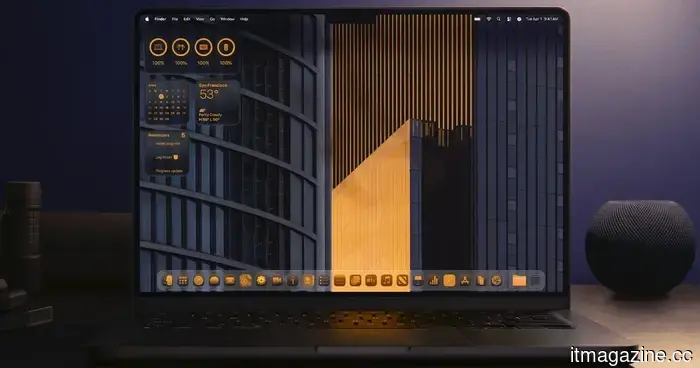 macOS 27 will refine the Liquid Glass design concept, though nothing overly drastic.
Apple is said to be enhancing the Liquid Glass interface in macOS 27 to boost readability, transparency effects, and general usability while keeping significant design alterations to a minimum.
macOS 27 will refine the Liquid Glass design concept, though nothing overly drastic.
Apple is said to be enhancing the Liquid Glass interface in macOS 27 to boost readability, transparency effects, and general usability while keeping significant design alterations to a minimum.
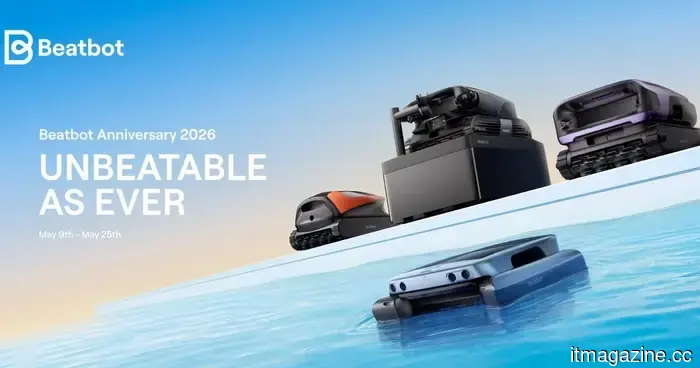 Beatbot’s Anniversary Campaign Makes Pool Cleaning a More Intelligent Purchasing Choice
Beatbot’s Anniversary Campaign simplifies the adoption of robotic pool cleaning by introducing smarter enhancements across Sora, AquaSense X, and iSkim, all aimed at decreasing manual labor and enhancing coverage.
Beatbot’s Anniversary Campaign Makes Pool Cleaning a More Intelligent Purchasing Choice
Beatbot’s Anniversary Campaign simplifies the adoption of robotic pool cleaning by introducing smarter enhancements across Sora, AquaSense X, and iSkim, all aimed at decreasing manual labor and enhancing coverage.
The iPhone Air demonstrates why smaller phones remain the superior choice.
The iPhone Air is a smart response to bulky flagship devices, but my experience with it reminded me that being slim and lightweight doesn’t address the fundamental issue of a standard tall phone.