

Counterfeit DDR5 RAM modules are now incorporating plastic chips to deceive consumers.
The PC hardware market is becoming increasingly complicated.
If the rising prices of DDR5 weren't already a concern, counterfeit RAM has now emerged as an issue. Some fake memory sticks are reportedly convincing enough to deceive buyers, featuring plastic pieces made to resemble DRAM chips.
Reports from Asian PC markets indicate that counterfeit DDR5 modules are quickly proliferating across online stores and gray-market sellers, especially as memory prices continue to rise. The counterfeit sticks are often made to look like genuine Samsung or SK Hynix modules, complete with replicated labels, serial stickers, and packaging.
There's a warning about counterfeit DDR5 memory circulating. Although they may appear to be standard memory, the chips actually consist of mere circuit boards and plastic sheets. A user has shared that they confirmed this by removing and slicing them open. Buyers should be cautious when purchasing untested memory to avoid potential disasters similar to what happened with the RTX 4090.
Some fraudulent SO-DIMM modules for laptops have been found to use dummy plastic components shaped like DRAM chips in order to mimic real memory designs. Strangely, some of these counterfeit sticks are marketed as “junk” or “untested” on platforms such as Yahoo Japan, with sellers explicitly stating that no returns are permitted.
In several instances, these modules either failed to perform or had much lower memory capacity than advertised. Reports suggest that some fake sticks contained recycled or low-grade chips concealed beneath relabeled heat spreaders, while others were merely designed to look realistic enough for a quick inspection.
The recent shortages of DDR5 have created a new set of challenges in the hardware landscape. The timing of this surge in counterfeiting is not surprising, as DDR5 prices have risen sharply over the past year, driven by increased demand from AI and manufacturers focusing on enterprise-level production for servers and accelerators. This price increase has made consumer RAM attractive to counterfeiters, particularly in areas where buyers depend on third-party sellers or imported hardware. Unlike GPUs or CPUs, RAM is a component that most individuals rarely inspect closely after their systems boot up.
Experienced PC builders can often identify suspicious modules by examining elements such as PCB quality, chip layouts, or inconsistencies in labeling. However, for the average consumer, counterfeit and legitimate memory sticks can appear nearly indistinguishable. This issue is exacerbated with desktop DDR5 kits, where large heat spreaders cover the memory chips, making it difficult to verify what is inside unless the system fails to boot, crashes frequently, or someone physically disassembles the module.
The concerning aspect of this situation is that counterfeit RAM is no longer just low-quality imitation hardware; it has become sophisticated enough to deceive consumers until something goes severely wrong.







Other articles
 macOS 27 aims to refine the Liquid Glass design concept, albeit with no significant changes.
Apple is said to be enhancing the Liquid Glass interface in macOS 27 to boost readability, transparency effects, and overall user experience without significant design alterations.
macOS 27 aims to refine the Liquid Glass design concept, albeit with no significant changes.
Apple is said to be enhancing the Liquid Glass interface in macOS 27 to boost readability, transparency effects, and overall user experience without significant design alterations.
 A leading competitor to the Kindle is enhancing its design, and you'll likely be interested in this e-reader.
The new Onyx Boox Poke 7 series introduces a modern and sleek design to the e-reader market, while still competing with Kindle by offering Android flexibility.
A leading competitor to the Kindle is enhancing its design, and you'll likely be interested in this e-reader.
The new Onyx Boox Poke 7 series introduces a modern and sleek design to the e-reader market, while still competing with Kindle by offering Android flexibility.
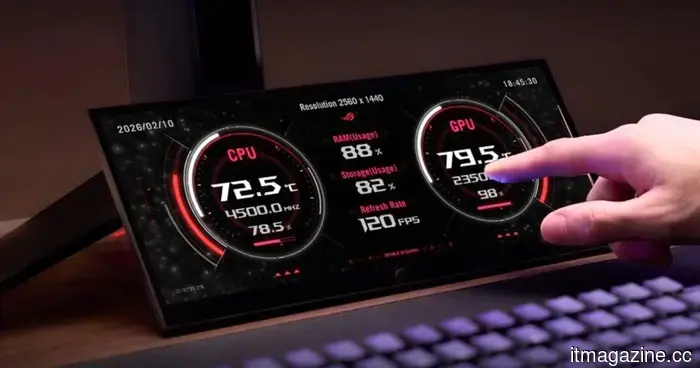 Asus unveils the ROG Strix XG129C, a small secondary monitor aimed at competing with Elgato's offerings for gamers.
The Asus ROG Strix XG129C is a 12.3-inch touchscreen that conveniently sits beneath your main monitor, supports 125% sRGB, and includes a one-year subscription to AIDA64 Extreme for real-time hardware monitoring.
Asus unveils the ROG Strix XG129C, a small secondary monitor aimed at competing with Elgato's offerings for gamers.
The Asus ROG Strix XG129C is a 12.3-inch touchscreen that conveniently sits beneath your main monitor, supports 125% sRGB, and includes a one-year subscription to AIDA64 Extreme for real-time hardware monitoring.
 The recent recall of Tesla's Cybertruck almost seems amusing.
Tesla is recalling 173 Cybertrucks due to a defect that may result in wheels coming off during operation, adding yet another unusual episode to the story of the electric pickup.
The recent recall of Tesla's Cybertruck almost seems amusing.
Tesla is recalling 173 Cybertrucks due to a defect that may result in wheels coming off during operation, adding yet another unusual episode to the story of the electric pickup.
 Beatbot’s Anniversary Campaign Makes Pool Cleaning a More Intelligent Purchasing Choice
Beatbot’s Anniversary Campaign simplifies the adoption of robotic pool cleaning by introducing smarter enhancements across Sora, AquaSense X, and iSkim, all aimed at decreasing manual labor and enhancing coverage.
Beatbot’s Anniversary Campaign Makes Pool Cleaning a More Intelligent Purchasing Choice
Beatbot’s Anniversary Campaign simplifies the adoption of robotic pool cleaning by introducing smarter enhancements across Sora, AquaSense X, and iSkim, all aimed at decreasing manual labor and enhancing coverage.
 5 excellent free films to enjoy on New Year’s Day
From light, entertaining films to those that allow you to really immerse yourself, these free movies cater to various moods on New Year’s Day. Each one can be streamed without a subscription, so you can begin watching without any hassle.
5 excellent free films to enjoy on New Year’s Day
From light, entertaining films to those that allow you to really immerse yourself, these free movies cater to various moods on New Year’s Day. Each one can be streamed without a subscription, so you can begin watching without any hassle.
Counterfeit DDR5 RAM modules are now incorporating plastic chips to deceive consumers.
Reports indicate that counterfeit DDR5 RAM sticks, complete with fake labels and even dummy plastic chips, are saturating PC markets as memory prices increase.