
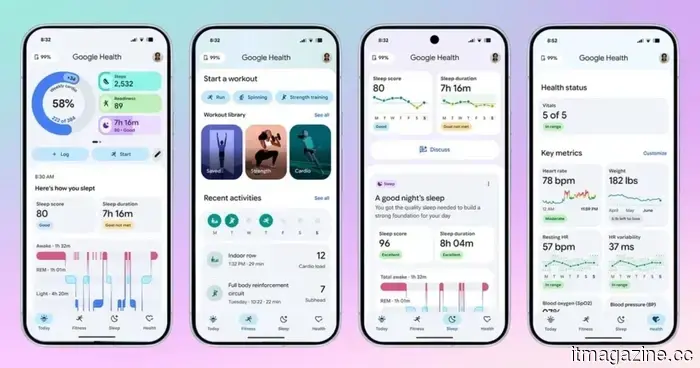
Fitbit is transitioning into Google Health and is receiving numerous enhancements for wellness.
Google has finally begun to view health tracking as a comprehensive platform, integrating medical records, third-party fitness data, and AI coaching in a way that Fitbit’s standalone app was not designed to manage.
Google is officially discontinuing the Fitbit app, transitioning to the new Google Health app on May 19, 2026. This change is somewhat ironic, as the company recently introduced a new Fitbit Air screenless fitness tracker, but the transition will occur through an OTA update.
This transition follows Fitbit’s fifteen-year history, during which it attracted millions of fitness-oriented users and provided various health trackers and valuable insights through its software.
Should Fitbit users be concerned?
Google has already confirmed on X that “Fitbit devices aren’t going anywhere,” ensuring that all user data will remain intact. In other words, all your workout records from the Fitbit app will still be available in Google Health.
Currently, the Fitbit brand will continue to thrive on the hardware side, meaning all its devices will remain available and supported. However, the Fitbit app is being integrated into Google’s new Health app.
Google has yet to clarify if existing Fitbit Premium subscribers will be transferred to Google Health Premium automatically. What is confirmed is that the monthly fee remains at $9.99, while the annual subscription has increased from $79.99 to $99.99.
What's new in Google Health?
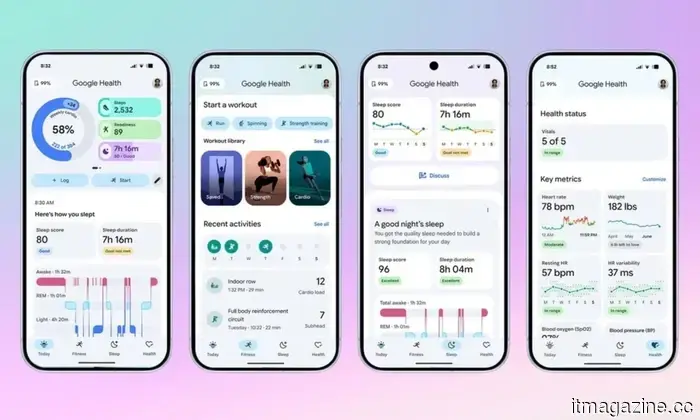
One of the most notable features is multimodal logging. Users can log their food, workouts, and health data by typing, speaking, or taking photos with their smartphones. The app employs AI to automatically identify and record the nutritional information from the picture, an enhanced feature compared to the Fitbit app.
In the United States, users can directly upload their medical records to the app, and the new Google Health Coach (an updated version of the Fitbit Personal Health Coach available through the Health Premium membership) can utilize that data while addressing health-related queries. Furthermore, sleep tracking accuracy has improved by 15% over the previous Fitbit app, thanks to enhanced machine learning.
The app can also aggregate data from Apple Health, Peloton, and MyFitnessPal, making it far more integrative than the Fitbit ecosystem. Other updates include a customizable dashboard, expanded social leaderboards for steps and cardio load, and better cycle tracking.
This represents a major shift from a device-centric app focused on step counting and workout storage to a health platform that unites wearables, medical records, nutritional information, and AI-driven coaching, all within a single application.
For over five years, Shikhar has been dedicated to simplifying advancements in consumer technology and presenting them clearly.
Perplexity's Personal Computer can function autonomously on your Mac, and it is now accessible to everyone. This might be the closest experience to having a personal assistant on your Mac.
Perplexity has officially released its Personal Computer Mac app for all users, potentially transforming how tasks are accomplished on Macs. The Personal Computer is an AI agent system that operates directly on your device. It can navigate local files, utilize native Mac applications, browse the internet, and connect to over 400 tools independently.
Recently, I created a Mac app to monitor my poor posture using AirPods without writing any code. It was a straightforward attempt with Claude that succeeded on the first try, almost feeling like magic.
A few weeks ago, I wrote about an app that monitors you through the Mac’s webcam, notifying you when it detects slouching. The app also tracks instances of poor posture and provides a daily posture score. Initially open-source, the app generated significant interest on Reddit, where users raised valid concerns about data processing and storage. After all, granting an app access to the camera raises legitimate questions about privacy and data security. Does a backdoor allow unauthorized access? What data might the app log in the background, and how much audio-visual content is being sent to external servers? Fortunately, the app operates entirely online, with processing handled locally on my Mac, yet I still felt uneasy.
Your colleague’s AI-generated app may inadvertently expose company secrets.
With the ease of using AI coding tools to develop web apps quickly, new security issues have emerged. What happens when these AI-generated applications launch without proper safeguards? They can leak sensitive information across the internet.
A WIRED report sheds light on a significant security risk associated with what are termed "vibe-coded" apps, which are created using AI development platforms like Lovable, Replit, Base44, and Netlify.




Other articles
 The production budget for GTA 6 is so immense that it may be difficult to accept as reality.
Analysts predict that the cost of GTA 6 could range from $1 billion to $1.5 billion, positioning it as one of the most expensive projects in gaming history.
The production budget for GTA 6 is so immense that it may be difficult to accept as reality.
Analysts predict that the cost of GTA 6 could range from $1 billion to $1.5 billion, positioning it as one of the most expensive projects in gaming history.
 The production budget for GTA 6 seems so incredibly high that it's difficult to believe.
Analysts predict that the budget for GTA 6 might range from $1 billion to $1.5 billion, positioning it among the most costly projects in gaming history.
The production budget for GTA 6 seems so incredibly high that it's difficult to believe.
Analysts predict that the budget for GTA 6 might range from $1 billion to $1.5 billion, positioning it among the most costly projects in gaming history.
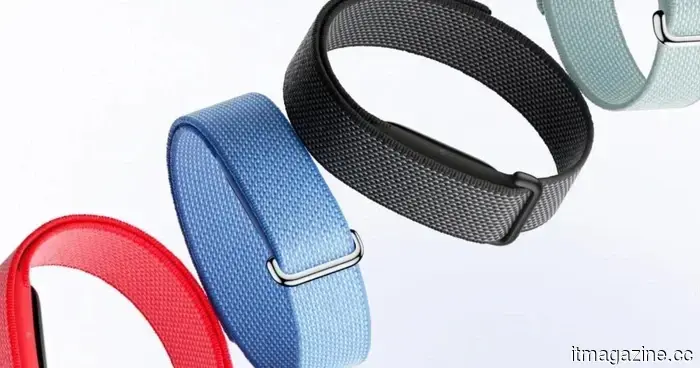 Google's Fitbit Air is a $99 competitor to Whoop that lacks a screen, and its main features do not require a subscription.
The Fitbit Air has a weight of 5 grams without the strap, monitors heart rate, blood oxygen levels, skin temperature, and step count continuously, has a battery life of seven days on a single charge, and is priced at $99.99.
Google's Fitbit Air is a $99 competitor to Whoop that lacks a screen, and its main features do not require a subscription.
The Fitbit Air has a weight of 5 grams without the strap, monitors heart rate, blood oxygen levels, skin temperature, and step count continuously, has a battery life of seven days on a single charge, and is priced at $99.99.
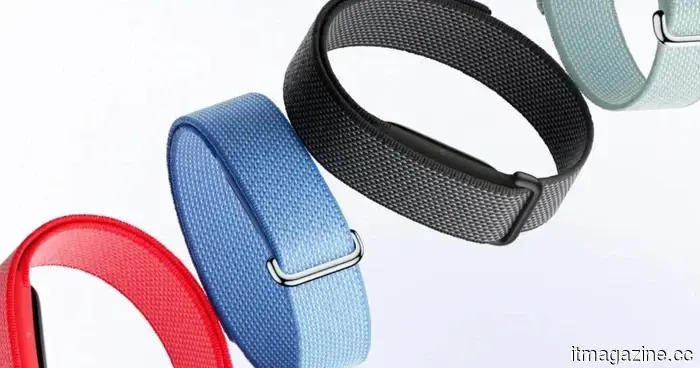 Google's Fitbit Air is a $99 competitor to Whoop that lacks a screen, and its essential functions do not require a subscription.
The Fitbit Air has a weight of 5 grams excluding its strap, monitors heart rate, blood oxygen levels, skin temperature, and daily steps continuously, offers a battery life of seven days per charge, and is priced at $99.99.
Google's Fitbit Air is a $99 competitor to Whoop that lacks a screen, and its essential functions do not require a subscription.
The Fitbit Air has a weight of 5 grams excluding its strap, monitors heart rate, blood oxygen levels, skin temperature, and daily steps continuously, offers a battery life of seven days per charge, and is priced at $99.99.
Fitbit is transitioning into Google Health and is receiving numerous enhancements for wellness.
Google Health is introducing photo-based food logging, integration with medical records, compatibility with Apple Health and Peloton, enhanced accuracy in sleep tracking, and a coach powered by Gemini.