
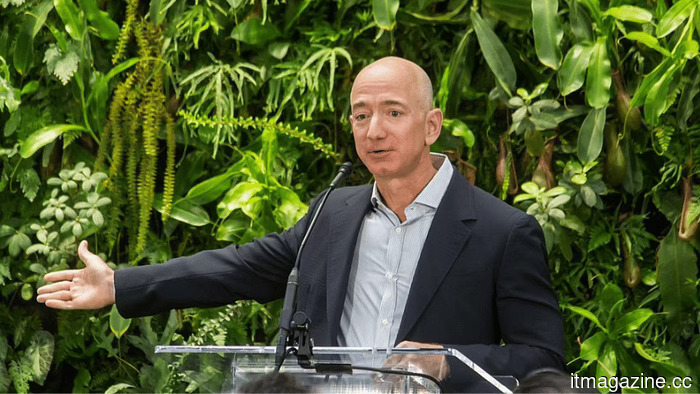
A representative from the Bezos family office steps down from the Slate Auto board just months before the electric vehicle startup, valued at $1.4 billion, starts production in Indiana.
**Summary**: Melinda Lewison, representative of Jeff Bezos's family office, has departed from Slate Auto’s board just months before the electric vehicle startup, valued at $1.4 billion, is set to produce its affordable electric truck in Warsaw, Indiana. This departure follows a change in CEO and raises questions about Bezos’s ongoing involvement, particularly since his name has been instrumental in the company’s fundraising efforts.
Lewison, who managed the Bezos family office and was noted as a director in Slate Auto's corporate documents, has left shortly before the company’s first truck is expected to be produced in Warsaw. This departure is part of a trend of leadership changes at the startup, which has raised considerable funds based primarily on its concept and Bezos's association.
Slate Auto originated within Re:Build Manufacturing, an industrial group led by Jeff Wilke, who formerly headed Amazon’s consumer division until 2021. Wilke and Miles Arnone, Re:Build’s CEO, developed the company, initially called Re:Car, before forming it into a separate entity in 2023.
Despite the indirect nature of Bezos’s connection to Slate, Lewison’s role on the board provided the startup with a critical asset: the endorsement of one of the world’s wealthiest individuals without placing the burden of public appearances or endorsements on Bezos himself. Meanwhile, Bezos has committed to substantial investments in AI and other sectors through his family office, executing investments in a variety of capital-intensive projects via intermediaries. Lewison's exit signifies a shift for Slate in this framework.
This board shift is notable as it marks the second significant leadership adjustment since March when Peter Faricy succeeded Chris Barman as CEO. Faricy, an ex-Amazon Marketplace VP, had been advising Slate alongside a role with McKinsey and Bessemer Venture Partners, while Barman transitioned to president of vehicles.
The timing of these changes is particularly meaningful. Slate launched preorders in June 2025, quickly reaching over 100,000 reservations, a number that has now surpassed 160,000. The company secured a $650 million Series C funding round in April 2026, pushing total funding to $1.4 billion.
Leadership changes in a startup before production don’t necessarily indicate issues, as they can reflect adjustments from fundraising to operational phases. Faricy’s background from Amazon may provide an advantage in scaling manufacturing compared to Barman. However, these changes are critical for a brand reliant on its association with Bezos.
While Amazon-related ventures have seen success, such as X-Energy’s recent IPO, the relationship with Slate appears to be diminishing rather than growing.
The electric truck, slated for mid-2026 production and priced in the mid-20s before incentives, intends to appeal to tradespeople and first-time EV buyers. Unlike Tesla's focus on high-end models, Slate is marketing a practical vehicle designed for functionality over glamor.
The factory, previously a printing facility, has drawn about $400 million in investment, expected to generate over 2,000 jobs in Kosciusko County, with production expected to begin in late 2026.
As the electric vehicle market evolves, competition for affordable models is increasing. Various companies are targeting the same demographic Slate aims for, emphasizing the need for strategic positioning to succeed in the current landscape. The trend of domestic manufacturing amid changing import costs and tariffs favors players like Slate.
Slate's reservations represent interest rather than definite purchases, and the rate at which they convert to actual orders will impact the factory's viability.
Every electric vehicle startup has faced transitions like those Slate is experiencing. The successful founders who initially attract investment don’t always possess the operational skills needed for mass production. Faricy's appointment indicates investors recognize this, while Lewison's departure may suggest a shift in strategy within Bezos's family office.
Slate's advantage lies in offering a realistic product tailored for an existing market, unlike many failed EV startups. The truck is designed for practical use, within a supportive manufacturing environment, and priced for current tax incentives.
The critical question remains: can Slate thrive without the influential backing of Bezos? His name helped open doors, attract investment, and secure media attention that a startup like Slate might not generate on its own. With funds secured and production underway, the departure of a key representative from the Amazon founder just months before production heightens uncertainty.
Other articles
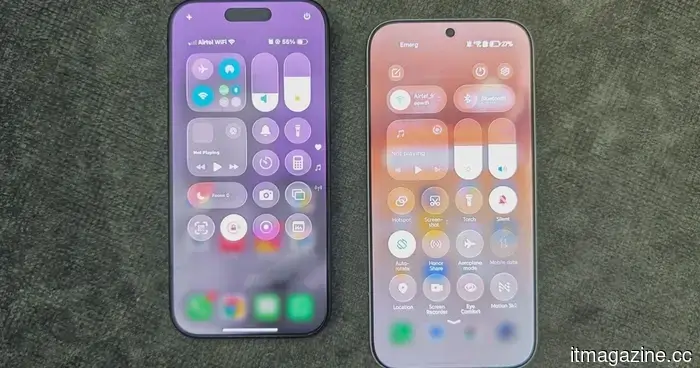 The head of Android has rejected the idea of a Liquid Glass imitation on Pixels, which is reassuring.
The top executive of Android has dismissed the possibility of Liquid Glass being used on Pixel devices, directly addressing the speculation. This decision highlights a clear distinction between Google's Material 3 Expressive design language and the trend of iOS-inspired UI updates that are proliferating among third-party Android skins.
The head of Android has rejected the idea of a Liquid Glass imitation on Pixels, which is reassuring.
The top executive of Android has dismissed the possibility of Liquid Glass being used on Pixel devices, directly addressing the speculation. This decision highlights a clear distinction between Google's Material 3 Expressive design language and the trend of iOS-inspired UI updates that are proliferating among third-party Android skins.
 The application created by your coworker using AI could potentially be exposing company confidential information.
A recent investigation discovered thousands of web applications created by AI that have inadequate or absent access controls, leaving medical records, corporate documents, chatbot logs, and financial information exposed.
The application created by your coworker using AI could potentially be exposing company confidential information.
A recent investigation discovered thousands of web applications created by AI that have inadequate or absent access controls, leaving medical records, corporate documents, chatbot logs, and financial information exposed.
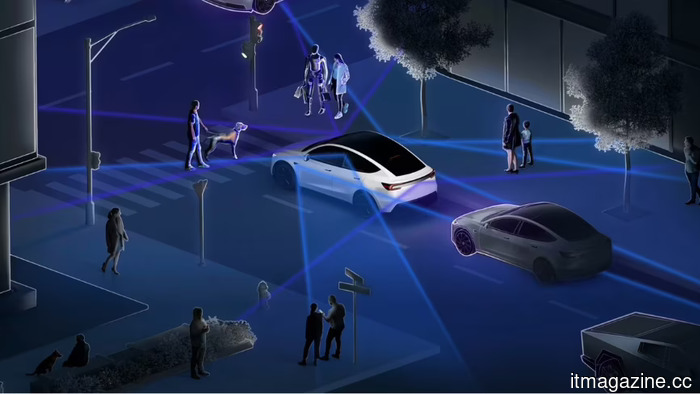 Tesla has submitted a trademark for a custom Roadster badge as the unveiling of the nine-year-old supercar approaches, a reveal that has been delayed each year since 2020.
Tesla submitted a distinctive Roadster shield emblem to the USPTO, marking its first custom vehicle branding. The car was initially promised in 2017 with a delivery date set for 2020, but it has yet to be constructed.
Tesla has submitted a trademark for a custom Roadster badge as the unveiling of the nine-year-old supercar approaches, a reveal that has been delayed each year since 2020.
Tesla submitted a distinctive Roadster shield emblem to the USPTO, marking its first custom vehicle branding. The car was initially promised in 2017 with a delivery date set for 2020, but it has yet to be constructed.
 Spotify now enables AI agents such as OpenClaw and Claude Code to generate personalized podcasts for you.
With Spotify's latest feature, AI agents such as OpenClaw, Claude Code, and OpenAI Codex can now convert your daily summaries, class notes, and travel itineraries into a shareable Personal Podcast.
Spotify now enables AI agents such as OpenClaw and Claude Code to generate personalized podcasts for you.
With Spotify's latest feature, AI agents such as OpenClaw, Claude Code, and OpenAI Codex can now convert your daily summaries, class notes, and travel itineraries into a shareable Personal Podcast.
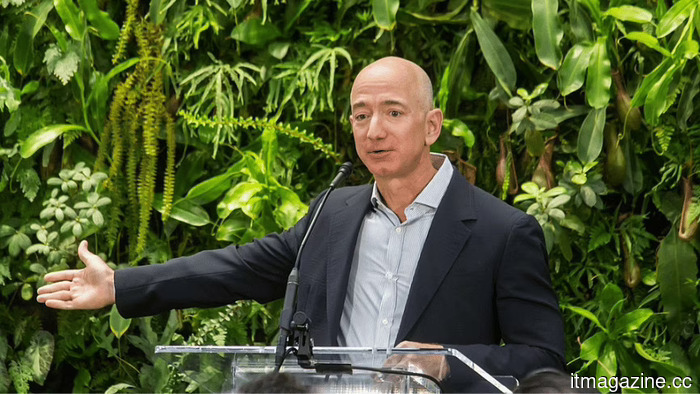 A representative from the Bezos family office has stepped down from the board of Slate Auto just months before the $1.4 billion electric vehicle startup is set to commence production in Indiana.
Melinda Lewison, the head of Jeff Bezos's family office, has departed from the board of Slate Auto. The electric vehicle startup has secured $1.4 billion in funding and aims to commence truck production by late 2026.
A representative from the Bezos family office has stepped down from the board of Slate Auto just months before the $1.4 billion electric vehicle startup is set to commence production in Indiana.
Melinda Lewison, the head of Jeff Bezos's family office, has departed from the board of Slate Auto. The electric vehicle startup has secured $1.4 billion in funding and aims to commence truck production by late 2026.
 The privacy concerns surrounding smart glasses have become a reality as a victim was filmed and subsequently extorted.
A BBC investigation reveals that a woman was covertly recorded with smart glasses, and the video was shared online prior to her reportedly being asked to pay for its removal.
The privacy concerns surrounding smart glasses have become a reality as a victim was filmed and subsequently extorted.
A BBC investigation reveals that a woman was covertly recorded with smart glasses, and the video was shared online prior to her reportedly being asked to pay for its removal.
A representative from the Bezos family office steps down from the Slate Auto board just months before the electric vehicle startup, valued at $1.4 billion, starts production in Indiana.
Melinda Lewison, the head of Jeff Bezos's family office, has departed from the board of Slate Auto. The electric vehicle startup has secured $1.4 billion in funding and aims to start truck production in late 2026.