
Thailand has given the green light to $29 billion worth of projects, including the expansion of TikTok's data center.
On Wednesday, Bangkok’s Board of Investment approved six significant investments, among which three are data centres. While TikTok's investment garners attention, the broader narrative concerns Thailand's emerging role in the regional AI infrastructure market.
Typically, Thailand's Board of Investment (BOI) does not attract much international interest with its announcements. However, Bloomberg reported that the BOI sanctioned a total of approximately $29 billion (around ₿958 billion at current rates) in investment approvals, with TikTok's data-centre expansion alone valued at ₿842 billion or about $25 billion. Overall, three of the six approved projects are related to data centres, accounting for nearly $27 billion or 93 percent of the total approvals. The evidence suggests that Thailand has identified data centre construction as its means of competing for foreign investment, which hyperscaling companies have recognized as a viable option for capital allocation.
Detailed Insights on the TikTok Project
TikTok's newly approved initiative represents a significant enhancement of its existing operations in Thailand. Earlier, ByteDance had pledged around $8.8 billion towards Thai data centres over five years, rising from an initial commitment of $3.8 billion that the BOI initially accepted in January 2025. The latest approval of ₿842 billion (approximately $25 billion) considerably exceeds previous total commitments.
This new undertaking involves the installation of servers, expansion of data storage, and scaling up processing capabilities across three Thai regions: Bangkok, Samut Prakan, and Chachoengsao. TikTok System (Thailand) Co., Ltd. is the legal entity behind the investment, with the overarching structure managed through TikTok Pte. Ltd., a Singapore-based branch of ByteDance that has historically managed the company's operations in Asia. The investment qualifies for a five-year exemption from corporate income tax under Thailand's BCG (Bio-Circular-Green) industrial promotion policy.
In addition to the infrastructure investment, the Bangkok Post reported that TikTok has committed to developing programs aimed at enhancing digital literacy and e-commerce education for Thai entrepreneurs and the country's digital workforce. Such side initiatives are standard for BOI-sanctioned foreign investments of this magnitude, reflecting the company’s intent to act as a strategic partner rather than just a foreign investor.
While TikTok’s project captures the headlines, the other approved investments are noteworthy as well. One is a ₿46 billion (~$1.4 billion) data centre project from Skyline Data Center and Cloud Services Co., a subsidiary of the UAE’s DAMAC Group, designed to support a 200-megawatt IT load in Chachoengsao Province. Another is a ₿3.25 billion cloud services investment by Siam AI Corporation, a Thai firm, focusing on AI applications. Collectively, these three data centre projects account for about $27 billion of the total $29 billion approval.
Geographically, Chachoengsao Province—on the eastern edge of Bangkok—has become Thailand's central data centre hub, with TikTok, Skyline, and previous hyperscaler investments converging in this area. Thailand has seen major commitments from AWS, Google, NextDC, CtrlS Datacenters, GDS IDC Services based in Singapore, alongside Chinese investments from ByteDance and the UAE-based Skyline project. This emerging cluster resembles the data centre landscape Singapore represented a decade ago and Malaysia more recently.
Reasons Behind Thailand's Appeal and Timing
The reasoning behind these approvals extends beyond Thailand's tax benefits. Singapore's data centre moratorium, which was lifted in 2022 but has not been fully reinstated, has resulted in unmet regional demand. Meanwhile, Malaysia, while growing quickly, faces constraints with its power grid and cooling water resources. Earlier this year, we noted Bain Capital's sale of its Bridge Data Centres stake for $5 billion, with ByteDance as the primary tenant. This platform includes six data centres in Malaysia and two in Thailand, and the demand from TikTok is a clear outcome of the limited regional capacity.
Thailand's advantages are reflected in the approved projects. Its BCG industrial-promotion framework offers more attractive tax incentives than competing nations.
Additionally, there is a factor related to China. ByteDance has leveraged Southeast Asian data centre capacity to access Nvidia GPUs that would otherwise be limited by US export controls in mainland China. Thailand's neutral diplomatic stance, its geographic proximity to ByteDance’s main user areas, and the absence of significant US export control reciprocity make it an exceptionally favorable location for such operations. Thus, the $25 billion commitment can be seen as both a victory for Thailand's industrial policy and an extension of ByteDance's regional computing strategy.
TikTok's expansion in Thailand forms part of a larger trend of infrastructure development that we've been monitoring in various regions. This includes TikTok's €12 billion investment across Europe as it completed its data centre in Norway, its €1 billion second data centre in Finland, and the operational launch of its first European data centre in Dublin. Including the existing arrangement
Другие статьи
 Ametek is set to acquire Indicor's instrumentation divisions for $5 billion.
Ametek is set to acquire the test-and-measurement divisions of Indicor, which is part of the Clayton, Dubilier & Rice industrial portfolio, for approximately $5 billion.
Ametek is set to acquire Indicor's instrumentation divisions for $5 billion.
Ametek is set to acquire the test-and-measurement divisions of Indicor, which is part of the Clayton, Dubilier & Rice industrial portfolio, for approximately $5 billion.
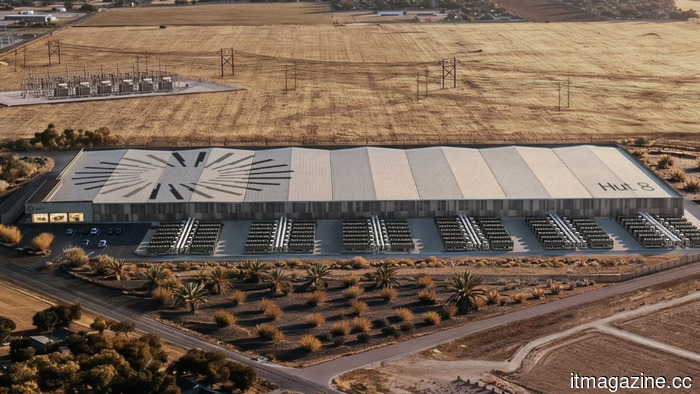 Hut 8 has entered into a 15-year lease worth $9.8 billion for the initial phase of its AI data center in Texas.
Hut 8 has entered into a 15-year lease for 352 MW at its Beacon Point Texas AI data center campus with a confidential investment-grade tenant, valued at $9.8 billion.
Hut 8 has entered into a 15-year lease worth $9.8 billion for the initial phase of its AI data center in Texas.
Hut 8 has entered into a 15-year lease for 352 MW at its Beacon Point Texas AI data center campus with a confidential investment-grade tenant, valued at $9.8 billion.
 Razr Fold versus Galaxy Z Fold 7: I’m tentatively impressed by what Motorola’s first foldable device brings to the table, all while saving $300.
Motorola focused its first release on creating the most robust hardware case possible. In contrast, Samsung dedicated seven generations to designing the most reliable daily-use case.
Razr Fold versus Galaxy Z Fold 7: I’m tentatively impressed by what Motorola’s first foldable device brings to the table, all while saving $300.
Motorola focused its first release on creating the most robust hardware case possible. In contrast, Samsung dedicated seven generations to designing the most reliable daily-use case.
 Ametek is set to acquire Indicor's instrumentation divisions for $5 billion.
Ametek is set to spend approximately $5 billion to acquire the test-and-measurement divisions of Indicor, which is part of a Clayton, Dubilier & Rice industrial portfolio.
Ametek is set to acquire Indicor's instrumentation divisions for $5 billion.
Ametek is set to spend approximately $5 billion to acquire the test-and-measurement divisions of Indicor, which is part of a Clayton, Dubilier & Rice industrial portfolio.
 Google is implementing a new framework to prevent problematic Android apps from causing issues.
Google is enhancing Binary Transparency for Android by utilizing a public ledger to assist in verifying official Google applications and identifying unauthorized builds more efficiently.
Google is implementing a new framework to prevent problematic Android apps from causing issues.
Google is enhancing Binary Transparency for Android by utilizing a public ledger to assist in verifying official Google applications and identifying unauthorized builds more efficiently.
 LiveEO secures €28 million for its satellite system focused on civil infrastructure.
LiveEO has secured a €28 million first close in its upcoming funding round, as the company broadens its operations into defence ISR in addition to its civil infrastructure sector.
LiveEO secures €28 million for its satellite system focused on civil infrastructure.
LiveEO has secured a €28 million first close in its upcoming funding round, as the company broadens its operations into defence ISR in addition to its civil infrastructure sector.
Thailand has given the green light to $29 billion worth of projects, including the expansion of TikTok's data center.
Thailand's BOI approved $29 billion in foreign investments, which includes a $25 billion expansion of TikTok's data center, positioning Thailand as the leader in Southeast Asia.