

Marloo secures $10M in funding, led by Blackbird Ventures, to transform its AI notetaker into an AI operating system for financial advisors.
Blackbird is making a significant commitment: it has led both the pre-seed and seed funding rounds, and now owns 34% of the company. Icehouse Ventures also took part in the funding. The founders — Hardy Michel, Shakeel Lala, and Ben Robertson — each maintain approximately 27%. The next step involves expanding into the United States.
Marloo, the AI company based in London that serves financial advisers, has raised $10 million in a seed round spearheaded by Blackbird Ventures, which was joined by Icehouse Ventures.
This funding brings Marloo's total raised to $12.7 million in less than a year, following Blackbird’s leadership in the $2.7 million pre-seed round in September 2025. After both funding rounds, Blackbird now possesses about 34% of Marloo. Co-founders Hardy Michel and Shakeel Lala continue to hold roughly 27% of the company. The new funds will be allocated to solidifying Marloo's presence in the UK and Australia, advancing into the US market, and expanding its product offerings to become a central operating system for financial advisory firms.
Founded in 2024 by Hardy Michel, Shakeel Lala, and Ben Robertson, Marloo has a team where a third are former financial advisers. The company addresses a well-known and challenging issue: the financial advisory field is highly regulated and document-heavy, which leads typical advisers to spend an excessive amount of time on administrative tasks instead of providing actual advice.
Before creating their product, the founders interviewed around 800 potential customers to identify the specific pain points that would encourage adoption.
Marloo currently produces advice documents, compliance workflows, and client context files, while also sustaining a continuously updated knowledge base regarding each adviser’s client relationships that is leveraged across all interactions.
Blackbird’s general partner, Samantha Wong, has expressed an ambition for Marloo akin to what Canva achieved for design: a platform that enhances design work without replacing designers, making it more accessible, faster, and professional for a broader user base.
“It reminds us of the early days of Canva,” Wong shared in both the September pre-seed announcement and this week’s funding round, suggesting that this comparison is based on strong conviction rather than mere promotional language.
The traction metrics reported by Marloo are notable for a company that was founded less than a year ago. Over 650 advisory firms in six countries are currently paying customers. Revenue has consistently increased by more than 40% month-on-month for eleven months straight.
Customer churn is described as nearly nonexistent, a metric that in enterprise SaaS indicates a stronger product-market fit than any growth figure. Individual user testimonials shared in the announcement highlight a 90% client closing rate, a fourfold increase in productivity, weekly savings of seven to ten hours, and the reduction of advice document preparation time from eight hours to less than four.
These testimonials are collected by the company and are not independently audited, but their quantity and detail align with a product that is genuinely integrated into daily workflows rather than being merely a purchased tool that remains unused.
Shakeel Lala directly addressed the competitive concern often raised: that larger AI labs such as OpenAI, Anthropic, and Google might develop tools that could overshadow niche AI companies targeting specific professions.
He believes that such a risk is overestimated in this specific area. “While an AI tool like Claude can summarize a meeting, it cannot synthesize the multiple layers of context necessary for generating usable outputs that adhere to legal and regulatory standards, a firm’s guidelines, and adviser preferences,” he stated.
“AI outputs are inherently non-deterministic, whereas advice is a profession grounded in trust and proof based on determinism.”
This perspective highlights the fundamental tension between probabilistic AI outputs and the compliance needs of regulated financial advice, presenting a compelling case for the vertical AI moat: not that the technology is proprietary, but that the requisite compliance and institutional context to make it effective is difficult to replicate without significant domain expertise.
The US expansion serves as a strategic challenge. Marloo's strongest markets to date are the UK and Australia, which are both relatively concentrated and regulated financial advice markets with well-established regulatory frameworks and documentation standards.
The US market, in contrast, is larger, more fragmented, and governed by a mix of federal and state regulations. Developing compliance-ready AI documentation tools for the US adviser market necessitates rebuilding the institutional expertise that Marloo has gained in its current markets, led by a founding team with direct experience in the UK and Australia but now navigating a new regulatory landscape.
The $10 million seed funding is adequate to initiate the US expansion; however, whether it can establish a substantial market presence will depend on how swiftly the company can replicate its success from the UK and Australia in North America.
Other articles
 Marloo secures $10 million in funding, spearheaded by Blackbird Ventures, to transform the AI notetaker into an AI operating system designed for financial advisers.
Marloo secures $10M in funding, led by Blackbird Ventures, for its AI platform aimed at financial advisers. The platform has gained 650 firms, achieved over 40% monthly growth, and maintains almost no customer churn in less than a year.
Revolut is launching its inaugural physical store in Barcelona.
Revolut is set to launch its inaugural physical store in Barcelona, expected to open by 2027. This permanent location will serve as a test for a retail model that the fintech company aims to replicate worldwide.
Marloo secures $10 million in funding, spearheaded by Blackbird Ventures, to transform the AI notetaker into an AI operating system designed for financial advisers.
Marloo secures $10M in funding, led by Blackbird Ventures, for its AI platform aimed at financial advisers. The platform has gained 650 firms, achieved over 40% monthly growth, and maintains almost no customer churn in less than a year.
Revolut is launching its inaugural physical store in Barcelona.
Revolut is set to launch its inaugural physical store in Barcelona, expected to open by 2027. This permanent location will serve as a test for a retail model that the fintech company aims to replicate worldwide.
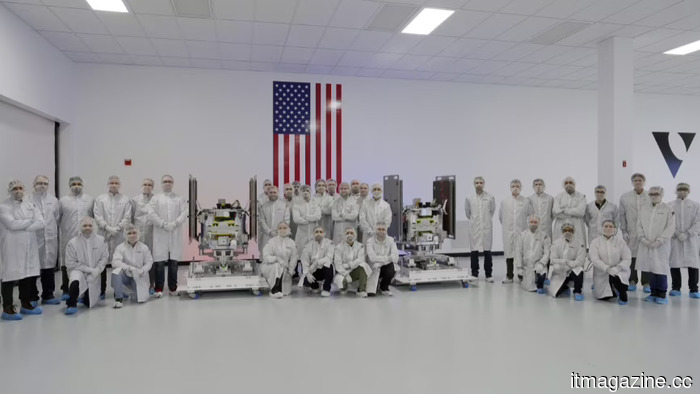 True Anomaly secures $650 million, becoming the sole space startup dedicated solely to orbital defense.
True Anomaly, the startup developing autonomous satellites, has secured $650 million just weeks after being chosen for Golden Dome’s space interceptor program.
True Anomaly secures $650 million, becoming the sole space startup dedicated solely to orbital defense.
True Anomaly, the startup developing autonomous satellites, has secured $650 million just weeks after being chosen for Golden Dome’s space interceptor program.
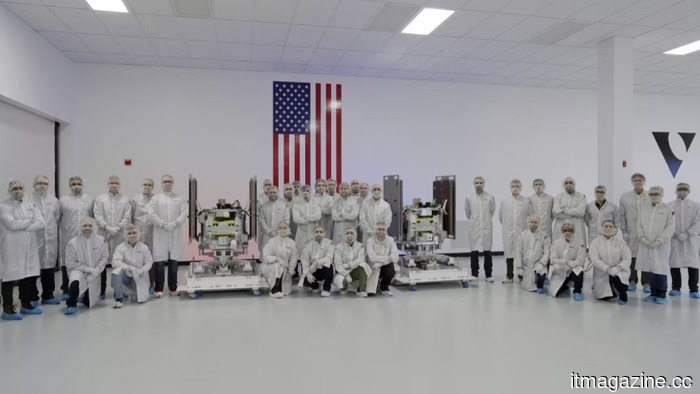 True Anomaly secures $650 million as the sole space startup dedicated entirely to orbital defense.
True Anomaly, the company developing autonomous satellites, has secured $650 million just weeks after being chosen for Golden Dome’s space interceptor initiative.
Revolut is launching its inaugural physical store in Barcelona.
Revolut is set to launch its first physical store in Barcelona, expected to open by 2027. This permanent location will test a retail model that the fintech intends to replicate worldwide.
True Anomaly secures $650 million as the sole space startup dedicated entirely to orbital defense.
True Anomaly, the company developing autonomous satellites, has secured $650 million just weeks after being chosen for Golden Dome’s space interceptor initiative.
Revolut is launching its inaugural physical store in Barcelona.
Revolut is set to launch its first physical store in Barcelona, expected to open by 2027. This permanent location will test a retail model that the fintech intends to replicate worldwide.
Marloo secures $10M in funding, led by Blackbird Ventures, to transform its AI notetaker into an AI operating system for financial advisors.
Marloo secures $10 million in funding, headed by Blackbird Ventures, for its AI platform aimed at financial advisers. The platform has attracted 650 firms, boasts over 40% monthly growth, and has experienced nearly zero churn within a year.