
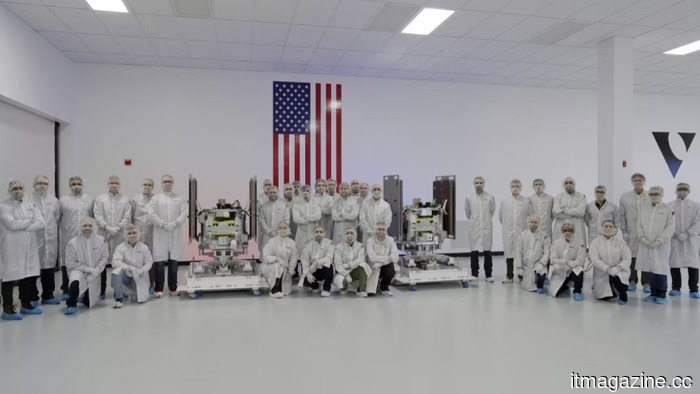
True Anomaly secures $650 million as the sole space startup dedicated entirely to orbital defense.
True Anomaly's Jackal autonomous orbital vehicles are capable of maneuvering near other satellites in orbit for purposes such as inspection, space situational awareness, and potential ballistic and hypersonic missile interception under the Golden Dome initiative. The total funding for the company has now surpassed $1 billion.
According to Bloomberg, True Anomaly, a Colorado-based space defense startup focused on developing autonomous orbital vehicles and the associated software for U.S. national security missions, has secured $650 million in funding, although the company has yet to confirm this amount. If confirmed, this raise would increase True Anomaly's overall funding to over $1 billion, marking a significant milestone in the company's three-year history.
The timing of the funding is noteworthy. On April 24, 2026, the U.S. Space Force revealed that True Anomaly was one of 12 selected companies for the development of Golden Dome space-based interceptor (SBI) prototypes, part of Other Transaction Authority agreements totaling up to $3.2 billion. Other companies chosen for this initiative include Anduril, Lockheed Martin, Northrop Grumman, Raytheon, General Dynamics Mission Systems, Booz Allen Hamilton, SpaceX, among others.
These OTA agreements will finance the development of space-based interceptors intended to neutralize enemy ballistic and hypersonic missiles during their boost phase, just seconds after launch, before they leave the atmosphere. Companies that successfully develop prototypes will compete for production contracts estimated at $1.8 to $3.4 billion annually post-2028.
At the heart of True Anomaly’s technology is the Jackal autonomous orbital vehicle, designed for rendezvous and proximity operations (RPO)—the ability to maneuver closely to other satellites in orbit for tasks such as inspection and monitoring, or engagement under kinetic missions. The Jackal works in conjunction with Mosaic, the company’s autonomy software suite, which offers command, control, and situational awareness for orbital operations.
Founded in 2022 by Even Rogers, who currently serves as CEO, along with Kyle Zakrzewski and two other co-founders who have since left, True Anomaly's founders met while serving in the U.S. Air Force’s 4th Space Operations Squadron. Rogers has articulated the company’s objective as the need for the U.S. to establish a credible orbital defense capability before adversaries secure an irreversible advantage in space.
True Anomaly's fundraising trajectory aligns with the growing political and strategic emphasis on space defense. The company raised $100 million in December 2023 and $260 million in a Series C round in April 2025, led by Accel, with participation from Meritech Capital, Eclipse, Riot Ventures, Menlo Ventures, among others, and has now reportedly raised an additional $650 million. Each funding round has approximately doubled the previous one, with the Series C being notably oversubscribed. If the latest round is confirmed at $650 million, it indicates that investor interest in dedicated space defense is persistently increasing, mirroring the Pentagon’s enhanced procurement activities, as evidenced by Trump’s proposed $1.5 trillion defense budget and the $185 billion Golden Dome program.
Since the Series C round, the company has significantly expanded its operational footprint, inaugurating a 90,000-square-foot manufacturing facility in Long Beach, California, within the aerospace cluster dubbed “Space Beach.” Its workforce has grown from about 170 employees at the time of the Series C to over 249 by January 2026, with aspirations to reach between 450 and 500 by the end of 2026.
Upcoming missions in 2026 include the initial Jackal deployments to geosynchronous orbit (22,000 miles above Earth, where numerous military satellites are stationed) and cislunar space (the area between Earth and the Moon), as well as the VICTUS HAZE mission with Firefly Aerospace, which aims to provide an end-to-end demonstration of tactically responsive space operations for the Space Force, showcasing the U.S. capability for rapid deployment of orbital assets during conflicts.
True Anomaly is part of a limited group of defense-centric space startups, including Anduril, Impulse Space, Starfish Space, and Turion Space, all vying to shape the future of U.S. space defense. What sets True Anomaly apart within this group is its singular focus; as stated by its CFO, it has established itself as “the only company focused exclusively on space defense.”
This narrow focus has led to both commercial uniqueness and a primary risk: if political or strategic enthusiasm for space-based orbital defense wanes, True Anomaly lacks an adjacent commercial market to rely on. The recent $650 million funding round, coming after the Golden Dome OTA selection, indicates that investors currently perceive this risk as low.
Other articles
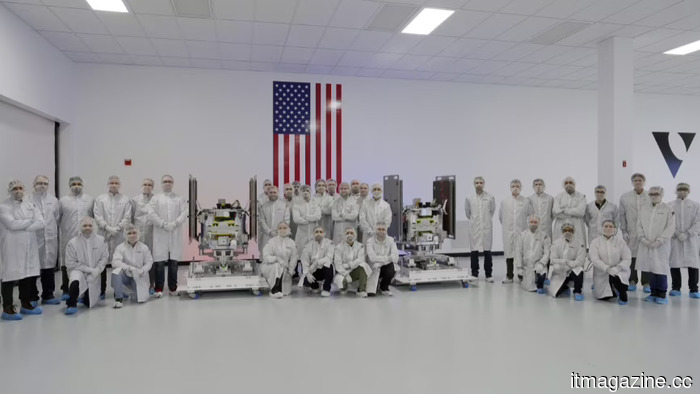 True Anomaly secures $650 million, becoming the sole space startup dedicated solely to orbital defense.
True Anomaly, the startup developing autonomous satellites, has secured $650 million just weeks after being chosen for Golden Dome’s space interceptor program.
True Anomaly secures $650 million, becoming the sole space startup dedicated solely to orbital defense.
True Anomaly, the startup developing autonomous satellites, has secured $650 million just weeks after being chosen for Golden Dome’s space interceptor program.
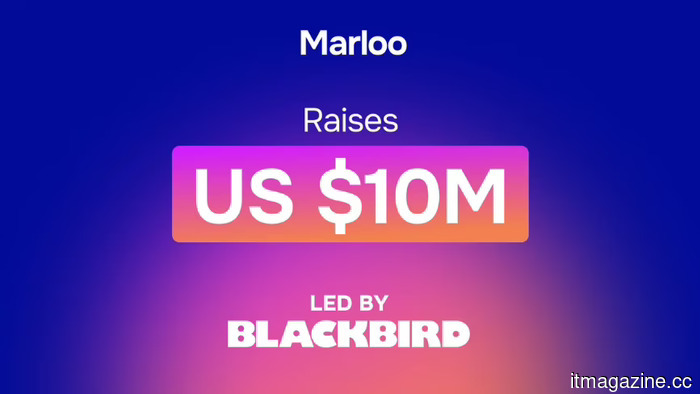 Marloo secures $10 million in funding, spearheaded by Blackbird Ventures, to transform the AI notetaker into an AI operating system designed for financial advisers.
Marloo secures $10M in funding, led by Blackbird Ventures, for its AI platform aimed at financial advisers. The platform has gained 650 firms, achieved over 40% monthly growth, and maintains almost no customer churn in less than a year.
Revolut is launching its inaugural physical store in Barcelona.
Revolut is set to launch its inaugural physical store in Barcelona, expected to open by 2027. This permanent location will serve as a test for a retail model that the fintech company aims to replicate worldwide.
Marloo secures $10 million in funding, spearheaded by Blackbird Ventures, to transform the AI notetaker into an AI operating system designed for financial advisers.
Marloo secures $10M in funding, led by Blackbird Ventures, for its AI platform aimed at financial advisers. The platform has gained 650 firms, achieved over 40% monthly growth, and maintains almost no customer churn in less than a year.
Revolut is launching its inaugural physical store in Barcelona.
Revolut is set to launch its inaugural physical store in Barcelona, expected to open by 2027. This permanent location will serve as a test for a retail model that the fintech company aims to replicate worldwide.
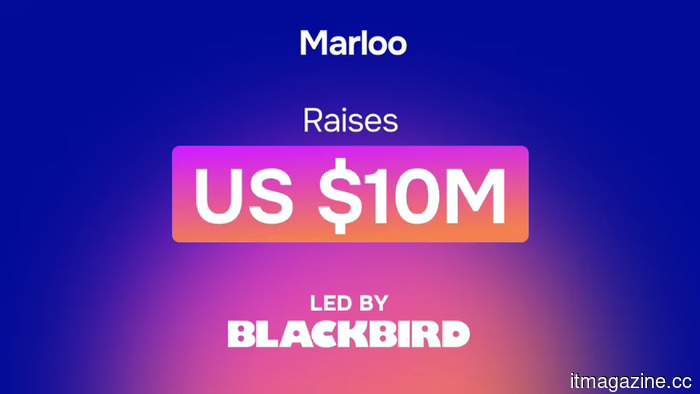 Marloo secures $10M in funding, led by Blackbird Ventures, to transform its AI notetaker into an AI operating system for financial advisors.
Marloo secures $10 million in funding, headed by Blackbird Ventures, for its AI platform aimed at financial advisers. The platform has attracted 650 firms, boasts over 40% monthly growth, and has experienced nearly zero churn within a year.
Marloo secures $10M in funding, led by Blackbird Ventures, to transform its AI notetaker into an AI operating system for financial advisors.
Marloo secures $10 million in funding, headed by Blackbird Ventures, for its AI platform aimed at financial advisers. The platform has attracted 650 firms, boasts over 40% monthly growth, and has experienced nearly zero churn within a year.
True Anomaly secures $650 million as the sole space startup dedicated entirely to orbital defense.
True Anomaly, the company developing autonomous satellites, has secured $650 million just weeks after being chosen for Golden Dome’s space interceptor initiative.